
Super League Betting: Match Markets, Grand Final Outrights, and League-Specific Edges
 Available in US
The faster code, the tighter prices
I came to Super League betting via union, and the first thing I had to unlearn was patience. League moves at roughly twice the tempo. A 26-point lead in the 50th minute is not safe. A 10-point lead at half time often means nothing. That tempo is what makes Super League fun to bet on, and it is also what catches most union punters out when they sit down to price their first round of fixtures.
The honest scale of the rugby league betting market in the UK is modest compared with union. Industry analysis by EY for the Betting and Gaming Council put combined annual betting-sector contribution to snooker, darts, and rugby league at £12.5 million-plus — a fraction of the £350 million horseracing receives. That smaller pot affects bookmaker behaviour: fewer markets per match, thinner margins on standard 1X2 prices, and far more lopsided exposure when a popular pick is involved.
Super League structure and what the fixtures actually look like
Twelve clubs, 27 regular-season rounds, top six into a play-off bracket that culminates at Old Trafford. The Grand Final is the showpiece, but the regular season is denser than newcomers think — back-to-back Thursday and Sunday rounds appear regularly, and Magic Weekend collapses an entire round into two days at a neutral venue.
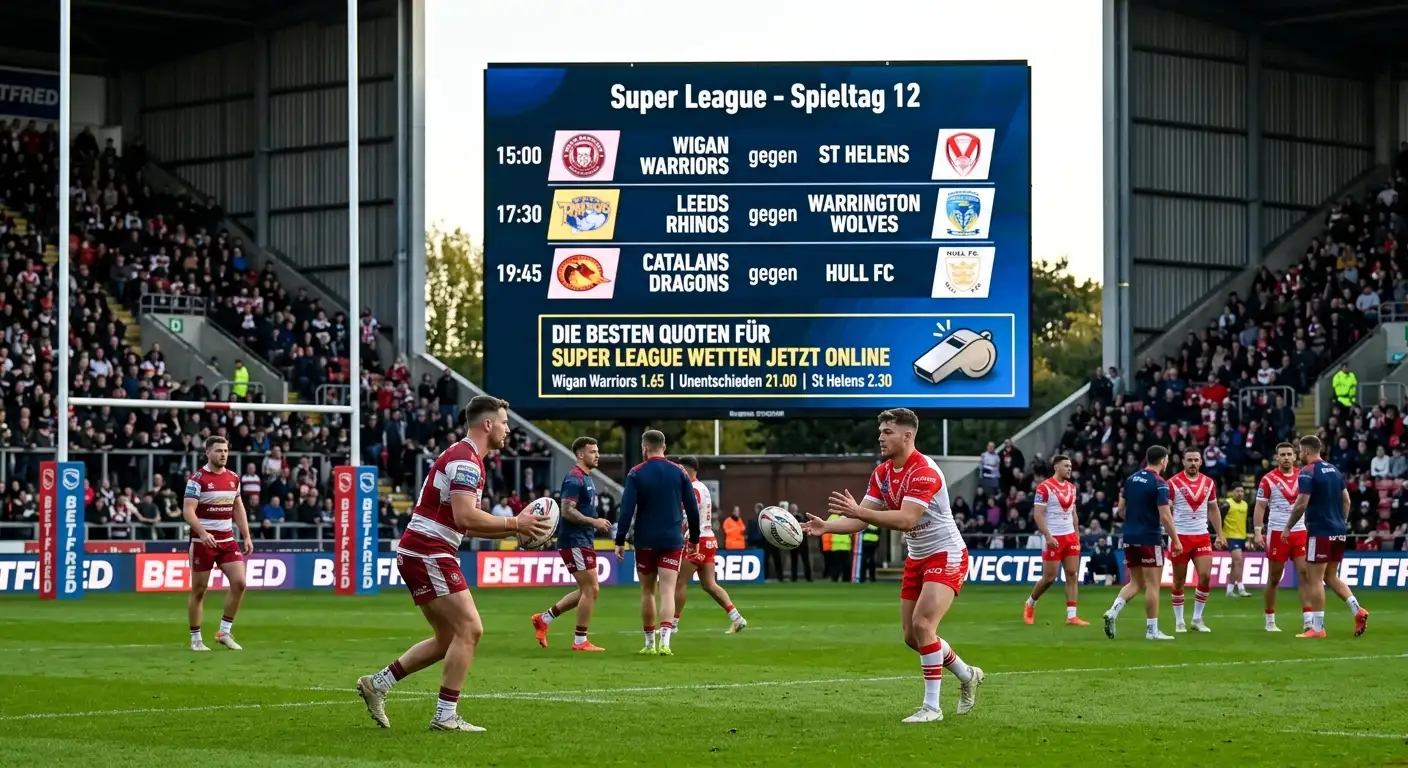
The schedule rewards squad depth and punishes fatigue more than union does. I track minutes played by spine players (1, 6, 7, 9) across rolling four-match windows. When the spine has been on for 70-plus minutes in three of four games, totals trend under and the underdog covers more often. The tempo cost is real and it is mispriced more often than not.
Match and handicap markets on the league side
Handicap lines in Super League rarely exceed 18 points and most cluster between 4 and 12. The compressed range is partly a function of the play-the-ball restart and the six-tackle structure, which keeps possession evenly split through almost every match. Big blowouts happen, but they are usually fatigue-driven late efforts rather than first-half dominance.
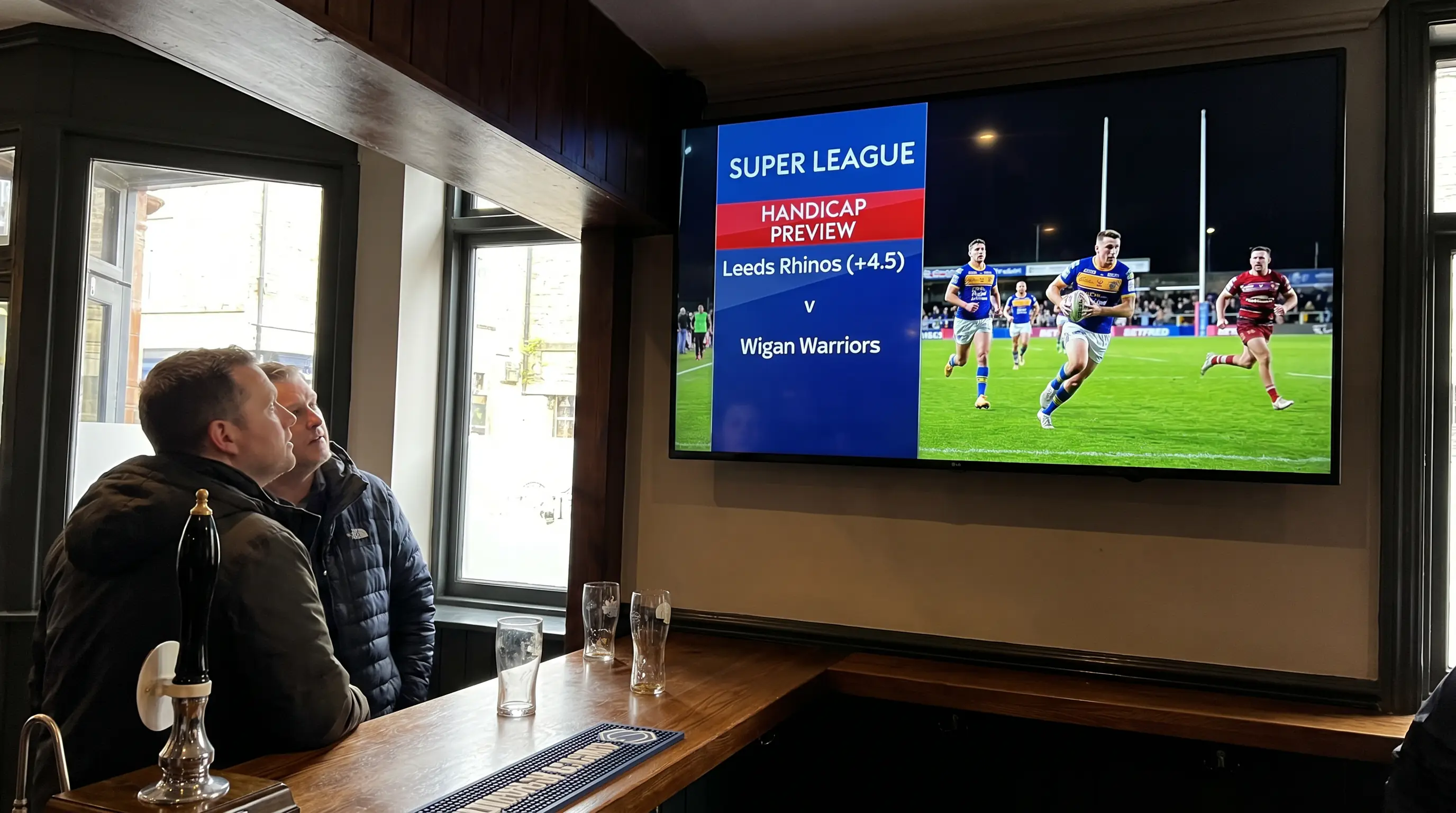
What this means for handicap betting: small-line games are where I look hardest. A 4.5-point line in a derby is a coin flip with overround attached — fine to skip. A 7.5-point line in a fixture where one side is rotating spine players is genuinely live, and the bookmaker often holds the line until late team news drops on the morning of the match.
Total points lines in Super League typically open between 36.5 and 44.5 for in-form fixtures. Weather still matters, but less than in union — the league code rains-and-grinds well, with set restarts keeping possession moving even in poor conditions. I have lost money chasing weather adjustments in league fixtures that I would have nailed in union.
Grand Final outrights and the play-off shape
The Grand Final outright is the one market I keep open all season. The play-off format means a side finishing third or fourth in the regular season can still win the Grand Final, and history shows that the regular-season leader does not always lift the trophy. Outright winner prices in March often look very different to the same market in mid-July, even when nothing dramatic has changed in the standings.
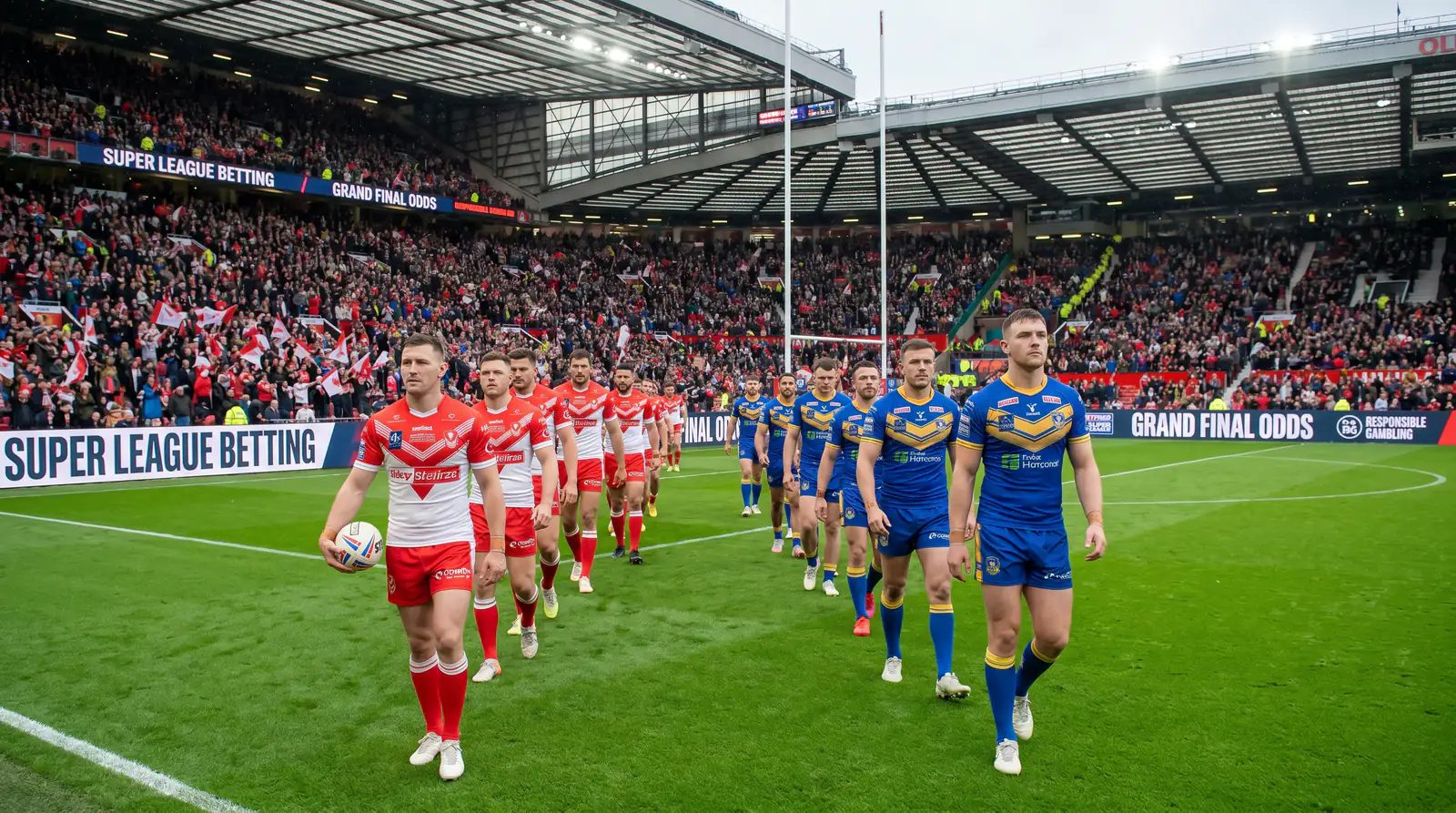
The cultural pull of league betting in the UK is bigger than the GGY numbers suggest. As one industry write-up put it, rugby union betting and league betting alongside it represent a popular pastime in the UK and globally — offering an exciting way to engage with one of the world’s most dynamic sports. That phrasing reflects something real about Grand Final week: the betting handle on outright and match markets is heavily concentrated, and prices firm or drift within hours of team news rather than days.
My approach for the Grand Final: build a position on the eventual winner in May or June at a price between 5.00 and 9.00, then trade out partially in the semi-finals once the bracket is set. The all-or-nothing approach is a losing strategy in a market with this much late-stage volatility.
Magic Weekend and the betting quirks it brings
Magic Weekend deserves its own paragraph. An entire round of fixtures, all played at a single neutral venue across one weekend, changes scoring patterns measurably. Average tries per match tick up, kicking accuracy varies as players adjust to an unfamiliar pitch, and the schedule itself — multiple games per day — affects how fans bet across the card.
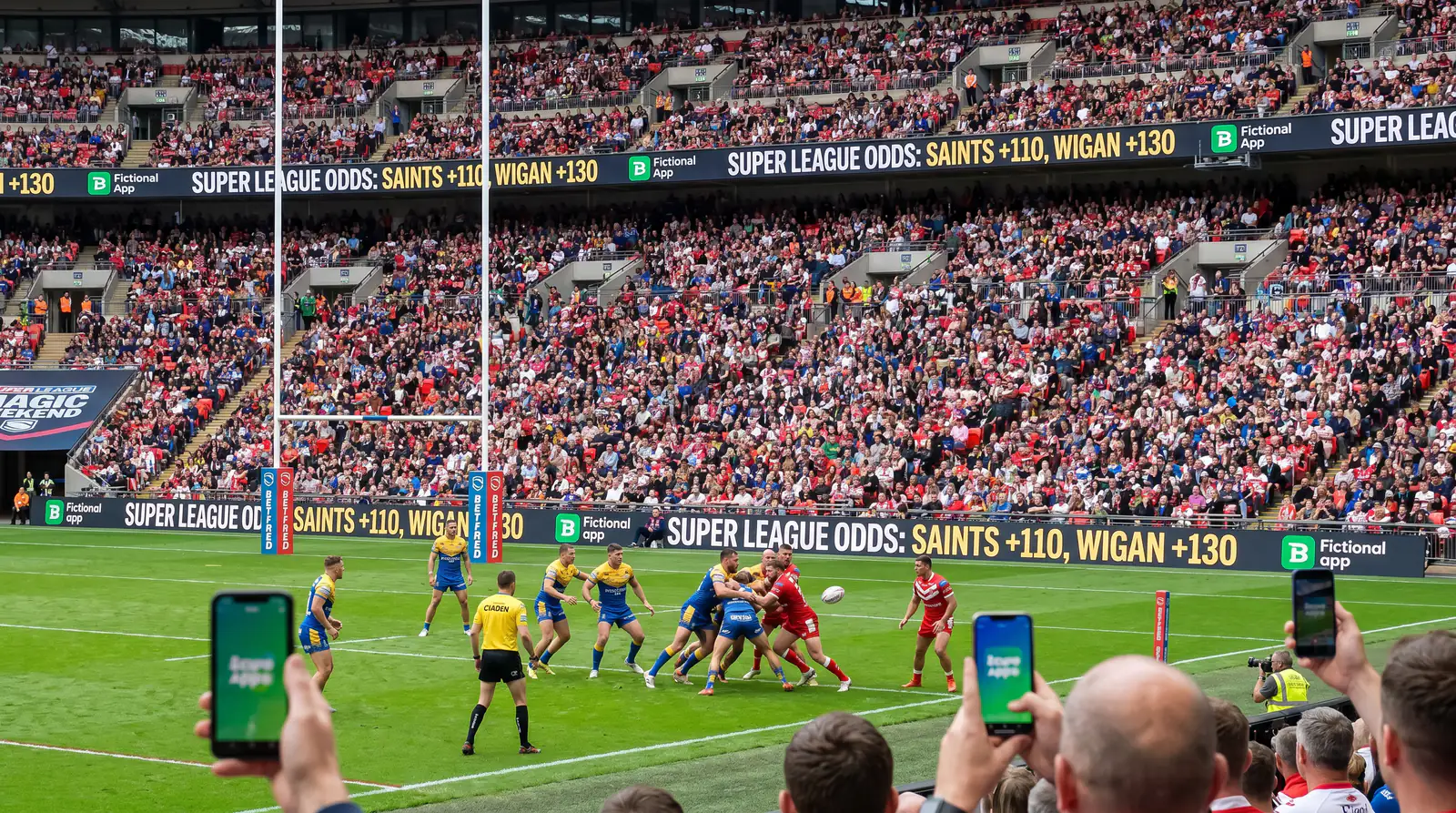
What I do differently for Magic Weekend: lean into total points overs more than usual, because the festival atmosphere and neutral venue both push tempo up; treat handicap lines as slightly noisier than the regular season, because home-pitch familiarity does not apply; and avoid acca-builders that string together four or five Magic fixtures, because the correlation between matches at a single venue is higher than the bookmaker’s bet builder model assumes.
Player try scorer markets in the league code
Try scorer markets in Super League look superficially similar to union. The differences are in the player pool and the way bookmakers build prices. Outside backs dominate the try-scoring numbers in league — wingers and full-backs combine for a much larger share than in union, where back-row forwards score regularly from close-range mauls.

The reliable patterns I work from: top wingers in a high-scoring side open at 1.80 to 2.50 for anytime try scorer; play-making half-backs are rarely the right price for first try (their game is to create, not finish); and the bench impact in league is smaller than in union because interchange rules are different, so last-try-scorer prices reward consistency over fresh legs.
A note on player props in playoff weeks: bookmakers tighten margins on the headline names and leave wider margins on second-tier picks. If you have a genuine read on a specific role player, this is where you can find a clean edge.
Where I think the league betting market is heading
Super League is a smaller market than the Prem or the URC, but the structural inefficiencies I described are real and they have been remarkably stable. Bookmakers continue to under-resource model depth on league fixtures, which means the patterns I rely on — small-line handicap value, Magic Weekend tempo bumps, late-season Grand Final volatility — keep working season after season. The competitive market data backs it up too: rugby league sits alongside snooker and darts in the lower-tier funding band, and that resource gap shows up in how prices are built. For a closer look at one of the season’s weirder weekends, see my piece on Magic Weekend betting quirks.