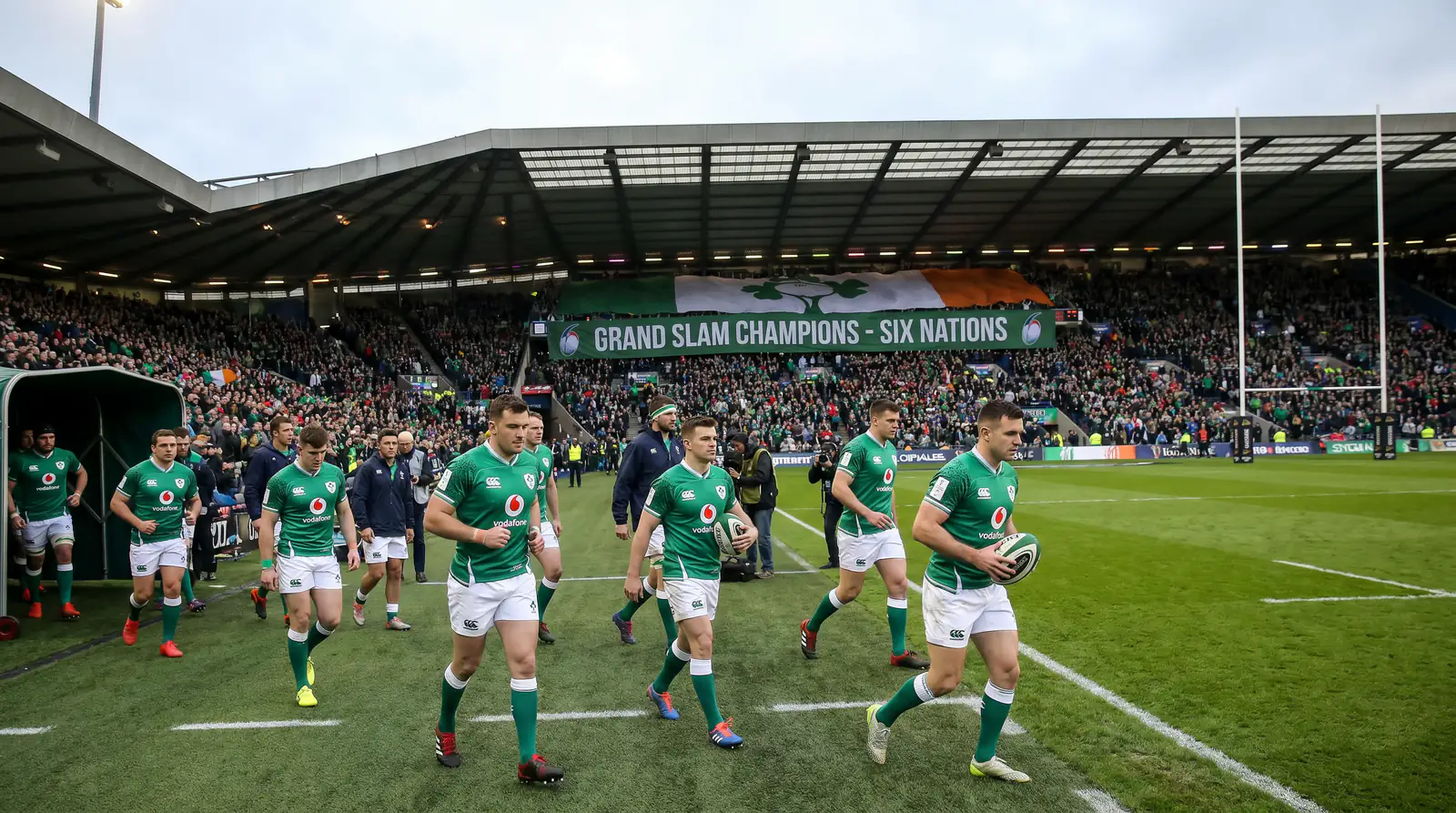
Six Nations Grand Slam Betting: Pricing the Perfect Run
 Available in US
The cleanest sweep in rugby and the bet most often mispriced
Five matches, five wins. The Grand Slam is the simplest concept in Six Nations betting and the most consistently mispriced. Pre-tournament Grand Slam odds at the top of the market tend to sit between 4.00 and 6.00 for whichever side is favoured to win the championship outright — yet historically the Grand Slam is completed once every three or four tournaments. The implied probability of those opening prices does not match the historical strike rate, and that gap is the bettor’s edge.
The reason the prices land where they do is partly behavioural. Bettors love clean narratives, and “wins every match” is the cleanest narrative in international rugby. Operators price for the demand, not just the probability. Knowing this is most of what you need to bet the Grand Slam market well.
Grand Slam historical frequency
Across recent tournament history, the Grand Slam has been won roughly once every three to four editions. Translated to implied probability per tournament, that is somewhere between 25 and 33 percent — but the implied probability is concentrated heavily in the top one or two favourites, not spread evenly across the field.
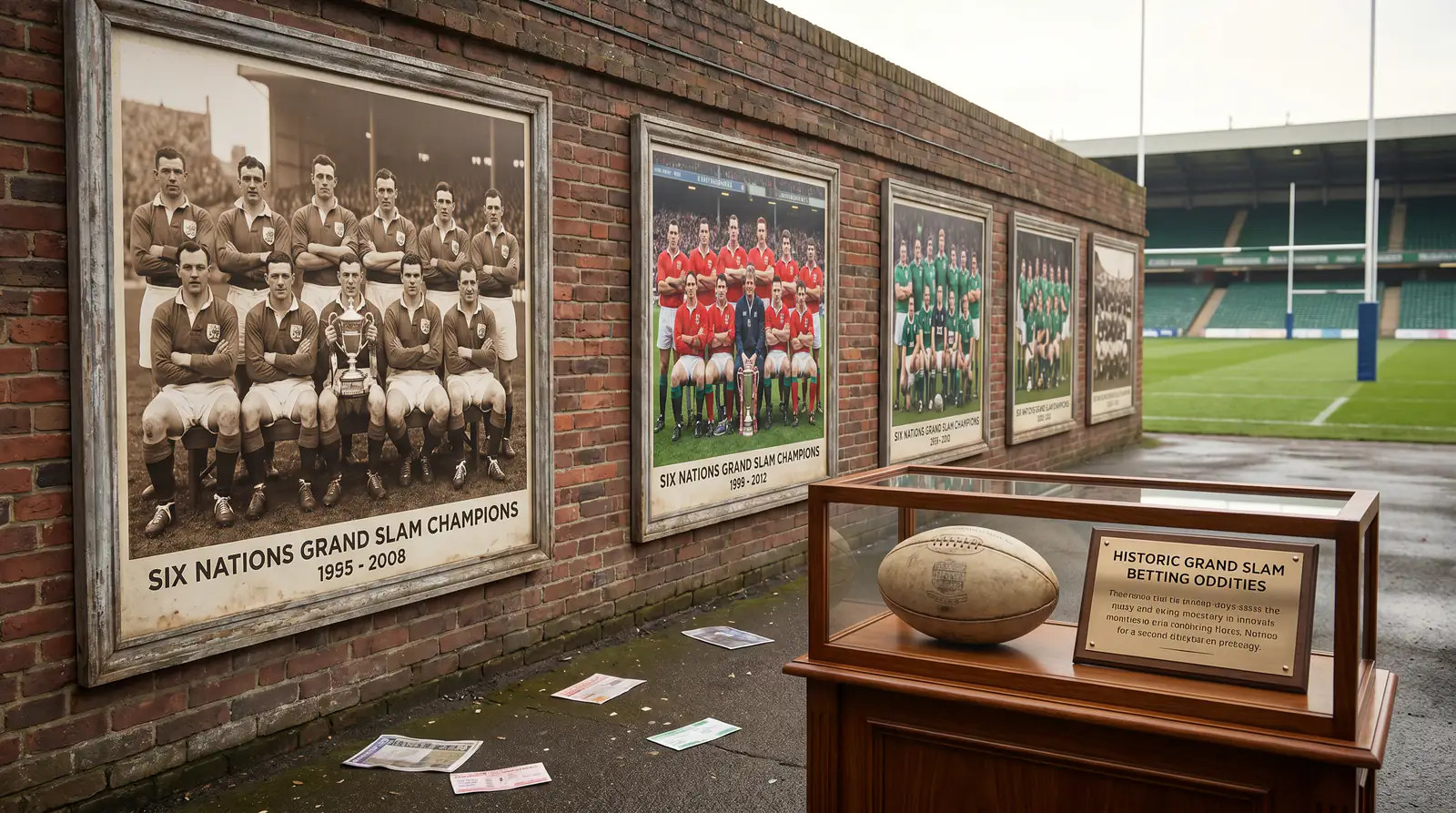
The favourite has won the Grand Slam less often than its pre-tournament price suggests, because the format is hostile to perfect runs. Five matches over five weekends, three away fixtures and two home (or vice versa), with at least one match against another tier-one side. A single bad weather day, a single suspension, a single off-day for the goal kicker, and the Slam is gone.
The reliable pricing pattern: top favourites at 4.00 to 6.00 imply 16 to 25 percent Grand Slam probability. The true probability of any specific favourite winning the Slam is usually 20 to 25 percent at the top end, sometimes higher in dominant years. The market’s pricing is approximately calibrated but tends to short-price the top favourite slightly.
Pre-tournament pricing patterns
The Grand Slam market opens in September or October — months before the tournament. Pricing at that stage reflects autumn international form, summer-tour results, and head-coach changes. By December the prices have absorbed the autumn results and are more accurate. By the week before round one they reflect named-squad form and weather forecasts.
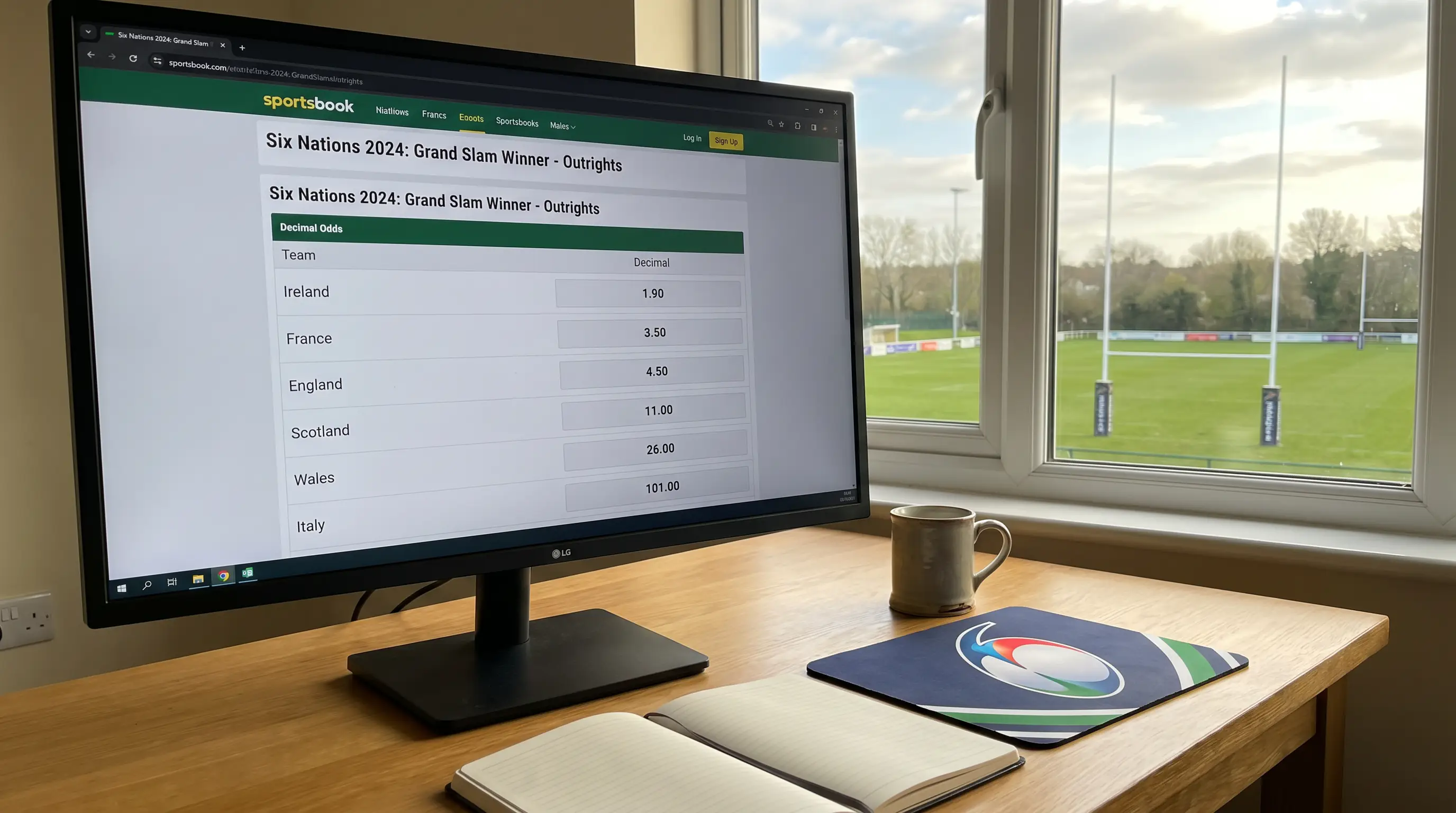
The window I prefer for staking: December. The autumn internationals are concluded, named squads are clear, and pre-tournament form is largely baked in. Prices have not yet been compressed by the round-one bookmaker bias toward whoever wins the opening weekend.
Round-one results have an outsized effect on Grand Slam prices. A favourite winning their opener at home shortens to 2.50 to 3.50 within hours of full time. A favourite losing their opener typically drifts beyond 12.00, even if their remaining four fixtures are favourable. The asymmetry is structural — one loss kills the Slam — and the price reflects that hard cliff.
Fixture sequence impact
The order in which a team plays its five matches affects the Grand Slam probability significantly. A side that plays its two toughest opponents at home in rounds three and four has a much easier path than the same side playing those opponents away in rounds one and five.
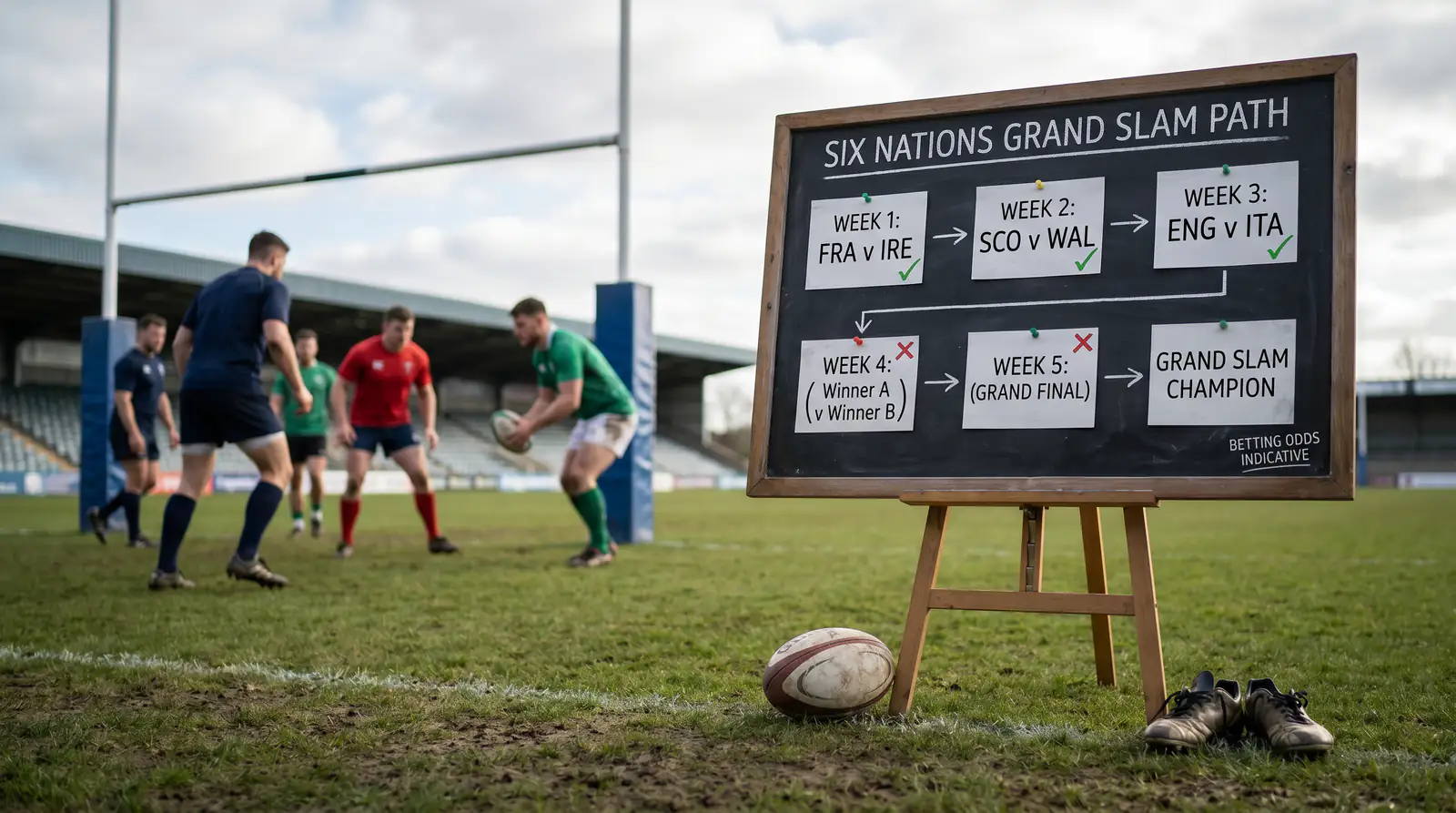
The factors that matter most: how many away fixtures the side has (three away is harder than two), the order of those away fixtures (front-loaded is harder than back-loaded), and the relative quality of the home opponents (avoiding tier-one opposition at home is favourable). A pre-tournament Slam favourite with three away fixtures including the two tougher opponents away is materially less likely to complete the Slam than the same side with the reverse schedule.
Bookmakers price the fixture order in approximately. The exact weighting depends on the operator’s model. Cross-operator price comparison reveals genuine disagreements about how much weight to give the schedule, which is occasionally where the cleanest edge sits.
Live Grand Slam trading
The Grand Slam market stays live throughout the tournament. After each round the price for surviving Slam-favourites either shortens (if they win) or settles permanently (if they lose). The pricing rhythm rewards active bettors who can act between rounds.
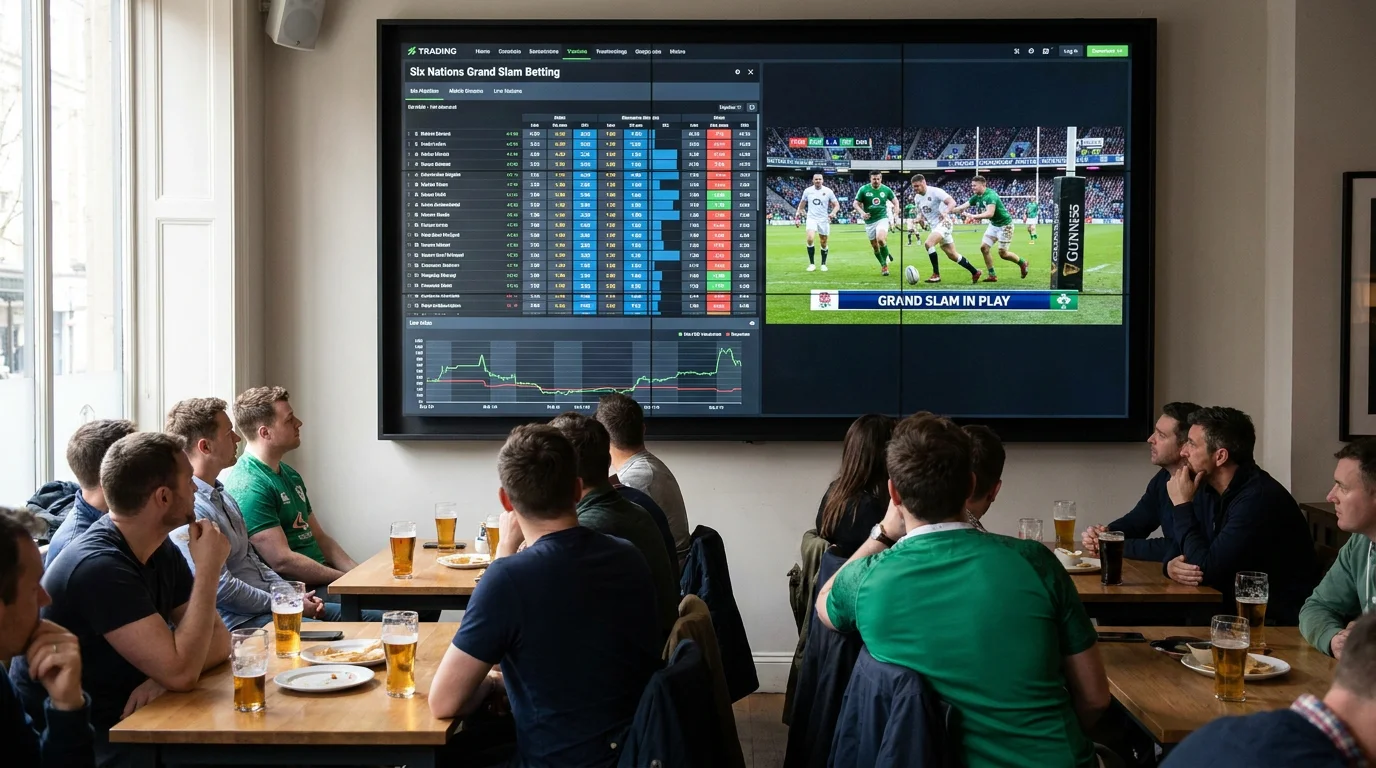
My approach. If I have a pre-tournament position on a side to win the Slam at 5.00, and that side wins round one at home, the price shortens to about 3.00. I do not take that off — I let it ride. If they win round two away, the price shortens to about 2.00 and I partially cash out half the stake, locking in profit while leaving exposure to the remaining three rounds. The two-round milestone is statistically meaningful: sides that win their first two matches have a much higher conditional probability of completing the Slam.
The opposite case: a Slam favourite priced at 4.00 pre-tournament that wins narrowly but unconvincingly in round one. The price shortens, but the underlying performance suggests the Slam is less likely than the new price implies. This is occasionally a hedge opportunity — back another contender at the inflated drifted price to balance the book.
Combining Grand Slam with championship
The championship market and the Grand Slam market are not the same. A side can win the championship without the Slam (with a single loss but most points). A Grand Slam side automatically wins the championship. The market pricing reflects this: a Grand Slam price is always longer than the same side’s championship price.
The combination bet — championship plus Grand Slam — is sometimes offered as a single market. The pricing is usually identical to the Grand Slam standalone price because the two events are functionally equivalent in scoring outcomes (the Slam side wins the title automatically with the maximum points).
What is more interesting: a parlay of championship for Team A and Slam for Team A. If you build that as a bet builder, the operator should price it at the standalone Slam price — they are the same outcome. If they price it higher (as if uncorrelated), you are getting genuine value at zero risk. The mispricing window is real and worth watching for.
The reason the market keeps mispricing
The Grand Slam is structurally hard to complete and structurally compelling to bet. Those two facts together produce predictable mispricing: the headline favourite is short-priced by demand, the field is wide-priced by uncertainty, and the value windows open and close around specific moments in the tournament. December for pre-tournament staking, post-round-two for partial cash out, and post-round-four for any remaining live positions — those are the windows I act in. The rest of the time I watch. For the related market on the wrong end of the table, my piece on Triple Crown betting covers the four-way sub-tournament that lives inside the same fixture list.