UK Rugby Betting · 2026 Edition
Rugby Bets in the UK: Markets, Bookmakers, and Value in 2026
 Available in US

Cold numbers for warm wagers — UK rugby betting decoded.
Nine years into pricing rugby for a living, and the question I still hear most often from punters at the pub is "so what's a decent bet on the Six Nations this weekend?" The honest answer always disappoints them — there isn't one. There are roughly forty of them on any given Saturday, spread across handicap, totals, try scorer, half markets and a handful of tournament specials. The trick isn't picking the bet. It's reading what the bookmaker has actually priced.
Rugby betting in the UK is its own particular animal. It sits inside a UKGC-regulated market that handles billions in turnover, but the rugby slice itself rewards specialists. The YouGov Sports Betting Tracker puts 14% of UK rugby union bettors above £200 a month — double the rate of football punters and noticeably ahead of horseracing followers. That tells you something about who actually shows up to this market: people who watch the games, know the kickers, and notice when a flanker is missing from the starting XV.
What you'll find on this page is the working framework I use myself — markets, pricing, regulation, value spots and the actual checklist I run before staking. No bookmaker rankings, no affiliate hand-holding. Just the structure that turns "I fancy France this weekend" into a properly priced bet.
The numbers in this article come from UK Gambling Commission operator data, HMRC betting and gaming receipts, the Rugby Football Union's published accounts, GlobalData tournament analysis and broadcaster audience figures. Where I quote a person directly, the attribution is in the text.
The Short Version Before You Bet
- Online real-event betting in the UK pulls about £596 million a quarter — rugby is a small but high-margin slice of that pot.
- Premiership Rugby revenue runs near £320 million a season and the RFU posted £228 million in 2024/25 — the union code is financially serious.
- UK payout percentages on rugby range from 93% to 98.5%; the gap costs real money over a year.
- The biggest edges live in totals and try-scorer markets, not in match-result.
- Build a five-point pre-bet checklist before you stake, not after the result comes in.
The UK Rugby Betting Market in Numbers
Before we touch a single rugby price, it's worth looking at what the wider UK gambling market actually is. Numbers ground the conversation — they stop us pretending rugby betting is some niche backwater when it isn't, and they stop us pretending it's bigger than it really is.
The headline figure from the Gambling Commission's most recent quarterly read: total UK gambling industry GGY in Q4 2025 was £4.5 billion, with £3.3 billion of that outside the National Lottery. Online GGY for the quarter ending March 2025 came in at £1.45 billion, up 7% year on year, with slots doing most of the heavy lifting on growth. The pocket that matters for us — online real-event betting GGY — sat at £596 million for that same quarter, up 5% year on year. Rugby is a single-digit-percentage slice of that real-event pot, but it punches above its weight on margin per market.
£4.5bn
Total UK gambling GGY, Q4 2025
£1.45bn
Online GGY, quarter to March 2025
£596m
Online real-event betting GGY, same quarter
13.5m
Average monthly active online accounts
A few things stand out when I look at these numbers next to industry chatter. First, the active-account count — average monthly active online accounts hit 13.5 million in Q1 2025, up 2% on the prior year. That's most of the betting adult population of Britain. Second, the annual frame: total GGY for the remote casino, betting and bingo sector across April 2024 to March 2025 was £7.8 billion, up 13.1% year on year. The market is growing, not shrinking, despite a steady drumbeat of regulatory tightening.
Industry-level scale matters even for rugby specialists. When HMRC's betting and gaming receipts run £153 million ahead of last year across April to August, bookmakers have headroom to compete on rugby pricing rather than thin it out. The cushion shows up in payout percentages, not just in marketing spend.
The trade-body framing for the year's safer-gambling drive came from Betting and Gaming Council CEO Grainne Hurst: "These record-breaking figures underline the industry's ongoing commitment to raising standards and ensuring the millions of people who enjoy a regular flutter do so in a safe and responsible environment." That's the public posture — record turnover paired with record protection messaging — and it matters for rugby because it sets the rules within which every UK-licensed bookmaker must price our markets.
One more macro number worth filing away: around 22.5 million people in Britain bet at least monthly across some channel — lottery, bookmaker, casino, bingo or online. That's the audience pool the rugby market draws from, even though most of those punters spend their weekends on football and horseracing rather than the Six Nations or Super League. Rugby's customers are concentrated, knowledgeable and — as the YouGov data shows — well above the average spend.
Union and League: Two Sports, Two Pricing Logics
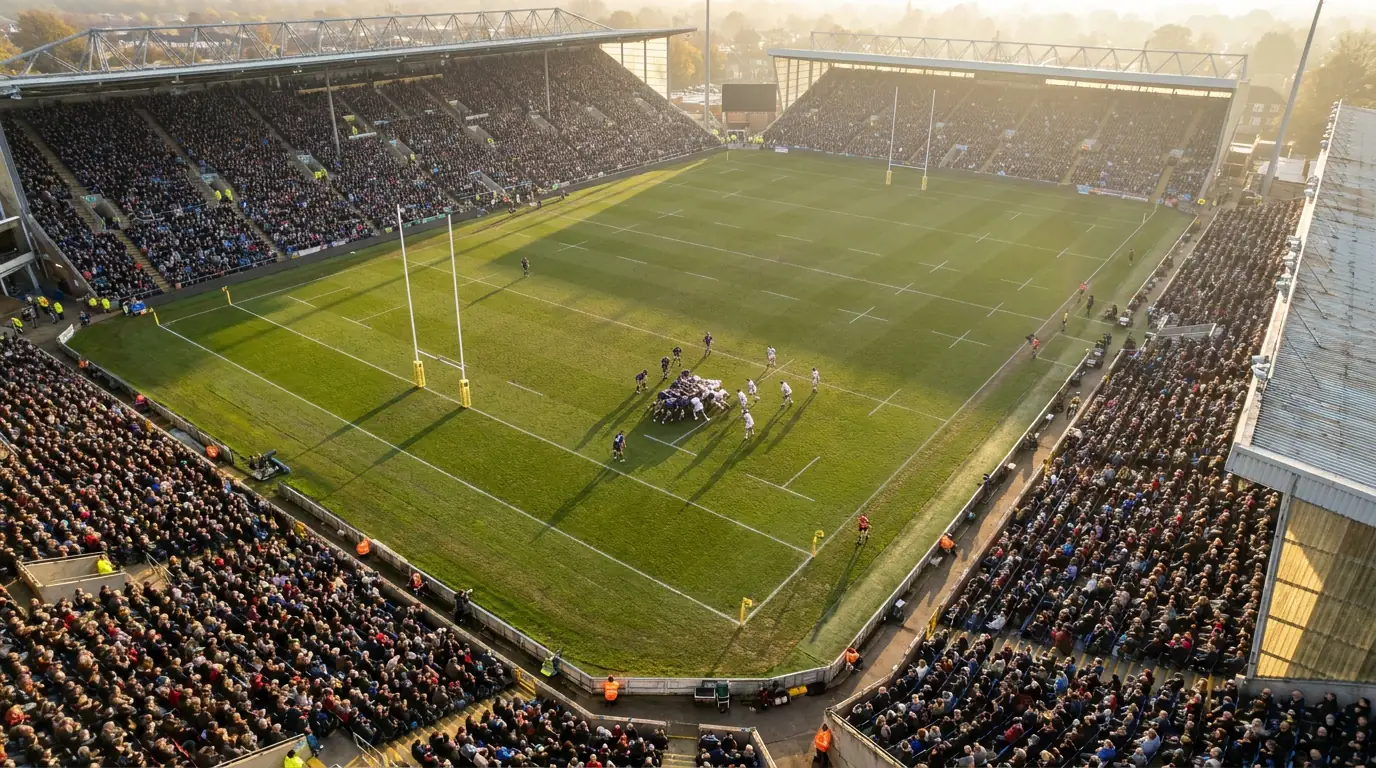
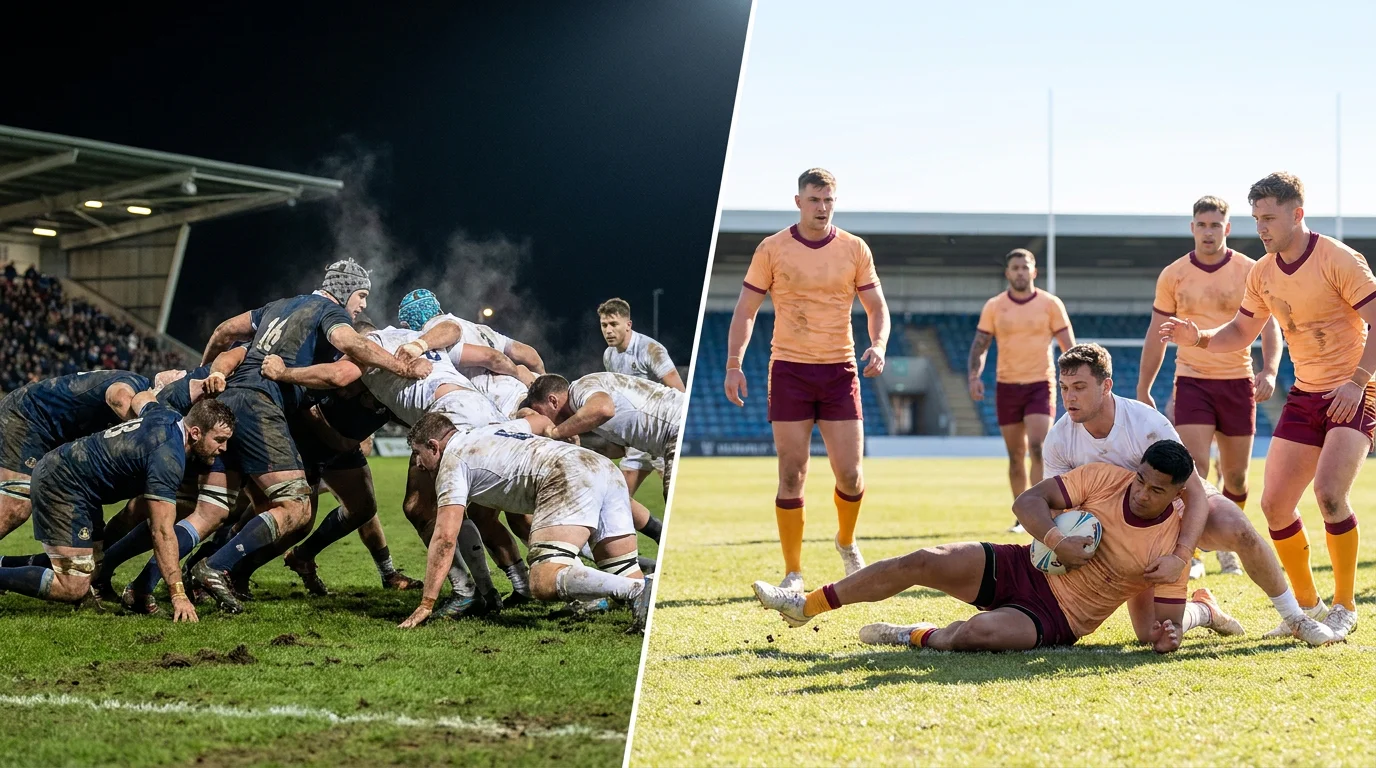
There are two rugbies in Britain, and bookmakers price them like two different sports — because they are. I've watched punters lump a Wigan Warriors handicap into a Saracens accumulator under the heading "rugby" and wonder why the maths felt off. The codes share roots and very little else.
Rugby union — the version you'll see at Twickenham, in the Six Nations and in the Champions Cup — uses 15 players a side, contested rucks, scrums that genuinely matter, and a scoring pace that puts top-flight totals in the 42-50 point band. Rugby league, the working-class invention of 1895 that broke away over broken-time payments, runs 13 players, six-tackle sets, faster phases and a more relentless point flow.
The money tells you which code dominates the British professional landscape. England's Premiership — now branded the Gallagher Prem — generated about £320 million in revenue last season, the highest of any pro union league worldwide. The Sky Sports broadcast deal alone is worth £180 million a year. The RFU itself posted £228 million in revenue for 2024/25, up 30% on the £175 million of the prior year and the second-highest figure in the union's history. Super League, by contrast, runs at a fraction of that turnover, though it still drives serious matchday volume across the north of England and feeds a steady line of in-play markets every Friday night.
| Characteristic | Rugby Union | Rugby League |
|---|---|---|
| Players on the field | 15 a side | 13 a side |
| Scoring rhythm | Slower, set-piece heavy | Faster, possession-driven |
| Typical total points line | 42-50 in top-flight matches | 38-44 in Super League |
| Typical favourite handicap | From minus 7 to minus 14 | From minus 4 to minus 10 |
| Try scorer profile | 66% scored by backs in Six Nations 2023 | More even, with try-line specialists |
| British flagship competitions | Six Nations, Premiership, Champions Cup, URC | Super League, Challenge Cup |
For UK punters, the practical consequence is that try-scorer odds, handicap lines and totals behave differently in each code. A 13-point handicap in union signals a confident favourite; the same line in league sits closer to a mid-table chalk. Mixing legs across codes in an accumulator is fine, but pricing them in your head as "rugby" will cost you over time. The deeper mechanical breakdown — code-specific handicap shifts, try-scorer probability differences, cross-code accumulator pitfalls — lives in our piece on Union and League betting differences.
Core Rugby Betting Markets
My first rugby bet — back when I was still pricing horses and had never built a try-scorer model — was a 6/4 anytime try scorer on a winger I'd watched score twice the previous weekend. He didn't touch the ball inside the opposition 22. That was my introduction to the gap between thinking you've found a price and understanding how the market builds it.
Rugby betting markets fall into three loose families: match results, handicaps and totals; player props; and tournament-long specials. Each family has its own pricing logic and its own typical overround.
Overround — the bookmaker's margin baked into a market, expressed as the percentage by which all implied probabilities add to more than 100%. A 1X2 market totalling 105% has 5% overround.
Match Result, Double Chance, Draw No Bet
The match-result family covers home win, away win and draw — and on a typical UK rugby card you'll also see double chance and draw no bet. Draws are vanishingly rare in union (one in roughly forty Premiership fixtures), so the draw price often sits at 25/1 or longer, which makes draw-no-bet a useful instrument when you fancy a fragile favourite without wanting to pay for the draw risk.
Handicaps and Totals
Handicap and totals are where the real money moves. Bookmakers post a points line — say France minus 12.5 against Italy — and you take a view on whether the favourite covers. Half-point hooks are standard in union, full-point lines occasionally appear in league. Totals run from the low 30s for a wet Premiership grind to the mid-60s for an open Champions Cup tie. The Champions Cup 2025-26 averaged 8.24 tries per match across 63 fixtures — that average is the structural reason totals in that competition price so much higher than URC ties.
| Market | Decimal | Fractional | Implied % |
|---|---|---|---|
| France minus 12.5 | 1.90 | 9/10 | 52.6% |
| Italy plus 12.5 | 1.95 | 19/20 | 51.3% |
| Match total over 45.5 | 1.85 | 17/20 | 54.1% |
| Match total under 45.5 | 1.95 | 19/20 | 51.3% |
Add the implied probabilities on either market and you'll see the book runs at about 104-105%. That four to five percent is the overround. Knowing how to strip it back to a fair price is the single most useful skill an aspiring rugby bettor can build, and it's the bedrock of every value calculation later in this article.
Player Props and Try Scorer Markets
Player props are the wild west of rugby pricing. First try scorer, anytime try scorer, last try scorer and player-points markets sit here. The structural quirk I lean on most: in Six Nations 2023, 66% of tries were scored by backs and 49% of tries were scored in the first half. That single piece of data reshapes how you read a first-try-scorer board where a forward sits priced shorter than a starting wing — sometimes the forward genuinely is the value, but more often the price is wrong.
The market-depth gap between operators is enormous. Top UK books offer 10 to 15 distinct rugby markets per fixture as a baseline and push past 150 in-game markets on top fixtures; thinner operators serve three to five. If you live in totals and player props, that depth gap is the difference between finding edges and grinding low-margin handicaps.
Tournament Specials
Outright markets — Wooden Spoon, Top Try Scorer, Championship plus Grand Slam parlays, season-long top points scorer — sit further out the value curve. Overround on outrights is typically heavier than on match-result markets because the bookmaker prices six or more outcomes, each with its own uncertainty. The deeper breakdown — including draw-no-bet edge cases, race-to markets and bet-builder mechanics — lives in our piece on detailed breakdown of rugby betting markets.
The British Rugby Betting Calendar
If football lives on the weekly cadence, rugby lives on a calendar of tentpoles. Knowing when liquidity spikes is half the job of timing your bets.
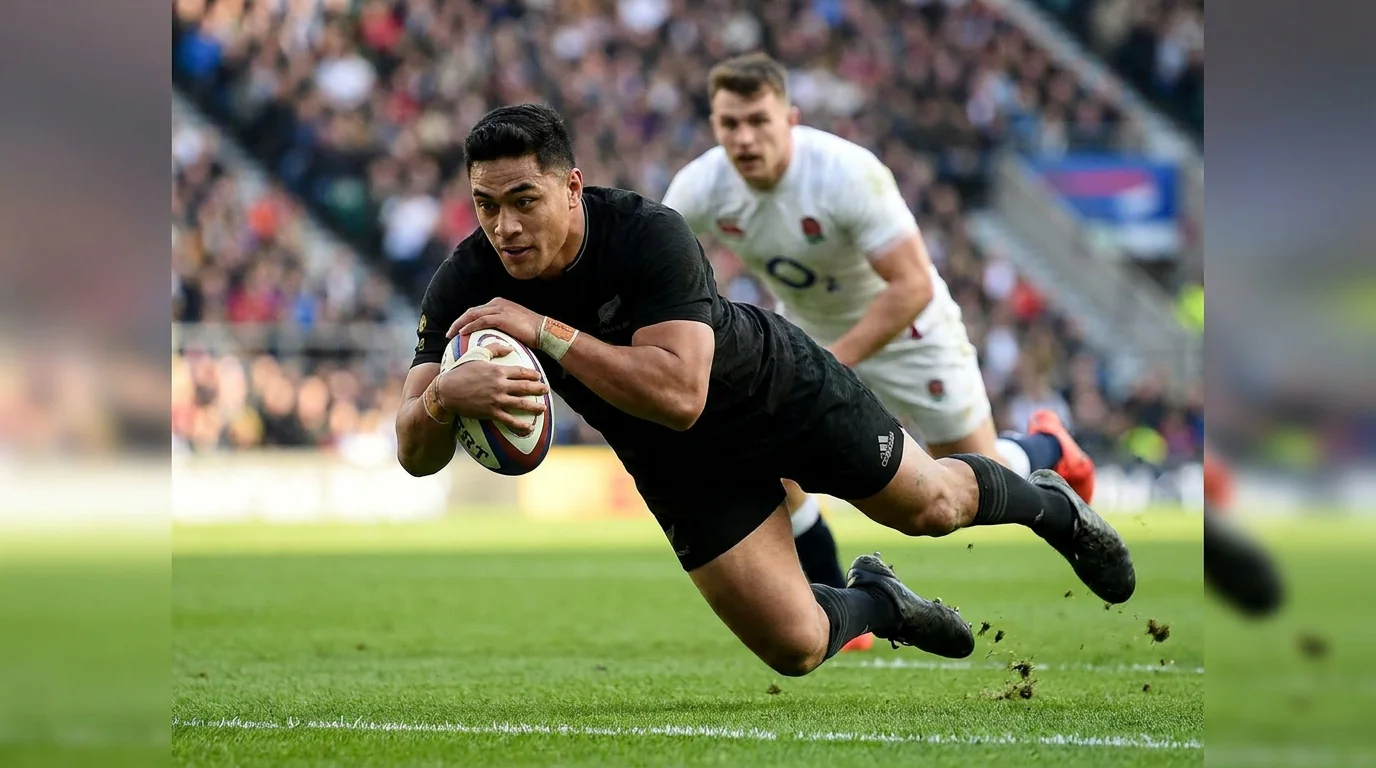
The British rugby year starts in earnest with the Six Nations in February and March. Six Nations 2025 drew an aggregate attendance of 1,050,465 across the fifteen matches — an average of 70,031 per game — and the broadcasting numbers were just as serious: ITV1's coverage of Ireland versus England in 2025 peaked at 5.2 million viewers on all devices, the highest overnight ITV1 peak of the year up to that point. When that many British eyeballs land on a single rugby match, bookmaker liquidity follows, and the market becomes both deeper and tighter.
The tournament economics matter too. Six Nations 2025 paid the champions, France, £6.5 million in prize money, with England banking £3.5 million as runners-up. The total prize pool has risen about 12.5% since 2020, and the tournament generated around $135 million in media revenue across the four broadcast markets. Late-tournament motivation — does a fourth-placed team really push for second when the gap is £2 million? — is the kind of question that occasionally sneaks past the public price and creates a value spot on the final weekend.
From the Six Nations rhythm, the British rugby calendar rolls into Premiership and URC business through spring, then into Champions Cup knockouts in May, and finally into Rugby World Cup mode whenever the four-year cycle lands.
The Premiership and URC fill the gaps between international windows. URC 2025-26 delivered 1.62 million in aggregate attendance across 148 matches at an average of 10,948 per game, with 988 tries logged across the season — useful baselines when sizing totals on URC handicaps. The Champions Cup followed with 1.06 million across 63 matches at 16,821 per fixture, with the headline tries-per-match rate of 8.24 that feeds directly into the high totals lines you'll see on that competition.
For the Six Nations specifically — Wooden Spoon pricing, Triple Crown, Grand Slam parlays, top try scorer pools, late-tournament value spots — the headline overview lives in our piece on Six Nations betting markets and Grand Slam pricing. That's where the tournament-specific calendar, prize-fund mechanics and ante-post timing get the proper treatment.
Looking further ahead, Rugby World Cup 2027 in Australia is the long-form bet. The tournament expands to 24 teams, adds a Round of 16 for the first time, and that format change ripples right through the outright market. Current pricing has South Africa as 9/4 favourites — about a 28.6% implied chance — with New Zealand 7/2, France 9/2, England 5/1, Ireland 6/1 and hosts Australia 9/1. Ante-post bets opened months ago. The structural detail of how the new format reshapes pool-stage and knockout pricing is laid out in our piece on Rugby World Cup 2027 outright odds.
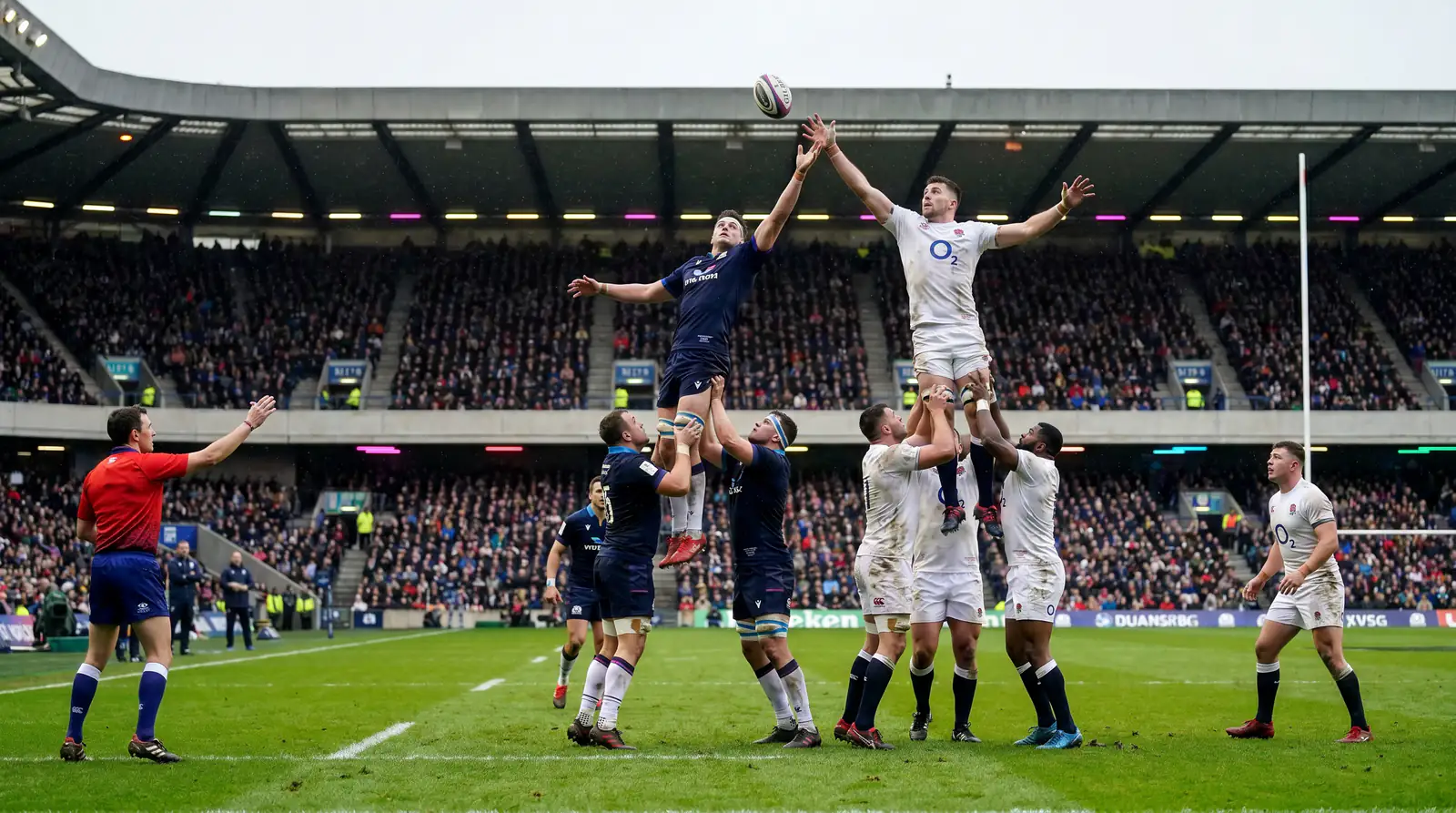
How UK Bookmakers Price Rugby
The single most expensive habit in rugby betting isn't picking the wrong team — it's accepting the first price you see. Bookmaker pricing varies meaningfully on rugby, and the gap shows up in the payout percentage.
UK rugby books advertise payout ranges between 93% and 98.5%. That's a 5.5-percentage-point spread, and on £1,000 staked across a season at average odds it's the difference between £55 in shaved margin and a fraction of that. Charlon Muscat, who covers casino and sports betting for FIRST.com, captures the structural reality: "The best rugby betting sites in the UK cater to both union and league fans, spanning competitions like the Rugby World Cup, Six Nations, Gallagher Premiership, Super League, and Challenge Cup. You can stream matches, claim bonuses, and explore markets such as handicaps, first try scorer, winning margin, and total points." The catch is that depth and price quality don't always travel together — some operators offer 150-plus in-play markets on a Six Nations Saturday but a thinner payout on the core handicap; others price the handicap razor-tight but list only ten markets total.
| Operator type | Match handicap payout | Totals payout | Markets per fixture |
|---|---|---|---|
| Sharp pricing | 97-98.5% | 96-98% | 10-15 pre-match |
| Depth-focused | 94-96% | 93-95% | 40-150 in-play |
| Mass-market | 93-95% | 92-94% | 5-10 pre-match |
Working out a payout percentage from the market
Step 1: Take a match line — Home 1.85, Draw 21.0, Away 2.10.
Step 2: Convert each to implied probability by dividing 1 by the decimal odds — 54.05%, 4.76%, 47.62%.
Step 3: Sum the probabilities — 106.43%.
Step 4: Overround is 6.43%; payout is 100 divided by 106.43, or 93.96%.
Step 5: A sharper book might price the same match at 1.92, 23.0, 2.18 — yielding 52.08% plus 4.35% plus 45.87% equals 102.30%, a payout of 97.75%.
Step 6: On £1,000 staked at average odds across the year, that's about £38 a year in shaved margin between the two books.
A useful way to think about it: market depth and price quality are different products. If you specialise in player props and in-play, you need depth. If you stake big on outrights and core handicaps, you need price. Most punters need both, and finding both in one place is rare.
The other lever is line shopping. Six Nations match handicaps move materially in the hours before kick-off — squad announcements, weather updates, sharp money on the Friday morning all push the line. The same market priced at minus 10.5 on Monday can sit at minus 11.5 by Saturday lunchtime, and a single point of movement on a fly-half handicap is real value to the punter who got in first. For the side-by-side breakdown of how UK-licensed rugby books actually compare on payout, market depth and in-play coverage — without picking a winner — our piece on UK rugby bookmaker payout and market depth walks through the framework.

Regulation, Licensing and Safer Gambling
Every UK-licensed rugby bookmaker operates inside the same regulatory perimeter, and ignoring it costs you money in subtler ways than people expect. Affordability checks pause withdrawals. Self-exclusion via GamStop locks you out across the licensed market. Sponsorship bans reshape the visible advertising landscape. None of it kills the rugby betting market, but all of it shapes how the product reaches you.
The UK Gambling Commission licenses every operator that takes a rugby bet from a UK customer. The same regulator publishes the participation and operator data used throughout this article and runs the Gambling Survey for Great Britain — the participation tracker that replaced earlier methodologies.
The audience is enormous. Average monthly active online gambling accounts in the UK hit 13.5 million in Q1 2025. Roughly 22.5 million people in Britain bet at least monthly across lottery, bookmaker, casino, bingo or online channels. Rugby bettors are a slice of that pool, but the regulatory machinery is built for the whole — which is why a Saturday afternoon flutter on a Premiership handicap meets the same affordability framework as a high-roller casino session.
"One of the biggest issues raised with me as Gambling Minister is advertising. I have tasked the industry with doing more to work together to ensure that gambling advertising and sponsorship is appropriate, responsible, and does not exacerbate harm." — Baroness Twycross, Minister for Gambling, speaking at the Betting and Gaming Council AGM in 2025.
That ministerial framing translated into concrete commitments. Premier League clubs agreed back in 2023 to withdraw front-of-shirt gambling sponsorship from the end of the 2025/26 season — the first sports league in the UK to do so voluntarily. The ban is football-specific in letter, but it sits inside a cross-sport BGC code that pulls rugby in. Sleeves and stadia remain in scope for gambling brands; matchday shirts are the headline change. The detailed sponsorship picture for rugby specifically sits later in this article.
Safer-gambling tooling is the other half of the regulatory product. During Safer Gambling Week 2025, the number of deposit limits set across the industry rose 41% to 281,000 in a single week, with safer-gambling messaging hitting 10.95 million impressions — a 75% year-on-year jump. As a rugby bettor, you'll meet those tools whether you want to or not: deposit caps, time-outs, reality checks, the GamStop register. Treat them as part of the product, not as an obstacle.
For the punter, two takeaways. First, only bet with UKGC-licensed operators — unregulated sites that advertise heavy rugby promos sit outside the consumer protection framework and outside the self-exclusion register. Second, set tools before you need them, not after. A £100 monthly deposit cap costs nothing to install when you're in profit and is invaluable when you're not.

Value Betting Fundamentals for Rugby
Value isn't a feeling, and the times I've talked myself into a "feels like a value bet" are the times I've burnt staking budget. Value in rugby is arithmetic: your estimated probability of an outcome, minus the bookmaker's implied probability, with the difference big enough to clear the overround.
The cleanest place to learn the discipline is on Six Nations totals. The typical total points line in a Six Nations match sits around 42.5 or 45.5 — bookmakers cluster there because the historical scoring distribution centres on roughly that range. If your own model — even an informal one built from recent form, weather and kicker fitness — produces an estimate of 49, you have a directional view. The question is whether that view is strong enough to bet.
A simple value calculation for over 45.5 total points
Step 1: Bookmaker price for over 45.5 is 1.91 in decimal.
Step 2: Implied probability is 1 divided by 1.91, which gives 52.4%.
Step 3: Your estimated probability of the over is 58%, built from recent form and conditions.
Step 4: Edge is 58% minus 52.4%, or 5.6 percentage points.
Step 5: Expected value per £100 stake is (0.58 multiplied by £91) minus (0.42 multiplied by £100), or £52.78 minus £42.00, equals £10.78.
Step 6: Result — positive expected value, sized via fractional Kelly or flat staking depending on confidence in the estimate.
The Grand Slam market gives a similar lesson at the tournament level. Pre-tournament Grand Slam odds for the favourite typically land in the 4.00 to 6.00 range. Historically, a Grand Slam is completed roughly once every three or four tournaments — a strike rate of 25 to 33%. Convert 4.00 to implied probability and you get 25%; 6.00 gives 16.7%. A favourite priced at 5.00 (20% implied) against your own 28% estimate is value; the same favourite at 4.00 might not be, even though the form on the page looks identical.
Value in rugby betting is never about which team you'd back at any price. It's about the gap between your number and the bookmaker's. Six percent edges, applied consistently, compound. One-off "feels right" bets do not.
Two practical disciplines anchor the work. First, build a personal probability number before you look at the bookmaker's price — once you've seen 1.91, your brain finds reasons to believe 53%. Second, track everything. Spreadsheet your bets, your estimated probabilities and your closing line value. Within a hundred bets you'll know whether your numbers actually beat the market, and within three hundred you'll know which market types you genuinely have an edge in.
The Pre-Bet Checklist I Actually Use
Before I place a rugby bet, I run the same five-point check every time. It takes ninety seconds and it filters out the worst impulse plays.
Pre-bet checklist for UK rugby
- Confirm the team news — both starting XVs published, no injury question marks on the kickers.
- Check the closing weather forecast for the venue, especially wind speed at altitude or by the coast.
- Compare the price across at least three UKGC-licensed operators.
- Calculate implied probability and confirm your own estimate beats it by at least 4 percentage points.
- Confirm the stake is inside your bankroll rule for the bet type — flat for match results, Kelly fraction for outrights.
If a bet fails any of those points, I don't place it. There are forty rugby markets a weekend and the discipline of refusing the bad ones is what makes the good ones profitable.
Do
- Strip overround out of the line before comparing to your own model.
- Stake bigger on stronger edges, never bigger because a bet feels obvious.
- Keep records of estimated probability versus closing line value.
- Use deposit limits and time-outs as part of normal practice, not crisis response.
- Read the team sheet before you read the price.
Don't
- Chase losses inside the same matchday.
- Combine code-mixed accumulators without re-running the maths on each leg.
- Treat a free-bet bonus as found money — wagering requirements price it back.
- Bet on rugby through a non-UKGC-licensed operator.
- Take the first price you see on a tentpole fixture.
The checklist itself isn't the point. The habit is. Pre-bet discipline is the lowest-cost edge available to any rugby punter, and it's the one almost everyone underuses.

Sponsorship and the Rugby Ecosystem
The relationship between gambling and professional rugby in the UK is more entangled than the casual viewer realises. In the 2023/24 season, 11 of the 13 Gallagher Premiership clubs carried a gambling sponsor — front of shirt, sleeve or stadium. Walk through a televised Premiership broadcast that year and 65% of matches contained visible gambling branding. The cumulative value of gambling sponsorships in European professional rugby topped £40 million in 2024.
Sponsorship money has been part of rugby's professional era from the start — but the gambling slice of the pie wasn't always dominant. Rugby's commercial culture absorbed betting brands later than football did, then accelerated past it on a per-club basis through the early 2020s.
That commercial reality is what makes the Premier League's voluntary front-of-shirt ban a more interesting development than the headlines suggest. The Premier League's official 2023 statement set the tone: "Premier League clubs have today collectively agreed to withdraw gambling sponsorship from the front of clubs' matchday shirts, becoming the first sports league in the UK to take such a measure voluntarily in order to reduce gambling advertising." That ban takes effect from the end of the 2025/26 season.
Rugby is not directly subject to the football ban, but it does sit inside the cross-sport BGC code that DCMS pushed for during the gambling white paper process. The RFU, the RFL and Premiership Rugby itself are participants in that broader framework. The practical question for rugby clubs — many of which are still loss-making after three consecutive seasons — is whether they'll voluntarily mirror the football timetable, hold the current model, or negotiate a halfway position with their existing sponsors.
For the bettor, the sponsorship shift matters in two ways. First, less visible branding doesn't reduce betting markets or odds quality — those are products of UKGC licensing, not of shirt logos. Second, club financial pressure increases the chance of mid-season ownership changes, which can ripple into ante-post outright pricing if a contender suddenly loses key players to a forced sale or restructuring.
Watch the next two seasons. The combination of front-of-shirt restrictions in football, cross-sport code pressure on rugby, and the persistent loss-making profile of Premiership clubs means the visible commercial face of British rugby is changing. The betting product underneath, regulated separately, is more stable than the brands on the jerseys would suggest.

Common Questions on UK Rugby Betting
Is rugby betting legal in the UK?
Yes — rugby betting is legal and regulated in the UK by the UK Gambling Commission. Every operator that takes a bet from a UK customer must hold a UKGC licence, and the same regulator runs the affordability framework, advertising standards and self-exclusion register that govern the market. Unregulated operators that target UK customers without that licence sit outside consumer protection rules and should be avoided.
What are the most popular rugby betting markets in the UK?
Match result, handicap and total points dominate volume. First and anytime try scorer markets carry the most prop volume. Outright tournament markets — winner, Grand Slam, Wooden Spoon, top try scorer — handle the long-dated money. On top fixtures, in-play markets can run past 150 distinct lines per match, including race-to-points specials, half-time totals, sin-bin specials and bet-builder combinations.
What is the difference between betting on rugby union and rugby league?
Union plays 15 a side with contested rucks and a heavier set-piece game; league plays 13 a side with six-tackle sets and faster phases. Handicap lines are wider in union, totals run higher in big union ties, and try-scorer markets behave differently because of how phases produce scoring opportunities. Mixing legs from both codes in an accumulator is fine — the maths just has to be run separately for each code.
When are the biggest rugby betting events of the year?
The Six Nations in February and March is the biggest annual tentpole for British rugby betting. The Rugby World Cup, run every four years, dwarfs it on a tournament basis — 2027 in Australia is the next one. Between those, the Gallagher Premiership, URC, European Champions Cup, Super League and the Challenge Cup all carry serious matchday liquidity. Domestic finals weekends in May and June produce peak in-play volumes outside the international windows.
How do rugby handicaps work?
A handicap line gives the favourite a virtual deficit — say France minus 12.5 — and the underdog a corresponding virtual lead. Your bet on the favourite wins if they win the actual match by more than the handicap. Bet on the underdog and you win if they win, draw, or lose by less than the handicap. Half-point lines remove the risk of a push, which is why most UK rugby handicaps end in 0.5.
What does the UK gambling sponsorship ban mean for rugby betting?
The Premier League's voluntary ban on front-of-shirt gambling sponsorship takes effect from the end of the 2025/26 season and applies to football. Rugby is not directly subject to it, but the RFU and RFL participate in a broader cross-sport BGC code that addresses gambling advertising and sponsorship across multiple sports. Bill Sweeney, RFU Chief Executive, framed the wider moment in the union's 2024/25 annual report: "This has been a year of progress amid challenges. We've made genuine advances on and off the field, yet we know parts of the game remain under real pressure." Sponsorship is part of that pressure. The betting markets themselves — handicaps, totals, props — are unaffected; UKGC licensing operates independently of shirt-sponsor rules.
How is the payout percentage on UK rugby bookmakers calculated?
Payout percentage equals 100% minus the bookmaker's overround. Convert each price in a market to its implied probability — 1 divided by the decimal odds — sum them, and the amount by which the sum exceeds 100% is the overround. A market with implied probabilities adding to 105% has a payout of about 95.24%. UK rugby markets typically range from 93% to 98.5% depending on operator and market type, with outrights usually lower payout than match-result and handicap markets.
Where the Edge Lives From Here
Nine years and several thousand rugby bets in, the patterns I keep coming back to are unglamorous. The biggest edges sit in player props and totals, not in match-result markets. Payout percentage matters more than welcome bonuses. The Six Nations rewards specialists who read the team sheet before the price. The Rugby World Cup rewards patience.
The 2027 World Cup outright market is the obvious working example of how the long view is priced right now. The Betfair spokesperson Sam Rosbottom put the current state of the board cleanly: "South Africa are 9/4 favourites to win the Rugby World Cup for a third successive time in 2027. The Boks have cemented their position as World No.1 and are likely to collide with 7/2 second-favourites New Zealand in the quarter finals. England's strong autumn form sees them as fourth favourites at 5/1." Whether those prices represent value depends on your own probability estimates, not on which team feels like the right answer.
Rugby betting in the UK isn't a market where you'll beat the bookmaker by knowing more about the game than they do. You'll beat it by being more disciplined about pricing, more patient about timing, and more honest about whether each individual bet has positive expected value.
The framework on this page is the starting point. The cluster articles linked above are where the working details live — Six Nations specifics, World Cup 2027 mechanics, union and league code differences, the deeper market breakdown, and the bookmaker comparison framework. Treat them as the next step, not the last word.