
Rugby Betting Bonuses and Free Bets: Reading the Small Print
 Available in US
The £30 in free bets that is worth £8
The headline numbers on welcome offers are theatre. “£30 in free bets when you stake £10” sounds like a 300 percent return on your first stake. The actual expected value, after wagering requirements, minimum odds, qualifying-bet rules, and expiry dates, is rarely above £8 to £12 in honest terms. Knowing the maths is the difference between reading promotional copy as marketing and reading it as a contract.
Promotional behaviour around major rugby events follows a predictable cycle. The Six Nations is the biggest single window — operators deploy their best offers in the weeks leading up to round one, with the 1,050,465 combined attendance across 15 matches in 2025 showing the scale of public interest the operators are competing for. The offers look generous because the volume justifies the cost. Whether they are good value for any individual bettor depends entirely on the fine print.
Welcome offer anatomy
The standard UK rugby sportsbook welcome offer follows a common template. Sign up, make a qualifying deposit (typically £10), place a qualifying first bet (usually at minimum odds, typically 1.50 or higher), receive free bets credited to your account.

The free bet credit is rarely cash-equivalent. Most operators credit “free bet tokens” that can be staked but cannot be withdrawn directly. If a £10 free bet wins at 2.00 odds, you receive £10 in winnings — the £10 stake itself is not returned. This is the structural difference between cash and free bets: cash wins return stake plus profit; free bet wins return profit only.
The result: a £30 free bet has a notional value of £30 but an actual expected value materially lower. If you stake the free bet on a 2.00 outcome, the expected return is roughly £15 in cash profit (50 percent of £30). Multiply by your expected long-run win rate at fair odds and the practical value sits in the £8 to £12 range for most welcome offers.
Wagering requirements explained
Wagering requirements are the second mechanism that compresses bonus value. A typical sportsbook bonus might require you to wager the bonus amount 1x, 3x, or 5x before any winnings can be withdrawn. For casino bonuses the requirements run much higher — 30x or 40x is common — but for sportsbook offers they are usually lower.
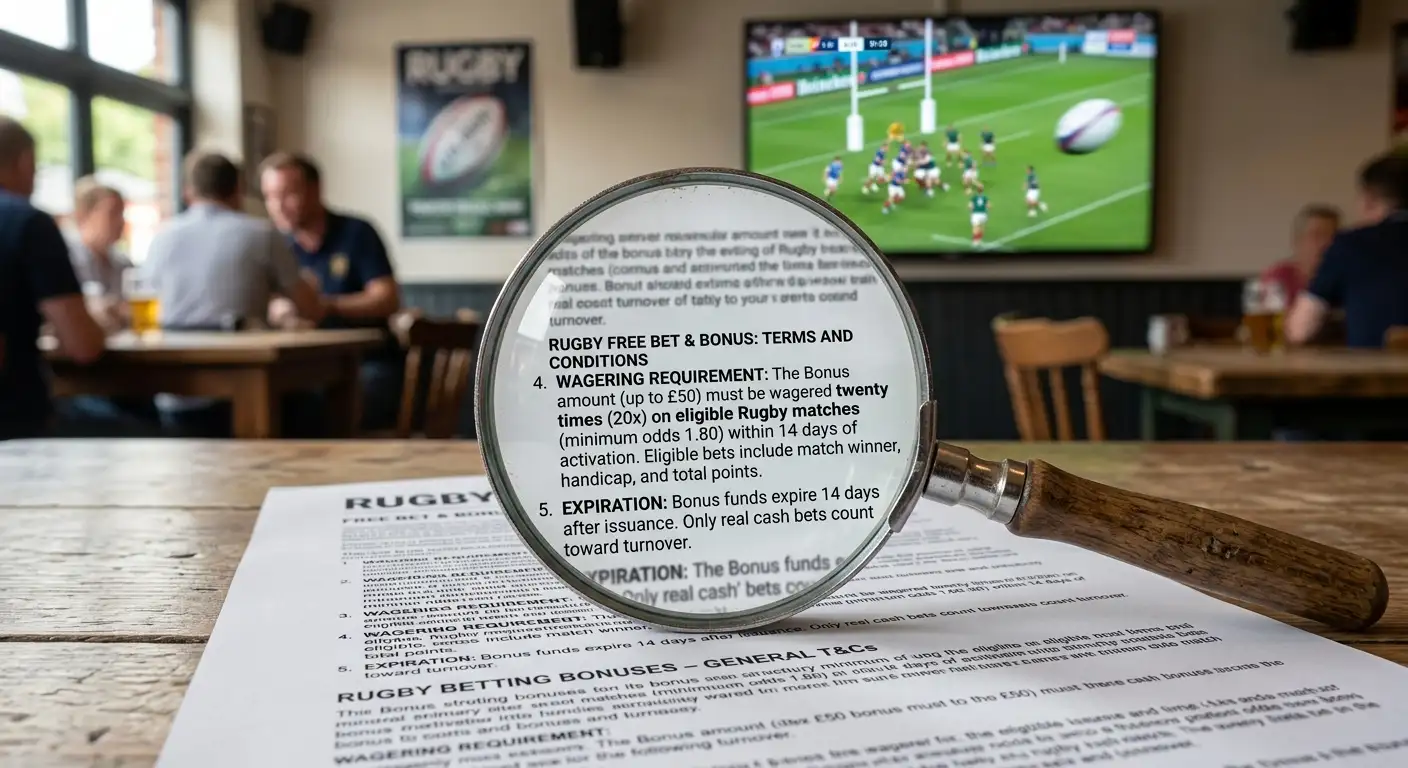
The effect of wagering requirements on expected value is straightforward but easy to miscalculate. A £30 free bet with a 1x wagering requirement at minimum 1.50 odds means you must stake £30 in qualifying bets at 1.50-plus before withdrawal. The 1.50 minimum is the key constraint: every qualifying bet must be at 1.50 or higher decimal odds, which excludes many short-odds favourites that bettors might naturally take.
The cumulative effect of multiple requirements compounds. A £30 free bet with a 1x wagering requirement, 1.50 minimum odds, seven-day expiry, and “no in-play” restriction has a meaningfully lower expected value than a £30 free bet with no wagering requirement and no odds floor. The headline number is the same; the practical value differs by a factor of two or three.
Enhanced odds and price boosts
Enhanced odds offers are a different category. The operator boosts the odds on a specific selection above the standard market price — often expressed as “England to win at 8.00 instead of 4.00”. These are typically capped at a small stake (£1 or £5) and limited to new customers or specific promotional windows.

The honest assessment of enhanced odds. The cap means the cash upside is limited even on a winning bet. The boosted price is genuinely better than market, but the underlying probability has not changed — England’s chance of winning has not doubled because the price has. The expected value of the offer is real but modest, and the operator’s marketing tends to overstate it.
Where enhanced odds are most useful: as a small additional stake on a bet you would have taken anyway. The £1 cap on a boosted price is essentially free expected value if you were going to back the selection at market price. The £1 cap on a price you would not have taken at market is more dubious — you are being incentivised to take a bet you would normally avoid, which is the marketing point.
Six Nations and tournament promos
Tournament-specific promos appear around major rugby events. Six Nations sees the biggest concentration of offers — round-by-round price boosts, top try scorer specials, money-back-as-free-bet offers for first try scorer bets that lose, multi-match accumulator insurance for Saturday cards.

The structure of these offers tends to follow a pattern. Higher headline value on the first weekend, then narrower offers as the tournament progresses. Money-back-as-free-bet offers on specific markets (first try scorer is common) shift expected value modestly upward, but the free-bet conversion means the value increment is smaller than the headline suggests.
Across the 995,964 attendance figures for 2026 and similar volumes in 2025, operator competition during the Six Nations window is genuinely fierce. The offers that look most generous on paper are not always the offers with the best expected value, but tournament promo windows are when the best honest value can be extracted — especially for bettors who would have taken specific bets anyway and can use the offers to enhance them.
Calculating true bonus value
The cleanest method for evaluating any bonus is to calculate its no-vig expected value, then compare against the marketing claim. Start with the nominal bonus amount. Subtract the qualifying-bet cost (the wager required to unlock the bonus). Apply the wagering requirement multiplier. Adjust for the free-bet-not-stake-returned mechanic. Discount by the probability of meeting all conditions within the time limit.

A worked calculation. £30 free bet for £10 qualifying stake, 1x wagering at 1.50 minimum, seven-day expiry. The £10 qualifying stake has an expected cost of roughly £0.50 to £1 (operator margin on the qualifying bet). The £30 free bet has a cash-equivalent value of roughly £15 (50 percent of nominal). The expiry constraint reduces this by perhaps 10 percent for missed deadlines. The honest expected value is around £13 to £14, against a marketing claim of £30 plus the original stake.
The exercise is uncomfortable because it deflates the appeal of welcome offers. It also produces clean comparisons across operators — the offer with the highest no-vig expected value, not the highest headline number, is the one to take.
The bonuses that are actually worth using
The offers worth taking are usually the unrestricted ones — small free-bet credits with no minimum odds, no wagering requirements, and a reasonable expiry window. The offers worth ignoring are usually the headline ones — large nominal values with cascading restrictions that compress the practical value.

Concentrating on one or two operators where you have already done the bonus arithmetic is better than chasing welcome offers across half a dozen sites. The 13.5 million average monthly active online accounts in early 2025 tell you the market is big enough that operators compete on retention promotional value, not just acquisition. The reload and loyalty offers at a single trusted operator often deliver more practical value over time than the headline welcome bonuses at multiple operators chased once each. For the related ground on operator quality more broadly, my piece on payout percentage and promo EV covers how the two interact.
