Six Nations Wooden Spoon Market: Pricing the Last-Place Finish
 Available in US
The market everyone laughs at and few people bet correctly
The Wooden Spoon is the symbolic prize for finishing last in the Six Nations. It does not exist as a physical trophy in the same way the championship does, but the betting market on it is one of the cleaner ante-post propositions in international rugby. Six teams, one finishes last, the prices reflect concentrated probability among two or three candidates.
As a recent industry summary on UK rugby betting captured the breadth of what is on offer: the best rugby sites cover both union and league fans across the Rugby World Cup, Six Nations, Gallagher Premiership, Super League, and Challenge Cup, with markets including handicaps, first try scorer, winning margin, and total points. The Wooden Spoon sits inside that Six Nations cluster as a specific tournament market that runs alongside the championship and Grand Slam outrights.
What is the Wooden Spoon
Last place in the Six Nations championship table after all five rounds. Points are awarded on a 4-2-0 system for win-draw-loss with bonus points for four-try scoring efforts and losses within seven. The team with the fewest points at the end of the tournament wins the Wooden Spoon market.

Tie-breakers vary across operators. Some use head-to-head record, some use points difference, some declare a dead heat and split the payout. For tied finishes the rules really matter — a settled bet under one tie-breaker can be a void bet under another. Read the operator’s Six Nations rules tab before staking, especially on a multi-way tie scenario that becomes more likely late in the tournament.
The tournament structure matters too. With 15 matches played across 1,050,465 attendance in 2025 and 995,964 across 15 matches in 2026, the sample is small. A single upset result reshapes the bottom of the table for the entire tournament. That volatility is both the appeal and the risk of the Wooden Spoon market.
Historical distribution by team
Italy has won the Wooden Spoon more often than any other side over the past two decades. The pre-tournament price reflects this dominance — Italy typically opens between 1.30 and 1.80, depending on the strength of the squad and the autumn-international form.
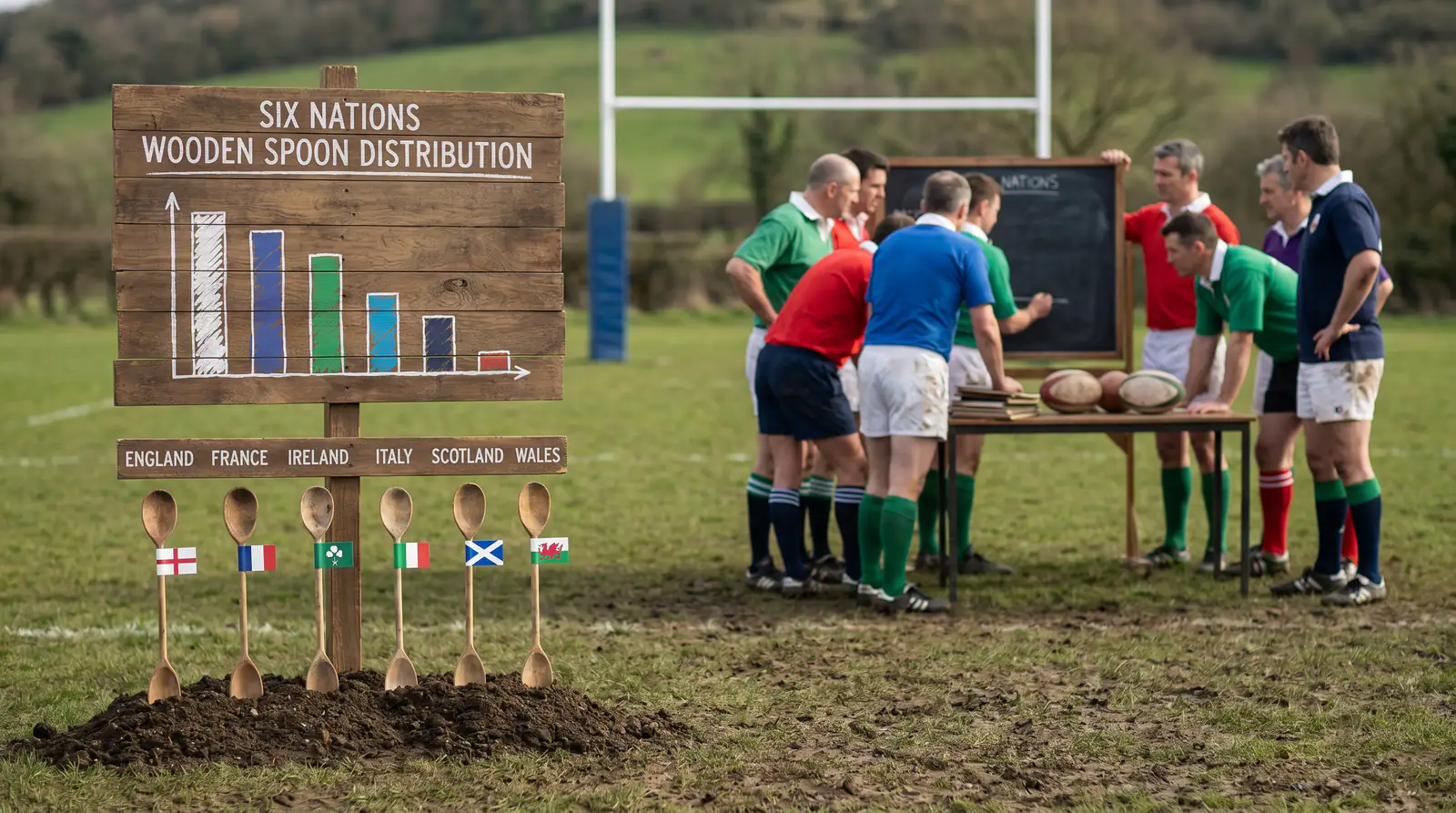
The other five sides share the remaining probability roughly inversely to their championship strength. The second-favourite Wooden Spoon candidate is usually whichever side has the weakest recent form among the non-Italy field — Scotland in some years, Wales in others, France in lean periods. The third-favourite shifts year to year and rarely opens shorter than 6.00.
The reliable lesson: Italy at 1.40 or shorter is not a value bet on its own merits, even if the historical strike rate justifies the price. The downside (1.40 returns 40p profit per £1 staked) is poor relative to the variance of a single bad tournament where Italy beats one of the field. Better-value Wooden Spoon positions tend to sit on the second or third favourite at 4.00 to 7.00, where the price has not yet absorbed the genuine probability.
Pre-tournament pricing patterns
The Wooden Spoon market opens in October or November alongside the championship outright. Pricing at that stage reflects autumn form and squad news. By December the prices have absorbed most autumn-international results. By round one the market is essentially fixed until a result comes in.
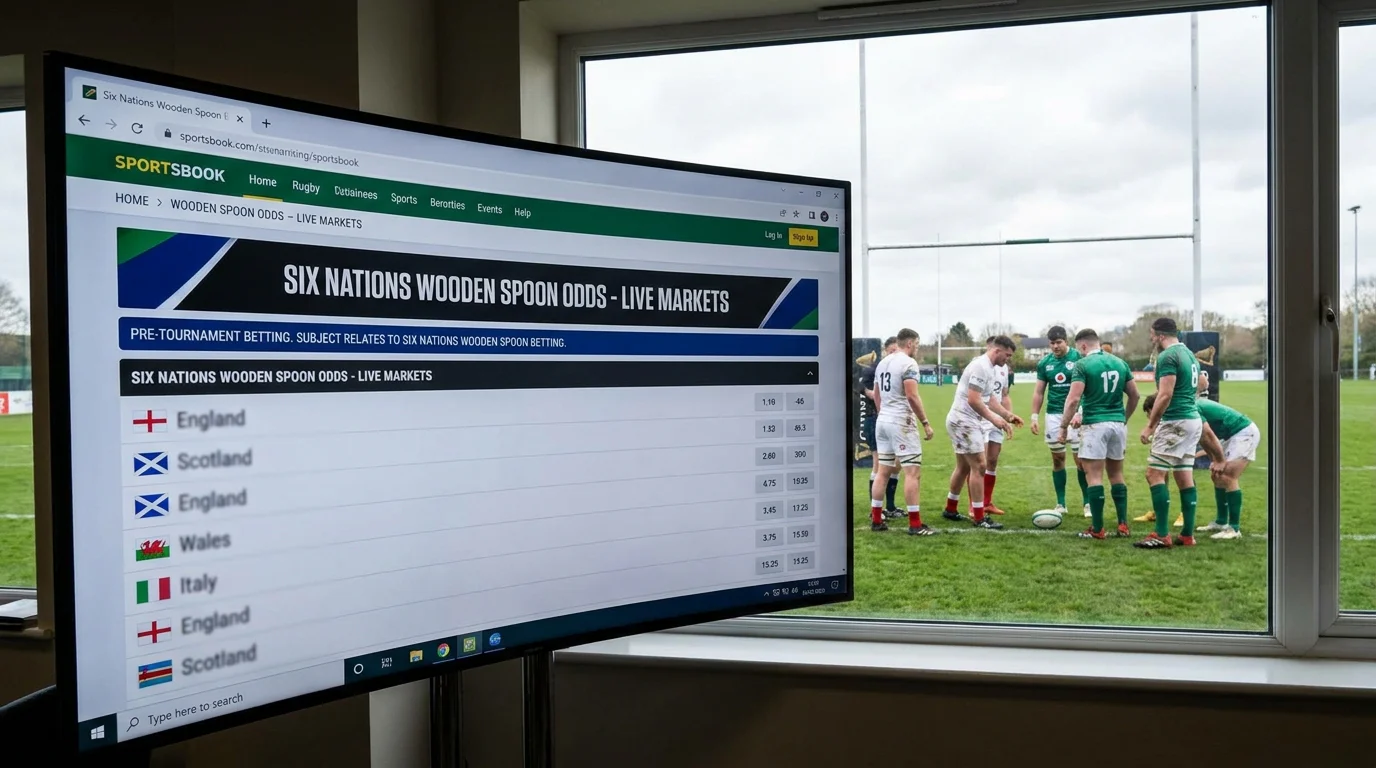
The first round of the tournament has an outsized effect. A favourite Wooden Spoon candidate (typically Italy) winning their opener drifts to 3.00 or longer within hours. The second-favourite, who likely lost in round one, becomes the new market leader at 2.00 or shorter. The asymmetry is brutal: one Italy win can wipe out a position taken at 1.40.
What I do with this. I rarely stake the favourite Wooden Spoon pick at the opening price. I do stake the second or third favourite in the December window, when their price reflects autumn form but the round-one results have not yet materialised. The hedge: if the favourite wins their opener, my second-favourite position becomes the new market leader and I can partially cash out at a profit.
Live Wooden Spoon trading
The Wooden Spoon market stays live throughout the tournament. After each round, prices for surviving last-place candidates either shorten (if they lose their match) or lengthen (if they win). The pricing rhythm is similar to the Grand Slam market but in mirror image.
The volatility is highest around round three, the halfway point. By this stage two or three teams have separated from the field, and the Wooden Spoon market concentrates on the bottom two or three. Sharp money flows in and out as the contenders win or lose specific fixtures, especially when two Wooden Spoon candidates play each other.
The single-round value windows: after a surprise win by a typical Wooden Spoon candidate (drift opportunity), and after the head-to-head fixture between two contenders (the loser tends to be sharply favoured to take the Spoon, often at prices that under-credit the remaining tournament uncertainty). I look for both signals.
Combining with team relegation bets
The Six Nations does not have a formal relegation mechanism — the championship is fixed for the participating sides each year. But the bottom of the table feeds into qualification questions for other competitions, sponsorship discussions, and coaching changes that ante-post bettors can position around.
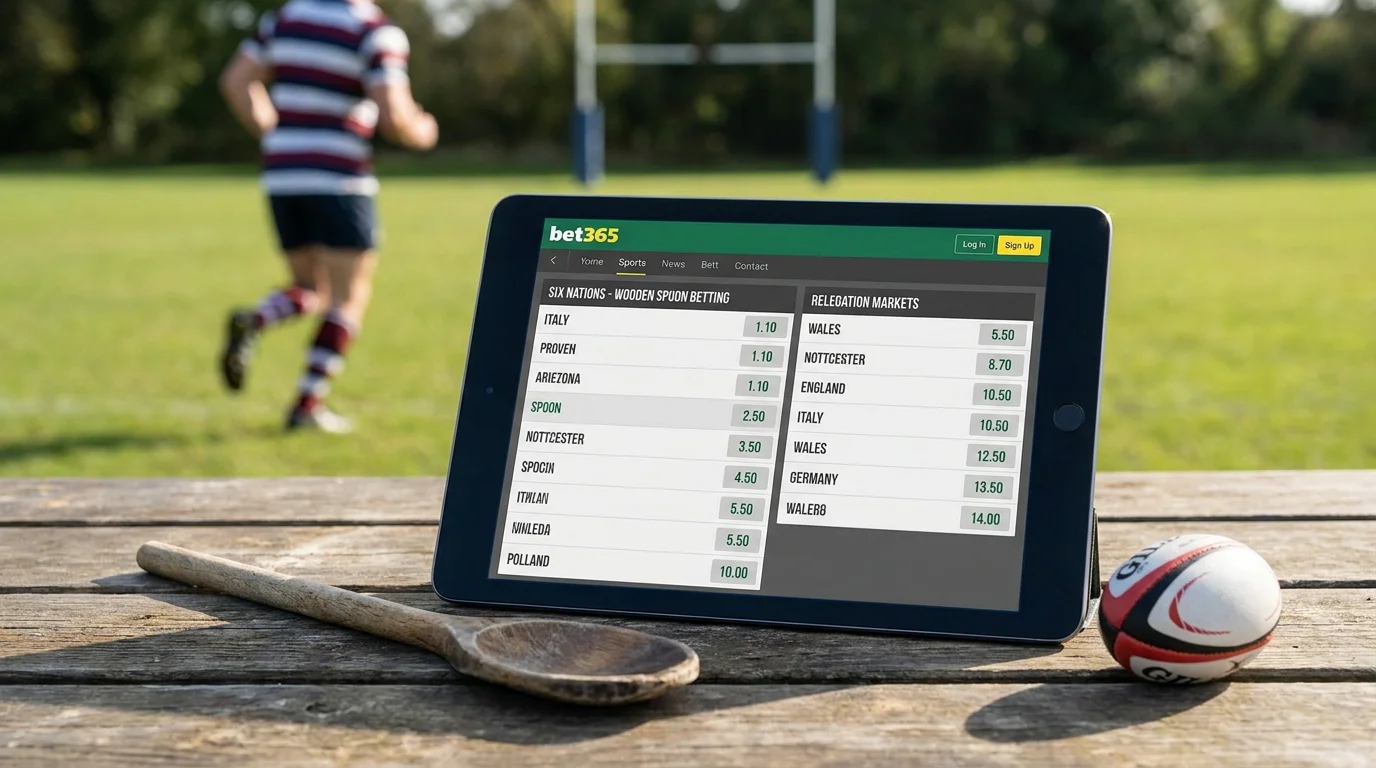
Combination bets I have seen offered. Wooden Spoon plus head coach to leave at end of season (operator-specific specials). Wooden Spoon plus championship for a different side (an “as expected” parlay where both outcomes are correlated with the same underlying tournament shape). Wooden Spoon plus France or England not to win (anti-correlated bets that reward unconventional tournament outcomes).
These combination specials are rarely good value because they are bespoke pricing rather than market-driven pricing. The operator sets the price to attract action, not to reflect the true probability. Avoid unless you have a very specific view that justifies the implied combined probability.
The market’s structural quirk
The Wooden Spoon is the rare ante-post market where the favourite is short-priced for historical reasons rather than current-form reasons. Italy’s dominance of the bottom of the table over many years has produced a structural opening price that does not always reflect the specific tournament’s competitive shape. That gap is where the value sits — usually on the second-favourite during the December window, occasionally on Italy if their squad has materially improved year-over-year. The breadth of Six Nations betting markets, from Grand Slam outrights down to Wooden Spoon specials, gives the patient bettor multiple windows to stake against the same tournament shape. For the headline market that pairs naturally with this one, see my piece on Grand Slam pricing.