First Try Scorer Prediction: Reading the Opening Ten Minutes
 Available in US
The market that lives or dies in the first ten minutes
I have a private rule about first try scorer markets: never bet one until I have watched at least three minutes of the match. The opening play sequence carries more signal than any pre-match form data, and the bookmaker’s pre-match price often misses it entirely. The market is volatile by design — one specific player, one specific moment — and prediction quality depends on reading the kick-off pattern, the early set-piece distribution, and the way the favourite is setting up their attacking shape.
The foundational stat is reliable. In the Six Nations 2023 sample, 66 percent of all tries were scored by three-quarters (backs), and 49 percent of all tries came in the first half. The first try, specifically, is the leading edge of that 49 percent. The kick-off scenario and the opening set pieces dominate the probability distribution for who scores it.
Historical first try patterns
The first try in elite union is most often scored by a back. Across the most recent Six Nations samples — 111 tries scored across 15 matches in 2026, similar volumes in 2025 — the position breakdown of first tries follows the broader pattern: wingers and outside centres lead, full-backs feature regularly, fly-halves and scrum-halves score occasionally on opportunistic plays.
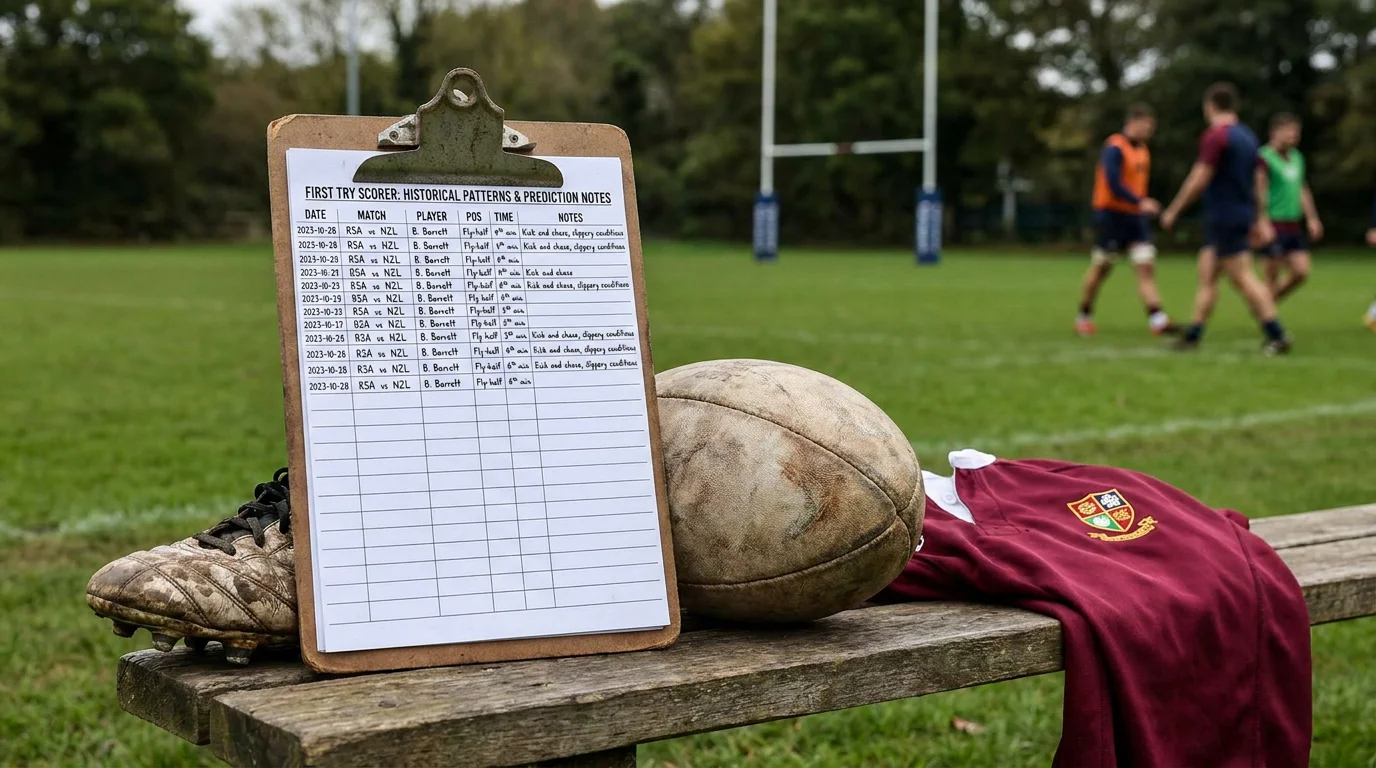
The timing distribution within the first half is also informative. First tries cluster in the 5-to-15 minute window more than uniformly across the half. The reasons are structural. The opening kick-off and reception establish field position. The first scrums and lineouts produce structured attacking platforms. Defensive intensity is high in the opening minutes but drops slightly as players settle into the rhythm. The result is that the 5-to-15 minute window sees the most try-scoring opportunities of the opening half.
Bookmakers know this and price first try scorer markets accordingly — but they cannot model the specific match-by-match script. The opening kick-off territory and the first three set pieces shape the actual first-try distribution in ways the pre-match model cannot anticipate.
Kick-off territory and set-piece pattern
The team kicking off the match deliberately surrenders the first possession. Their kick aims to put the receiving team under pressure deep in their own half. The receiving team’s first decision — kick for territory, run from deep, or set up a structured exit play — affects the next two to three minutes of field position and therefore the first-try probability distribution.
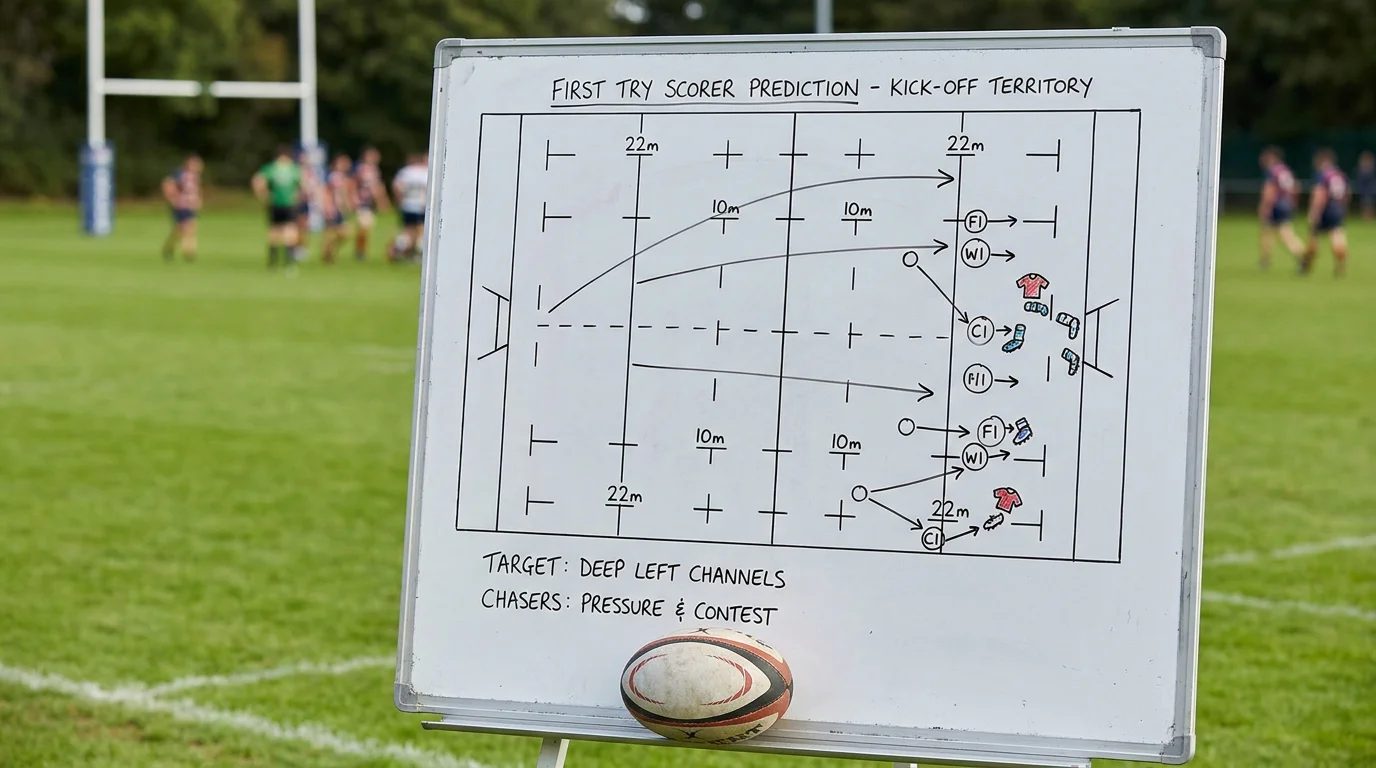
What I watch for in the opening play. If the receiving team kicks long and the kicking team retains possession in the opposition 22, the kicking team’s wingers and outside backs are the favourites for the first try. If the receiving team runs from deep and creates a turnover, the receiving team’s back row or scrum-half become more likely. If the opening play produces a scrum or lineout in the opposition half, the team in possession at that set piece has a clear attacking platform.
The set-piece distribution in the first ten minutes is informative. A team that wins their first two lineouts cleanly and feeds their first scrum without disruption is producing the structured platform that backs can score from. A team that struggles at the lineout or loses a scrum penalty in the first ten minutes is unlikely to be the source of the first try, regardless of pre-match form.
Position bias in first tries
The 66 percent share of tries scored by backs in the Six Nations 2023 sample translates approximately to the first-try market — but the position weighting within “backs” matters. Wingers and outside centres are the highest-frequency first-try scorers because they finish moves that have already created the attacking shape. Fly-halves score first tries occasionally on direct breakthroughs or quick-tap penalties. Scrum-halves are rare first-try scorers despite their high involvement in attacking phases.
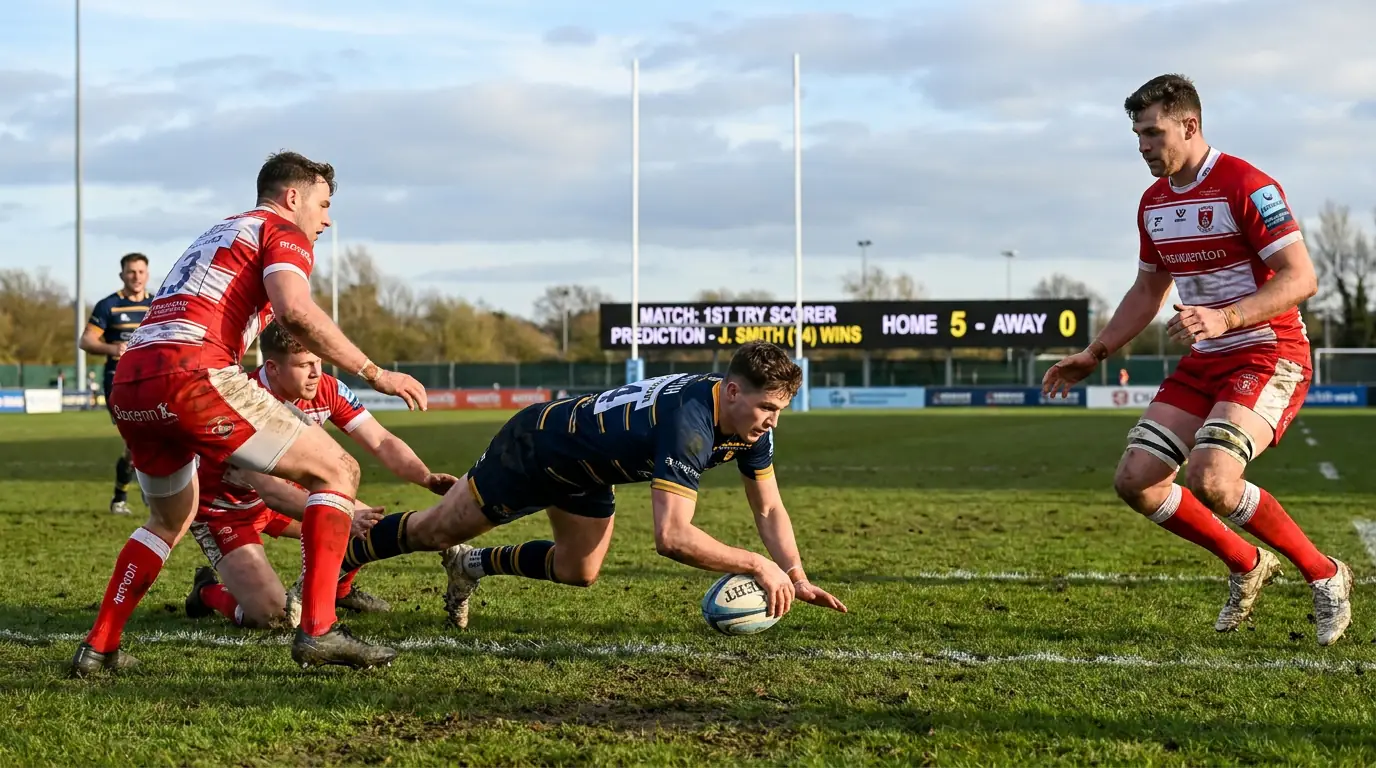
Among forwards, back-row players (especially openside flankers and number 8s) are the highest-frequency first-try scorers. Hookers score occasionally from rolling mauls in the opposition red zone. Locks and props are rare first-try scorers regardless of form.
The position weighting in the bookmaker’s price reflects this approximately. Wingers and outside centres open at 6.00 to 12.00 for first try scorer in marquee fixtures. Fly-halves at 14.00 to 22.00. Back-row forwards at 12.00 to 20.00. The pre-match prices are usually reasonable; the value emerges from reading the early-match scenario and acting before the live market re-prices.
Staking the first try market
First try scorer is the highest-variance prop market in standard rugby betting. Stakes should reflect that variance. My approach: small unit stakes per fixture, never compounded across multiple fixtures, treated as portfolio entries rather than individual conviction bets.
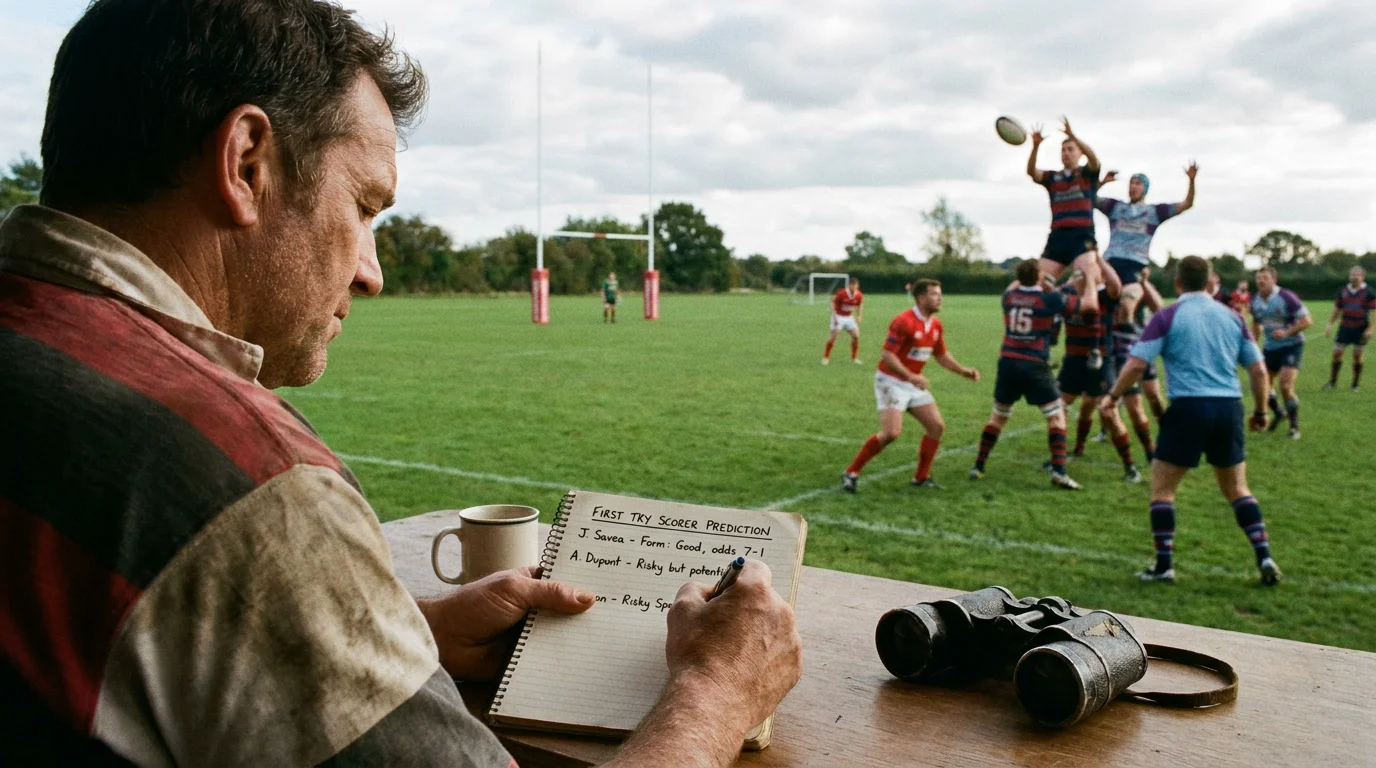
The cleanest staking pattern. Two or three named picks per fixture, total stake at one-third to one-half of my standard single-bet unit, spread across positions to capture both back and forward scenarios. The expected return on any single pick is modest — most picks lose — but the cumulative return across a season’s worth of fixtures aligns with the underlying probability structure if the picks are calibrated correctly.
Live first try scorer markets are sometimes better value than pre-match. After the opening kick-off and first set pieces, the bookmaker’s live price adjusts but does not always fully reflect the new information. A favourite to score the first try whose price has shortened from 8.00 pre-match to 5.50 live (after favourable opening territory) may still be undervalued if the underlying scenario is now clearly favourable. The live window is narrow — usually 30 to 60 seconds — but the edge can be material.
Combining with first-half totals
First try scorer and first-half totals correlate positively. A match where the first try is scored early and the attacking pattern continues is also a match where the first-half totals over is more likely. Bet builders that combine first try scorer with first-half totals over can produce edges when the operator under-prices the correlation.
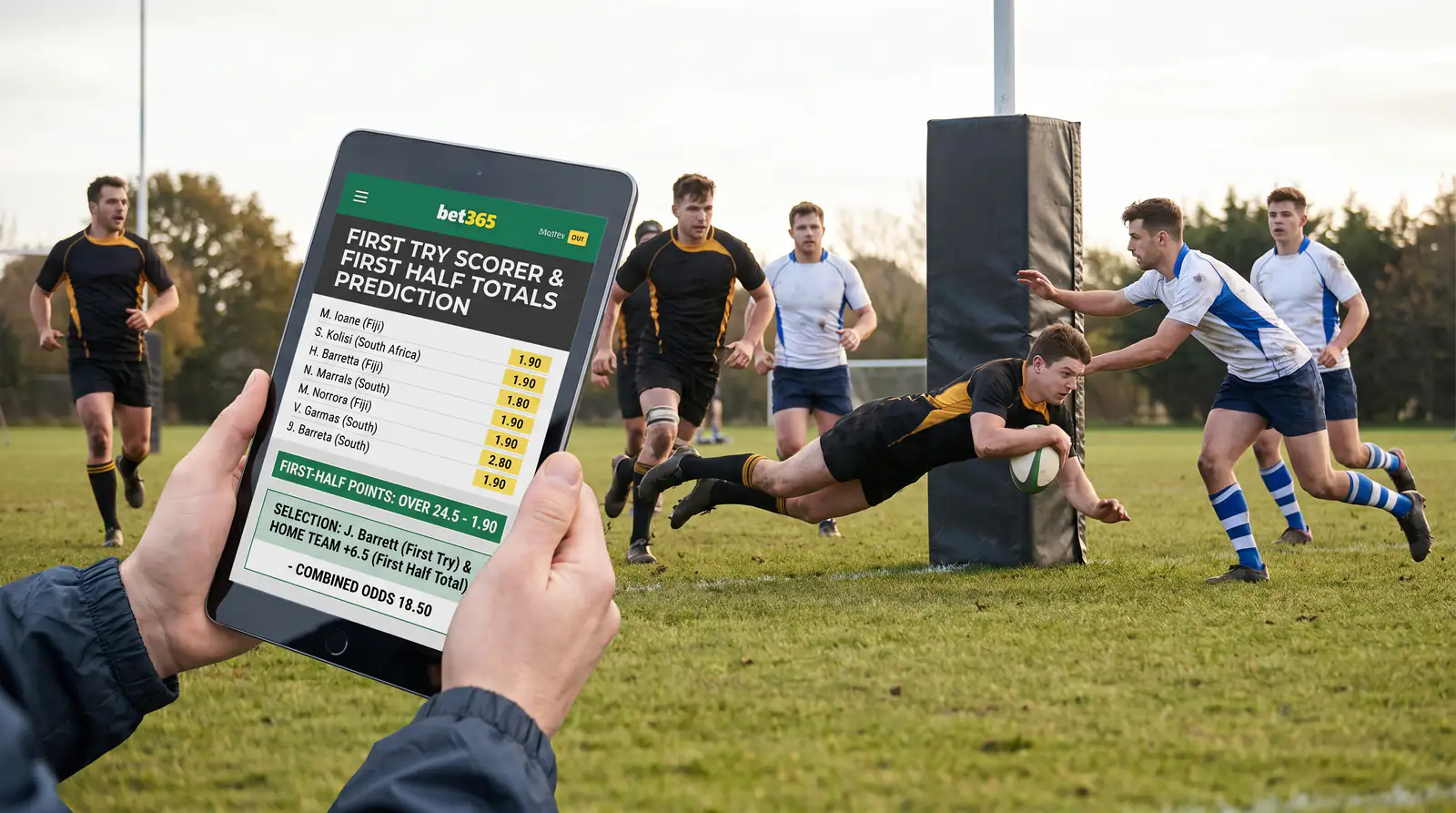
The correlation is strongest when the named first try scorer is in the favourite’s attacking line. A favourite scoring the first try early sets up a high-scoring first half more often than not. Combining a favourite-side first try scorer pick with a first-half totals over creates positive expected value when the bet builder uses simple multiplication.
The reverse case — combining an underdog first try scorer with first-half totals under — is also positively correlated. An underdog scoring the first try, against an expected favourite-led match pattern, often produces a tight first half with limited scoring overall. The same multiplication-pricing edge applies.
Reading the opening signals correctly
The single most important habit in first try scorer prediction is patience. The pre-match price reflects pre-match information. The first three minutes of the match provide significantly better information, and acting in that live window is where the genuine edge sits. The 49 percent first-half try share, the 66 percent backs share, and the 5-to-15 minute clustering of first tries all combine into a probability distribution that pre-match prices approximate but live observation refines. My discipline is to wait, read the opening play, and stake when the live price reflects pre-match information but the match-script is already pointing elsewhere. For the broader try-scorer market context that this specific window sits within, see my piece on try scorer markets overview.