
Rugby Betting Tax in the UK: Who Pays, Who Doesn't, and What HMRC Sees
 Available in US
The most common rugby betting question I get from beginners
The first question new rugby bettors ask me, more often than any other, is whether they owe tax on their winnings. The short answer is no — UK punters do not pay tax on betting winnings. The longer answer involves understanding why that is true and what does get taxed instead. The system works on a different model than most people expect, and once you understand it, the operator-versus-bettor split makes complete sense.
The numbers behind the system give a useful frame. UK betting and gaming receipts collected by HMRC ran at £982 million for the provisional Q1 2025-26 period — that is the April-June window — representing an 11 percent year-on-year increase of £98 million. Cumulatively, betting and gaming receipts for April through August 2025 reached £1,786 million, up £153 million (9 percent) on the same period the previous year. Someone is paying tax. It is not you.
Winnings are tax-free: the rules
UK residents do not pay income tax, capital gains tax, or any other personal tax on betting winnings. The position is set by HMRC’s longstanding policy: gambling winnings are not income for tax purposes. This applies whether you bet £10 on a single match or £10,000 across a season, and whether your winnings are £50 or £50,000.
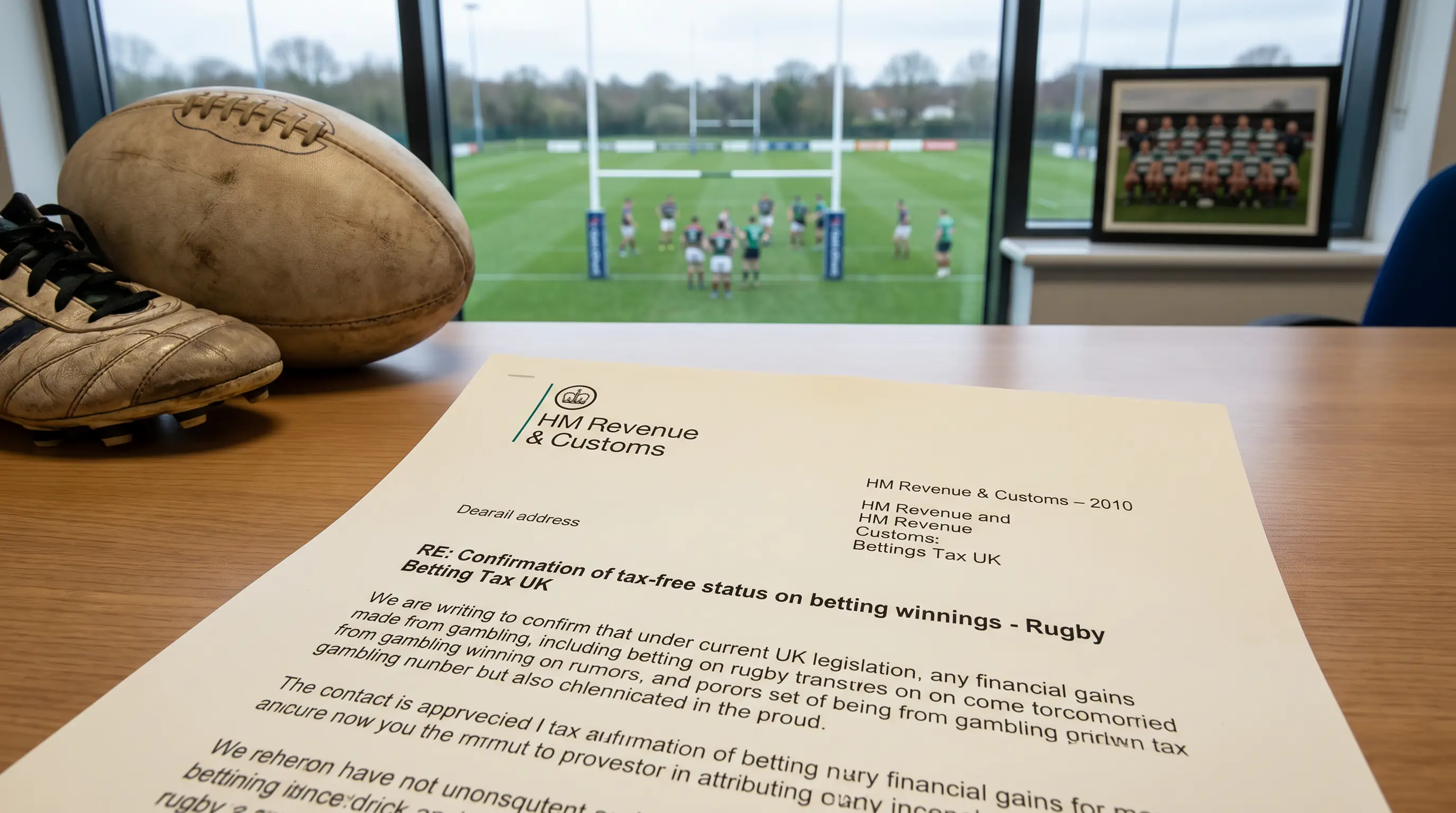
The rule covers fixed-odds betting, spread betting (which is FCA-regulated), pool betting, and casino-style products. It applies to UK-licensed operators and to bets placed with overseas operators (subject to the operator being legally accessible from the UK — using offshore unlicensed operators is a different question with separate concerns).
The reason for the policy is historical. The UK shifted from taxing punters to taxing operators in the 2001 reform, and the system has been refined since. The current model taxes operators on their Gross Gambling Yield (the amount they retain from customers’ bets after winnings are paid out), which means the tax is collected at the operator level and built into the prices and margins that customers see.
Operator-side duty explained
The main tax on betting in the UK is General Betting Duty (GBD), levied on operators’ net stake receipts from betting on horse racing, football, rugby, and other sports. The standard rate is 15 percent on UK customers’ bets, applied to the operator’s GGY (stakes received minus winnings paid out).
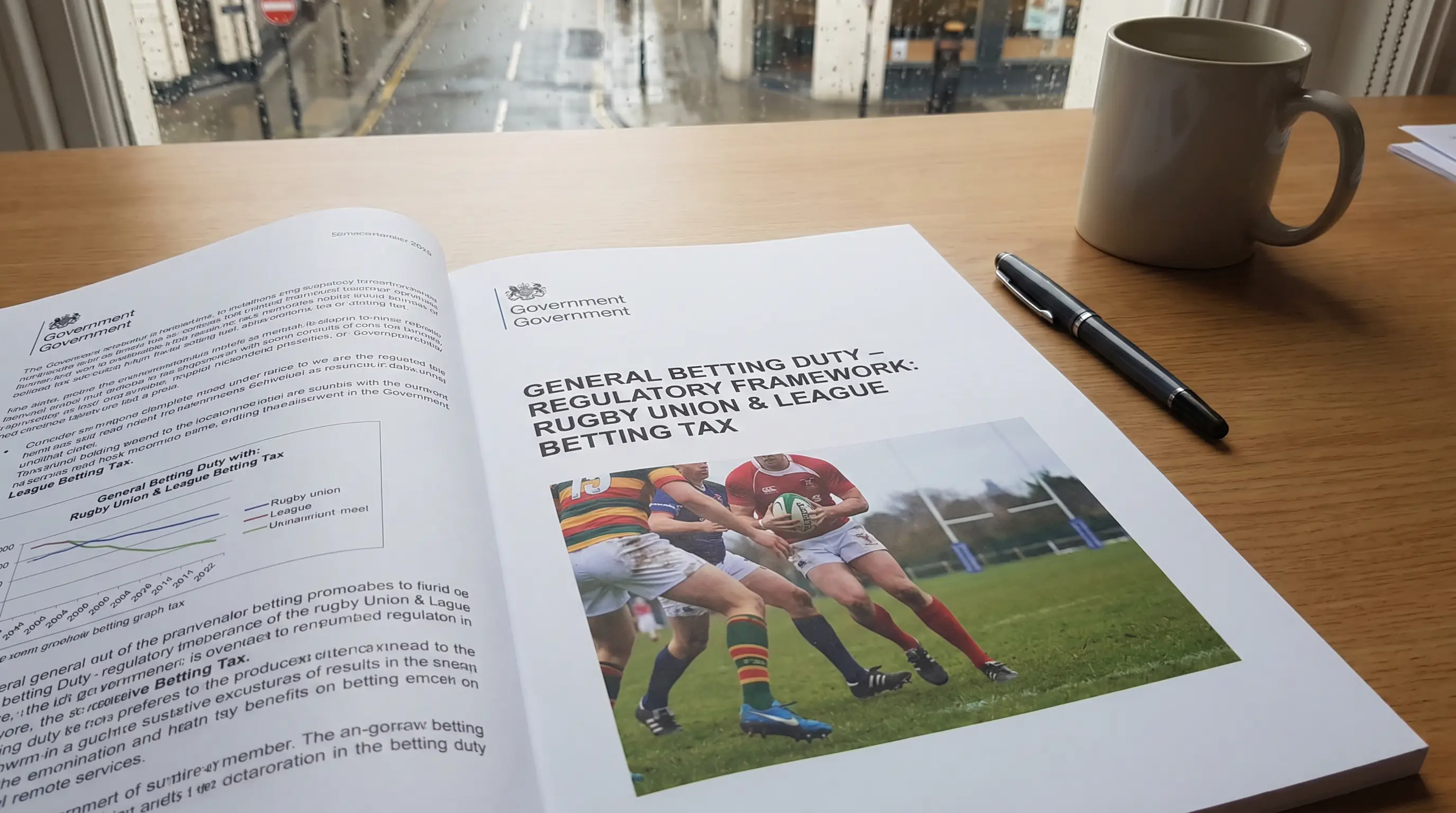
For online betting specifically, the Remote Betting Duty applies at the same 15 percent rate. For spread betting regulated by the FCA, a different duty regime applies — Pool Betting Duty and other specific charges. The exact rates and bases differ, but the principle is consistent: the operator pays the tax, not the customer.
HMRC’s published data tracks these collections in detail. The provisional Q1 2025-26 figure of £982 million in total betting and gaming receipts, up 11 percent on the previous year, reflects continued growth in operator activity (and therefore in tax collected). The cumulative £1,786 million for April-August 2025, up 9 percent, shows the same trend. This is the revenue stream that funds the tax-free position for bettors.
One implication: when operators talk about regulatory or tax pressure compressing their margins, they are referring to this 15 percent GBD plus the statutory levy plus other charges. The cumulative cost on operators feeds back into pricing through the 93 to 98.5 percent payout range across UK rugby bookmakers. Customers do not pay tax directly, but they do pay through the operator’s margin structure.
Professional gambler edge cases
The “professional gambler” question is more nuanced than newcomers expect. HMRC’s position is that betting winnings are not taxable income regardless of how systematic or professional the betting is, provided the activity remains betting (an outcome based on chance) rather than trading (a structured activity that produces income).

The line between “professional gambler” and “trader” is fact-specific. Pure betting activity — placing bets on outcomes where the gambler does not control the outcome — is not taxable even if the gambler is highly successful and treats it as a primary income source. Trading activity — for instance, running a bookmaking business or operating as a market-maker — is taxable as trading income.
HMRC has historically maintained that systematic value betting, even at high stakes and consistent profitability, falls into the betting category rather than the trading category. The reasoning is that the outcome of each bet remains outside the gambler’s control — the gambler is identifying mispriced probabilities, not creating them.
The edge cases that have attracted HMRC attention typically involve activity that resembles trading: market-making, hedging across multiple positions to lock in arbitrage, or running structured pools. For an individual rugby bettor placing bets at standard sportsbooks, the professional-gambler edge case is unlikely to apply regardless of profitability or volume.
Cross-border and offshore operators
UK residents who bet with UK-licensed operators are clearly within the tax-free framework. Bets placed with operators licensed in other jurisdictions but legally accessible to UK customers (typically EU operators with UK approval) also fall within the same framework — the operator pays the duty if they are subject to it, and the customer pays nothing.

Offshore unlicensed operators are a different category. Using such operators is not illegal for UK customers, but the protections of the UK regulatory regime — UKGC oversight, GamStop integration, ADR access, affordability frameworks — do not apply. The tax position for the customer is still tax-free, but the protections are reduced.
For most UK rugby bettors, the distinction matters less for tax reasons (winnings are tax-free either way) than for protection reasons (UK-licensed operators offer more recourse if disputes arise). The breadth of UK-licensed options is substantial — UK betting and gaming receipts of £982 million in a single quarter reflect a large, regulated, competitive market.
Record-keeping is still useful
UK bettors do not need to report betting winnings on self-assessment returns or to keep records for HMRC. The activity is simply outside the tax-reporting framework.

That said, keeping personal records of betting activity is still useful for non-tax reasons. Tracking stakes, results, and net position over time is essential for any bettor with serious value-betting intent. The records reveal whether modelled probabilities are calibrated correctly, whether stake sizing is working, and whether the operator-level payout structure is being captured efficiently.
For bettors approaching affordability check thresholds, records also become useful in a different way. Operators may request evidence of income or financial means; while this is not a tax-reporting requirement, having personal records of betting activity over time helps frame the activity to operators making affordability decisions. The records do not change the tax position — they support engagement with the operator’s compliance framework.
Why the UK system actually works for bettors
The operator-side tax model serves UK bettors better than the alternative would. The £982 million in quarterly betting and gaming receipts that HMRC collects from operators funds public services without imposing reporting or tax-filing burdens on individual bettors. The 9 to 11 percent growth in those receipts year-on-year shows the model scales with the market. Bettors get tax-free winnings, structured consumer protections, and competitive pricing — at the cost of operator margins that include the embedded tax. The trade-off is one of the cleaner features of UK betting infrastructure. For the related question on how operators absorb regulatory costs into pricing, my piece on spread betting taxation differences covers the FCA-regulated parallel.