Rugby Home Advantage Betting: How Bookmakers Price the Crowd
 Available in US
Why home advantage is the only edge that compounds across the season
If I had to pick a single factor that has carried more profit in my rugby betting than any other, it would be a consistent edge on home-advantage mispricing. Bookmakers use a generic home advantage adjustment in their power-rating models — usually 3 to 5 points in union, 2 to 4 points in league — and apply it across the board. The reality is much more granular. Some venues are genuine fortresses. Some are barely 50-50 home records. The gap between the generic adjustment and the venue-specific reality is one of the cleaner repeatable edges in the sport.
The Six Nations is the showcase. Across 1,050,465 attendance in 2025 and 995,964 in 2026 — average crowds north of 65,000 per match — the home effect at Test venues is real and observable. But the size of the effect varies dramatically by venue and by competition, and pricing it correctly is where the value lives.
Quantifying home edge
The bookmaker’s standard home-advantage adjustment in elite union sits at 3 to 5 points on the handicap line. That means a side rated as evenly matched on neutral ground will be a 4-point favourite at home in the operator’s opening price.
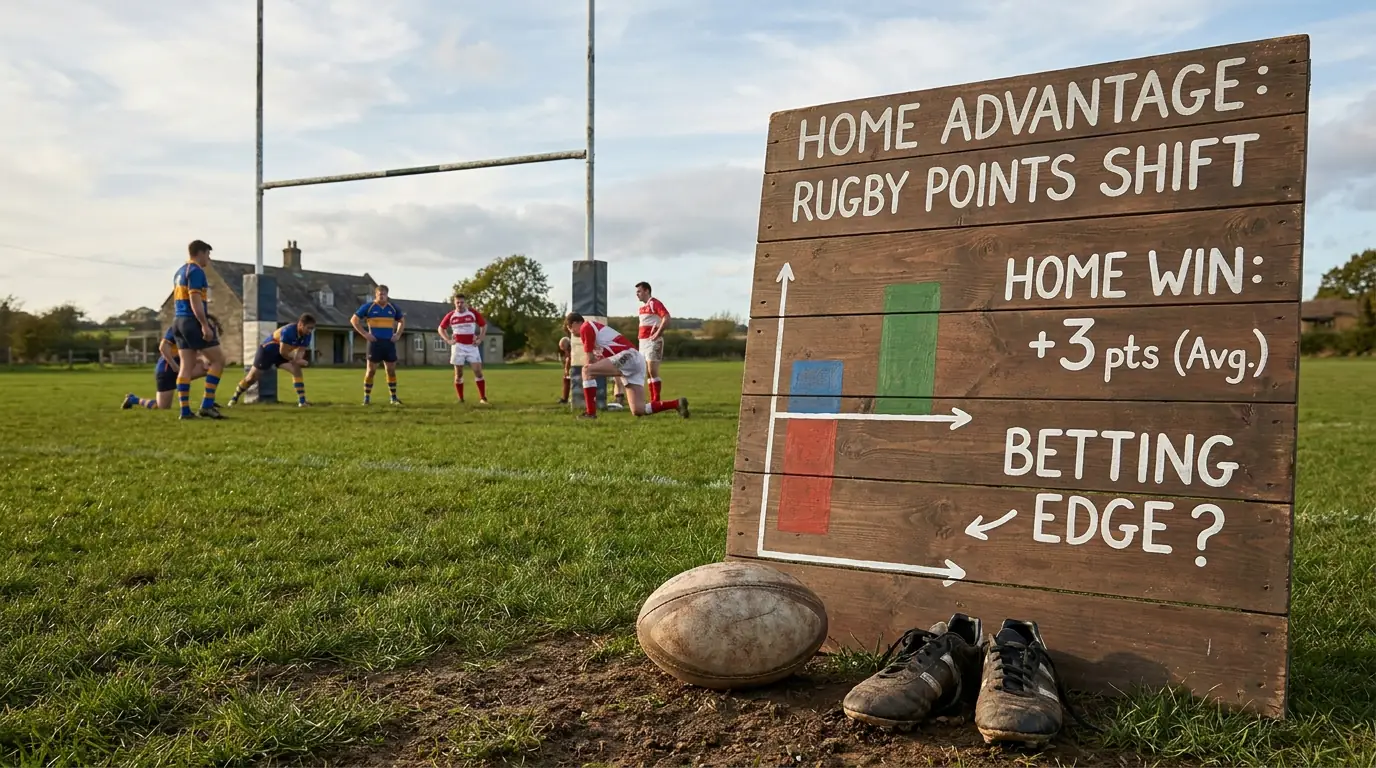
The actual home edge varies by competition and venue. Test rugby at major Six Nations venues shows a home edge in the 5 to 7 point range historically — slightly above the bookmaker’s generic adjustment. Premiership rugby shows a home edge closer to 4 points, in line with the generic. URC home edge varies wildly by venue: some Irish provinces show 7-plus point home edges, some South African franchises show 8-plus points at altitude, and some smaller clubs show only 2 to 3 points despite playing at familiar grounds.
The implication for betting. The generic 4-point adjustment is roughly right on average but wrong on specific venues. Where the actual home edge exceeds the generic, home-favourite handicaps are slightly under-priced and home covers are good value. Where the actual home edge is below the generic, the same logic runs in reverse — away covers are sometimes the better play.
Competition-by-competition home rates
Six Nations Test matches at home venues. The home win rate over recent decades sits around 65 to 70 percent across all home unions plus France and Italy. Home advantage in this competition is meaningful and stable. With 66,398 average attendance per match in 2026, the crowd effect is real and the venues are familiar.
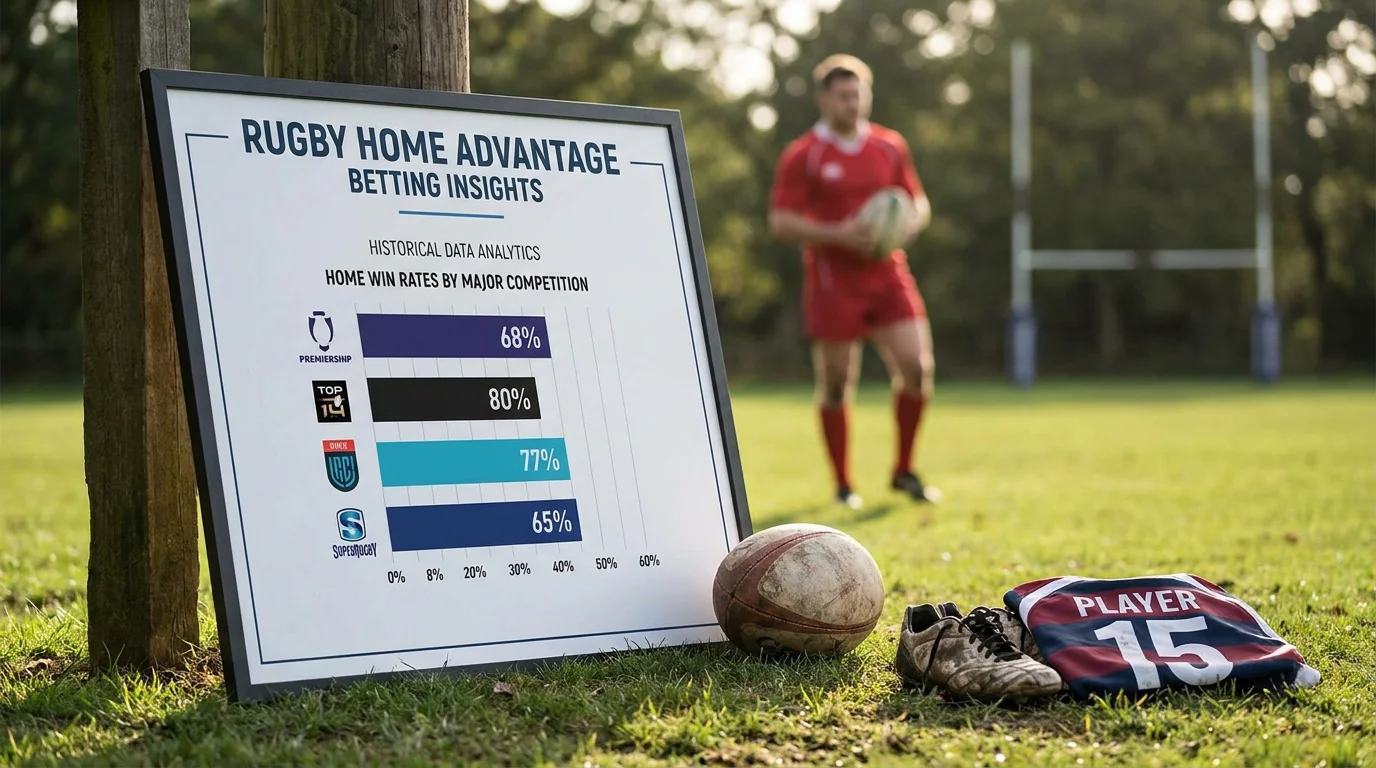
Premiership home rates run roughly 60 percent across the league. The variance by club is moderate — most Premiership venues show a home edge of 3 to 5 points, with one or two clubs whose home edge is structurally larger because of pitch quirks or travel difficulty for visitors. The 85 matches played across the most recent Premiership 2025-26 season give a sample big enough to track this annually.
URC home rates are the messiest because of the cross-border element. South African franchises at home show extreme home edges — partly altitude, partly travel fatigue for visiting European sides. European URC sides at home against South African visitors show similarly large edges in the reverse direction. The 148 matches across the recent URC 2025-26 season produced 1,620,340 attendance, and the home rate varied from 55 percent at neutral venues to 75 percent or higher at the most hostile away trips.
Travel fatigue: URC and Champions Cup
The travel component is most visible in URC fixtures involving South Africa. European sides flying south for a two-week block show a measurable form drop in their first match after returning — jet lag, altitude reversal, and accumulated fatigue all compound. The bookmaker’s handicap line on the first match home from a South African tour is sometimes the cleanest away-cover bet of the season.

The reverse pattern. South African sides visiting Europe in November (cold weather, hostile crowds, time-zone disruption) often look sharp in their first match and fade in their second. Their handicap line for the second match of a European tour is sometimes too generous to them, given the predictable form drop.
Champions Cup pool stage has similar patterns. French clubs at home in pool round one routinely rotate starters before Top 14 derbies; visiting Premiership and URC sides occasionally exploit this with travel covers that look unfriendly on form alone. The cross-border context creates predictable mispricing windows.
Away underdog value spots
The cleanest away-underdog scenarios share specific features. First, the home side is rotating squad players before a more important fixture. Second, the home side is coming off a long-distance away trip the previous week. Third, the home side’s venue does not show the generic home edge in long-run records.

What I look for. Premiership home fixtures the week after a European weekend, where the home side has clearly rotated. Six Nations home fixtures for sides whose specific venue has a weaker home record than the competition average. URC home fixtures for European sides immediately after a South African tour. In each case, the handicap line tends to be set on generic home advantage, and the actual conditions justify a smaller home edge — which makes the away cover or the away outright price genuine value.
The opposite case to watch for: home fixtures where the side is well-rested, the venue is a known fortress, and the visitor is travelling long-distance. These are where home-favourite handicaps are sometimes too short, and where the alternative line (home favourite covering by more than the standard 7.5) is the better bet.
Home edge in knockout rugby
Knockout fixtures introduce variance that flattens home advantage. The 80-minute single-elimination format means home advantage matters but matters less than in regular-season fixtures. The reason: knockout games are usually closer matches between higher-quality opponents, where home edge has proportionally less effect.

Premiership and URC play-offs award home advantage to higher-seeded sides, and the bookmaker’s pricing reflects that — home favourites in play-off semi-finals price as 3 to 6 point favourites typically. Champions Cup knockouts vary: round of sixteen home draws based on pool finish, quarter-finals and beyond determined by the bracket. Home edge in Champions Cup knockouts has been historically smaller than in regular pool fixtures, possibly because the visiting side is usually a tier-one club that travels well.
Cup competitions like the Challenge Cup amplify the home edge in early rounds (smaller clubs at home produce more upsets than the line credits) and flatten it in later rounds (the final is at a neutral venue, removing the variable entirely).
The discipline of venue-specific tracking
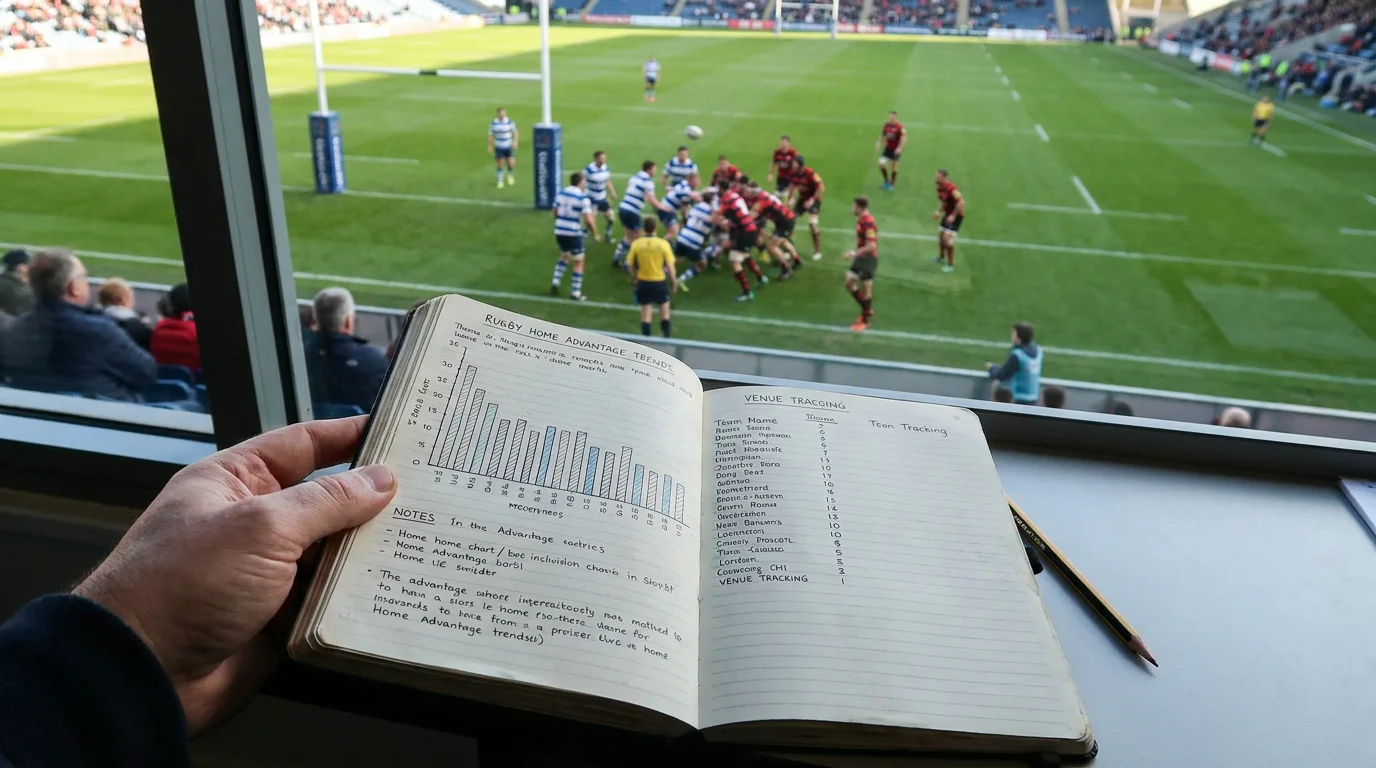
The single habit that has improved my home-advantage edge is venue-specific tracking rather than team-specific tracking. Bath at home is not the same as Bath rugby on neutral ground; specific venues carry specific edges that shift slowly across seasons. Tracking home win rate by venue across rolling 24-match windows reveals where the generic adjustment is materially off, and that gap is where I stake. The breadth of UK rugby venues — 5,825 betting shops nationally as a broader market reference point — means there are plenty of fixtures to model. The discipline is in choosing which ones to act on. For the related cross-border context, my piece on URC betting cross-border patterns covers the travel dimension in more detail.