
European Rugby Champions Cup Betting: Pool Pricing and Knockout Value
 Available in US
The continent’s most generous totals market
If you only bet one rugby competition for totals, make it the Champions Cup. The 2025-26 edition produced 519 tries across 63 matches — that is 8.24 tries per game, and Bordeaux Bègles topped the field by claiming the trophy from Leinster in the final. That tries-per-match figure is higher than the Premiership, higher than the URC, and well above the Six Nations average. The structural reason is simple: cross-league mismatches force open rugby, and the format pushes every side to chase bonus points in the pool stage.
Operators know this. The opening totals lines on Champions Cup fixtures run 5 to 8 points higher than equivalent domestic fixtures between similar-quality opponents. The question for a bettor is whether those lines are high enough to capture the actual scoring rate, and the answer is usually no in the pool rounds and yes in the knockouts.
Format and seedings
Twenty-four teams across the regular pool phase, split into pools that pull from the Premiership, URC, and Top 14. After four rounds of pool matches, the top sixteen sides progress to the round of sixteen, then quarter-finals, semis, and final.
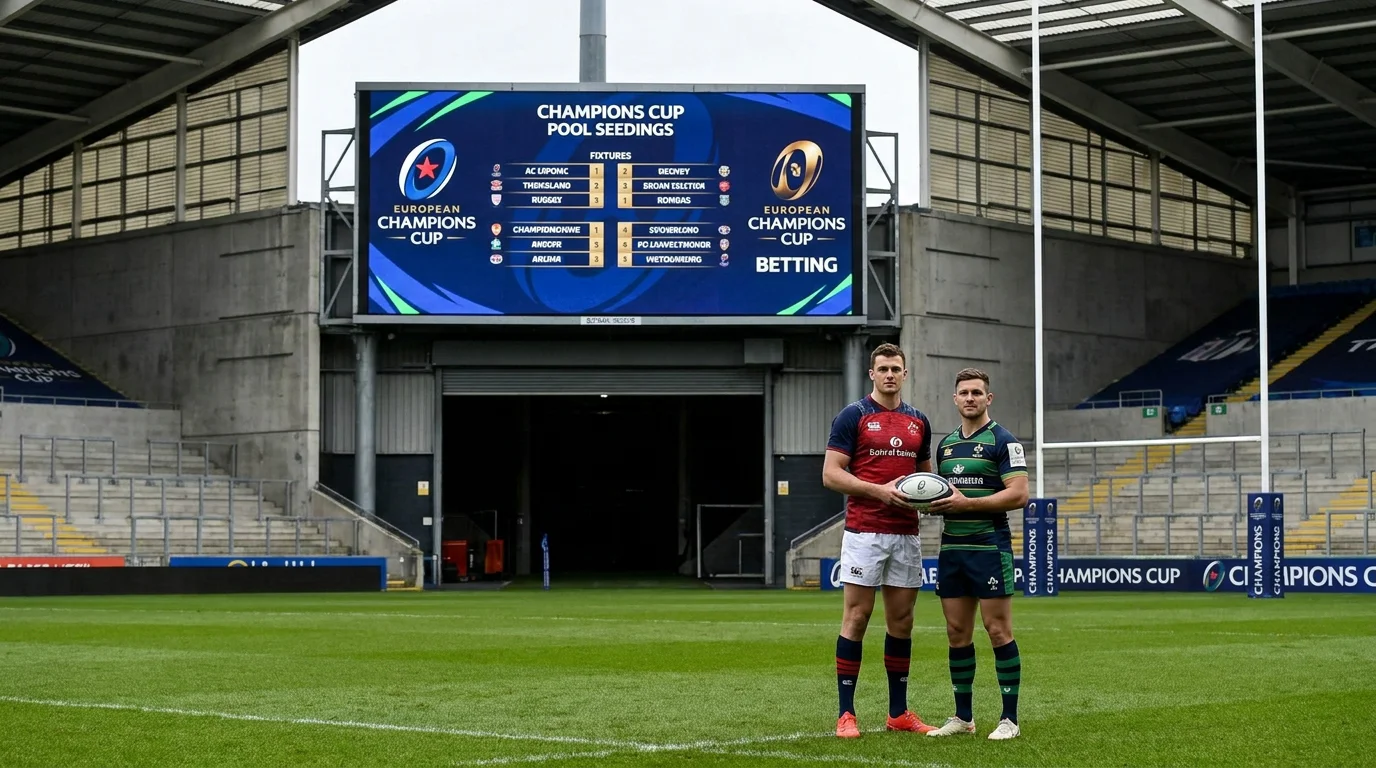
The seedings matter because they shape pool difficulty. A top-seeded Premiership side in a pool with two mid-table URC clubs and a Top 14 outfit faces a very different competitive load than a fourth-seeded side trying to qualify against a higher-seeded Toulouse or Leinster. The qualification-to-knockouts market is where this seeding pattern is most often mispriced — bookmakers tend to anchor on overall ranking and underweight the pool-specific draw.
One quick anchor: the most recent season’s 1,059,748 total attendance across 63 matches works out to roughly 16,821 per game. That figure tells you the competition draws genuine crowds, which matters because home advantage at marquee European venues is meaningfully larger than in domestic fixtures.
Pool stage handicap value
Pool stage handicaps in the Champions Cup are where I look hardest. The bookmaker has to set 24 sides of pricing relative to each other across leagues that play different styles, and the margin for error is real.
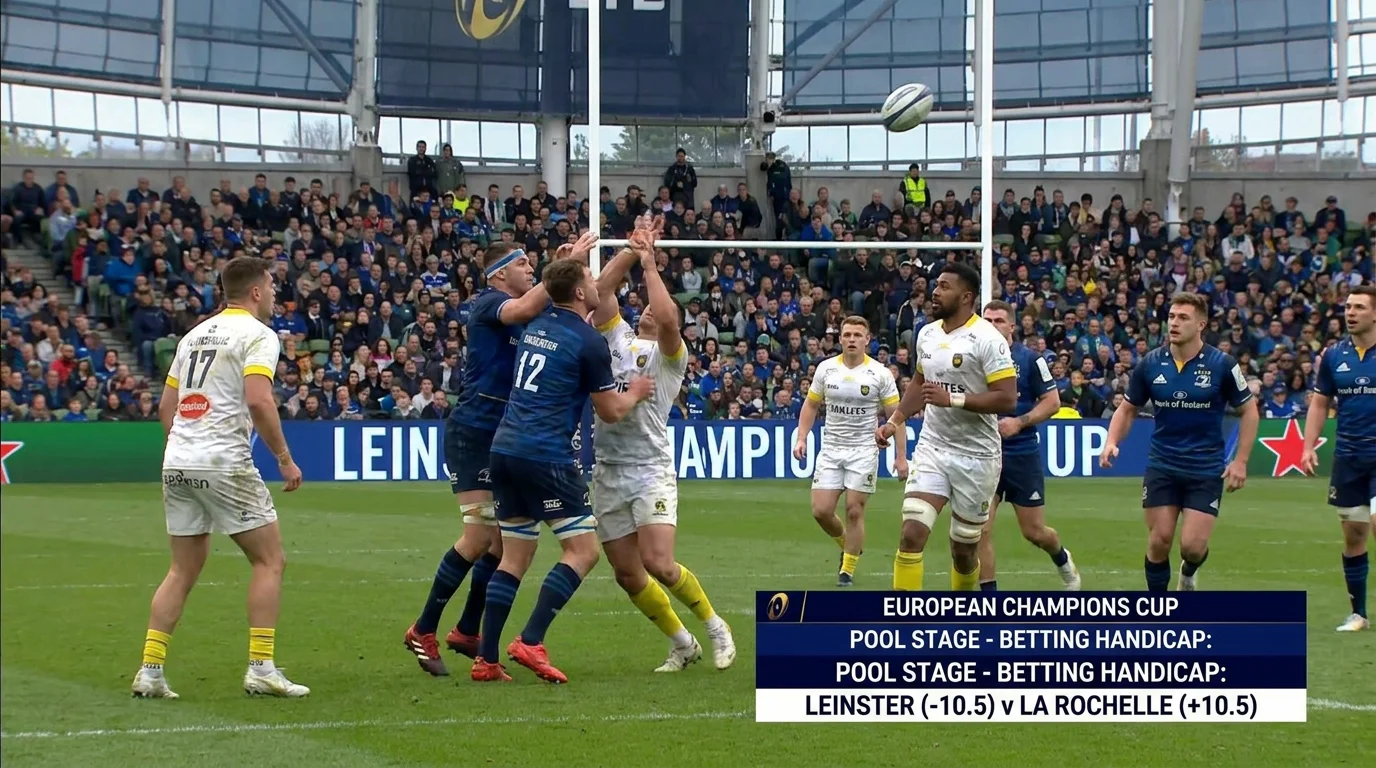
The patterns I rely on. First, French sides at home in pool matches under-perform relative to their overall handicap rating by an average of 4 to 6 points in early rounds — they treat the pool stage as auditions for second-team players, and the line does not always reflect it. Second, English Premiership sides travelling to a URC venue in November (cold weather, hostile crowd) cover the away handicap less often than a domestic away game would suggest. Third, the round 3 to 4 window is where qualification motivation peaks and form lines diverge from underlying quality.
Translation: I bet the away underdog cover on French home pool fixtures more often than the favourite; I avoid Premiership travel covers in pool round 1; and I stake heavier in round 4 when motivation is asymmetric.
Knockout bracket pricing
The round of sixteen is the most volatile knockout round in European rugby. Sixteen sides, single-elimination, often featuring a mid-tier club hosting a top seed from another league. Prices are tighter than they should be on certain matchups because the bookmaker model has limited cross-league predictive data and tends to weight league position too heavily.

Where I have made money: targeted bets on home underdogs in the round of sixteen when the visiting top seed is rotating before a domestic play-off push. The same logic applies in reverse — the home side that has nothing left to play for domestically will rest starters, and the visiting team can cover an unfriendly line.
Quarter-final and semi-final pricing is sharper because the sample is smaller and the bookmaker has more time to model. I do not stake heavily on QF or SF outright winners; I take individual match positions instead.
Cross-league mismatch patterns
The cross-league pool draws produce specific scoring patterns worth knowing. Top 14 sides playing URC opposition tend to push tries higher because both leagues favour open running rugby; Premiership sides in the same pool tend to slow the game down, especially on the road, which pulls totals back toward the line.
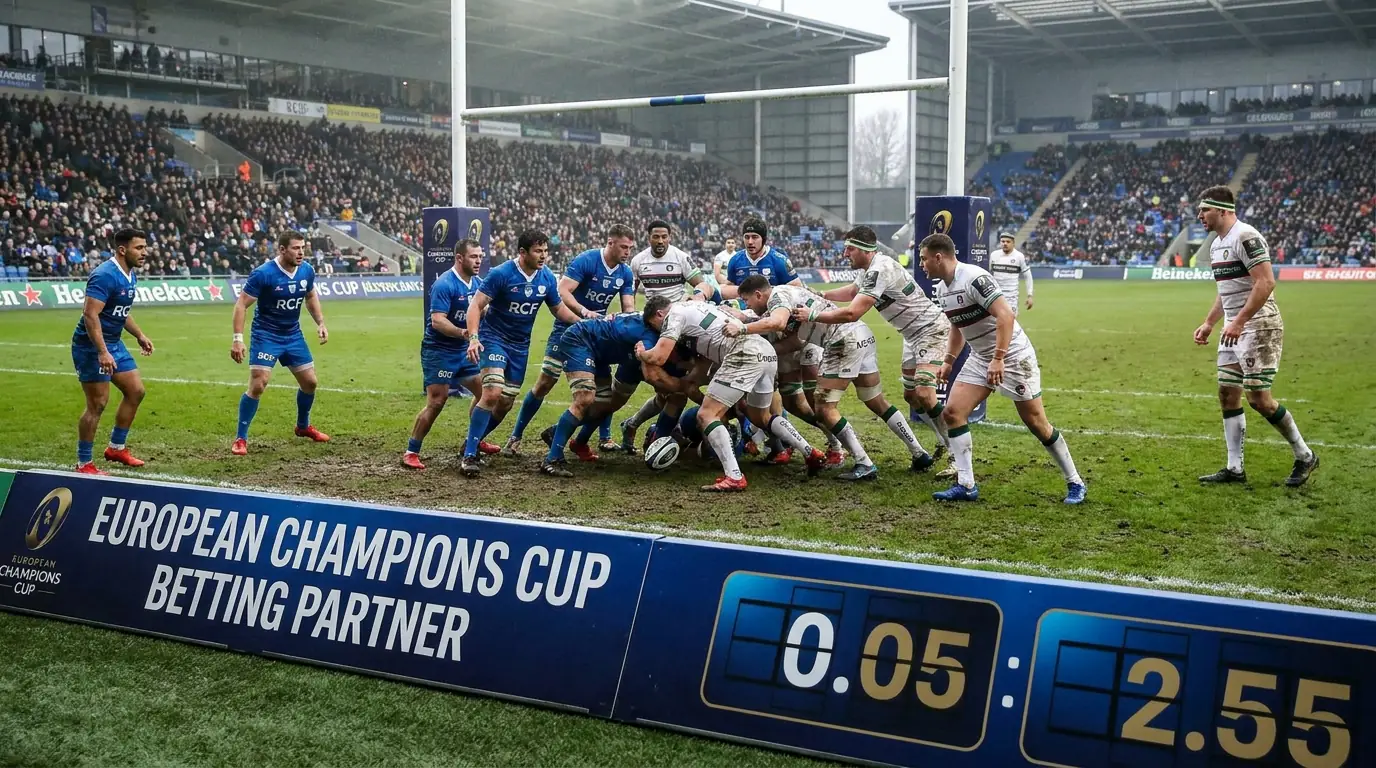
The clearest signal: average tries per game in the Champions Cup runs at 8.24, but that average hides wide variance. A Premiership v Premiership pool fixture might produce 5 tries; a Toulouse v Leinster fixture might produce 12. Pricing the variance correctly is more useful than pricing the average. I do this by tracking style-of-rugby labels for each side — open running, set-piece dominant, defensive grind — and combining them before staking on totals.
Top try scorer and tournament-long props
The top try scorer market opens before the pool stage starts and stays live until the round of sixteen. Outside backs from leading French and Irish sides dominate the betting boards — that pricing reflects squad selection in marquee fixtures, where wingers see the most run-time.

I tend not to stake heavily on top try scorer pre-pool. The market is too noisy, and individual injuries or selection rotations can wipe out a position in week one. The window I prefer is round 3 of the pool stage: by then the leading scorers have a small head start, and the price compression has not fully kicked in.
Pool winner markets — “to win pool” — are usually decent value early when the bookmaker hedges against unknown form, then sharpen aggressively after round 2. The window to act is round 1 to round 2, before pool dynamics solidify.
The competition’s signature edge
The Champions Cup combines cross-league mismatches, high tries-per-match scoring, and an asymmetric pool-stage motivation structure. None of these features exists in the same combination in any other rugby competition I cover. The result is a market that is consistently looser than the Six Nations and consistently more generous on totals than domestic leagues. The 519 tries across 63 matches in 2025-26 was not a fluke — it reflects how the tournament is built. For more on the totals side specifically, my article on rugby totals and over-under covers the methodology I use across competitions.