
Live Rugby Betting: In-Play Markets, Momentum, and Reading the Scoreboard
 Available in US
Why I treat live betting like a trading screen
The first lesson I learnt about in-play rugby betting was that the market is not your friend. Live lines move on every kick, every penalty, every minute of clock. Sit there pressing buttons reactively and you will give back any edge your pre-match analysis built. The bettors who consistently win in-play come to the match with a plan and execute it patiently, not by chasing each oscillation.
The volume side of the modern rugby live book is substantial. Top operators run 150-plus in-play markets on major matches — handicap, totals, next try scorer, race to X points, sin-bin specials, half-time totals, individual quarter markets. That breadth is the playing field. The opportunities sit in specific windows, not across the whole 80 minutes.
Core in-play markets
The bread-and-butter live markets are live handicap, live totals, next try scorer, and race-to-X-points. Each has its own pricing rhythm.
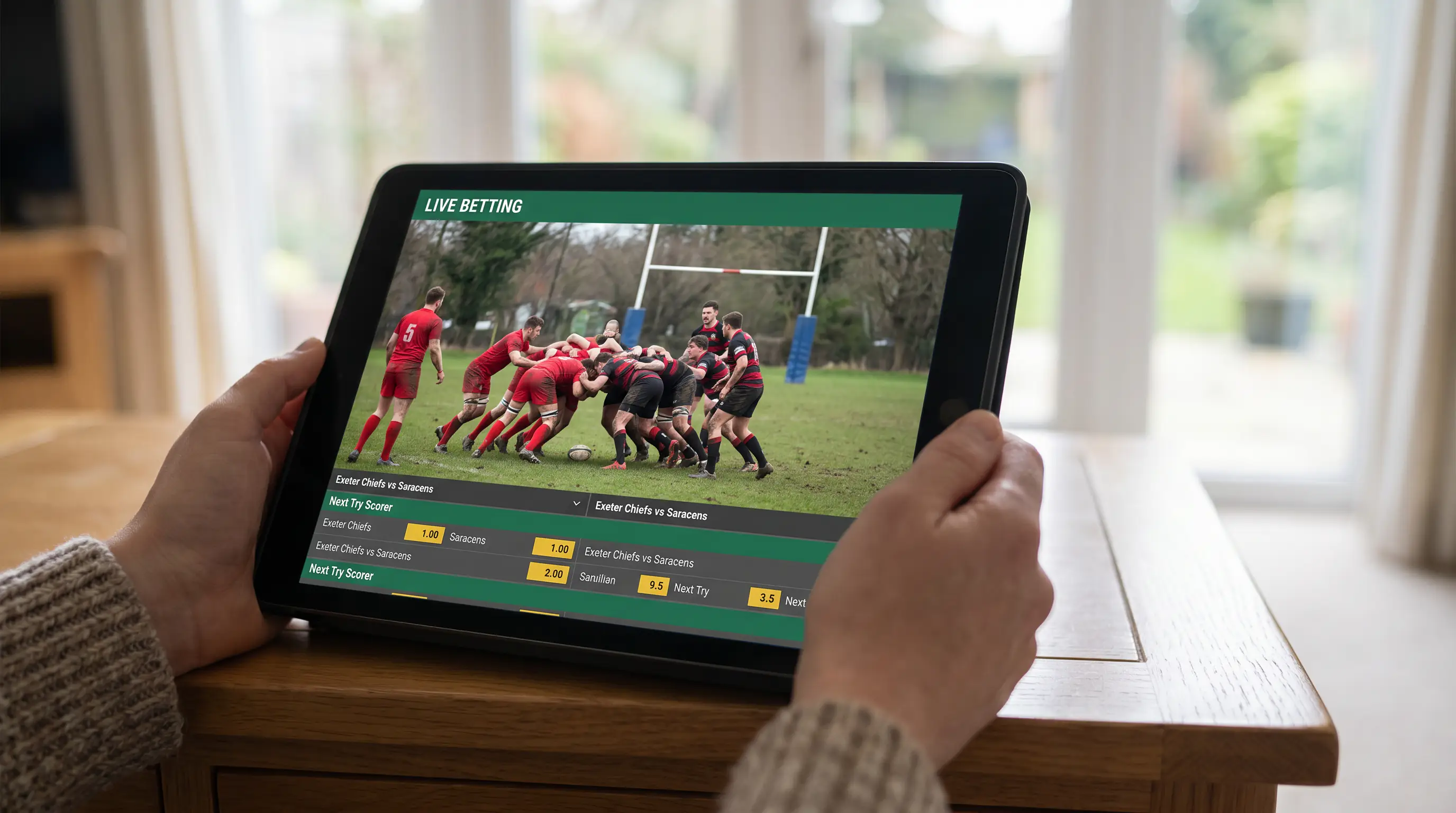
Live handicap shifts continuously with the score, weighted by the remaining time. A pre-match favourite at -7.5 might trade at -4.5 if the underdog scores first and the match passes the 30-minute mark. The bookmaker is balancing the actual score and the remaining clock against the model’s prior expectation of cover.
Live totals move on every scoring play and every territory shift. The line is generally well-priced through the first 30 minutes but starts to lag in the final quarter when the model has to forecast a smaller remaining sample. That lag is where the totals overs and unders open up — small windows of 3 to 5 points of mispricing on either side.
Next try scorer is rebuilt after every try. Bookmakers refresh the named-player list, recalculate position-bias probabilities, and apply a fresh overround. The market is busy and the prices are noisy, which means line-shopping across operators in the 30 to 60 seconds after each try is occasionally very profitable.
Momentum and scoring windows
Rugby tries cluster more than newcomers expect. In the Six Nations 2023 sample, 49 percent of all tries came in the first half — meaning the second half is not just half the sample but slightly less. Within each half, tries cluster around territorial dominance windows that can run 8 to 15 minutes.
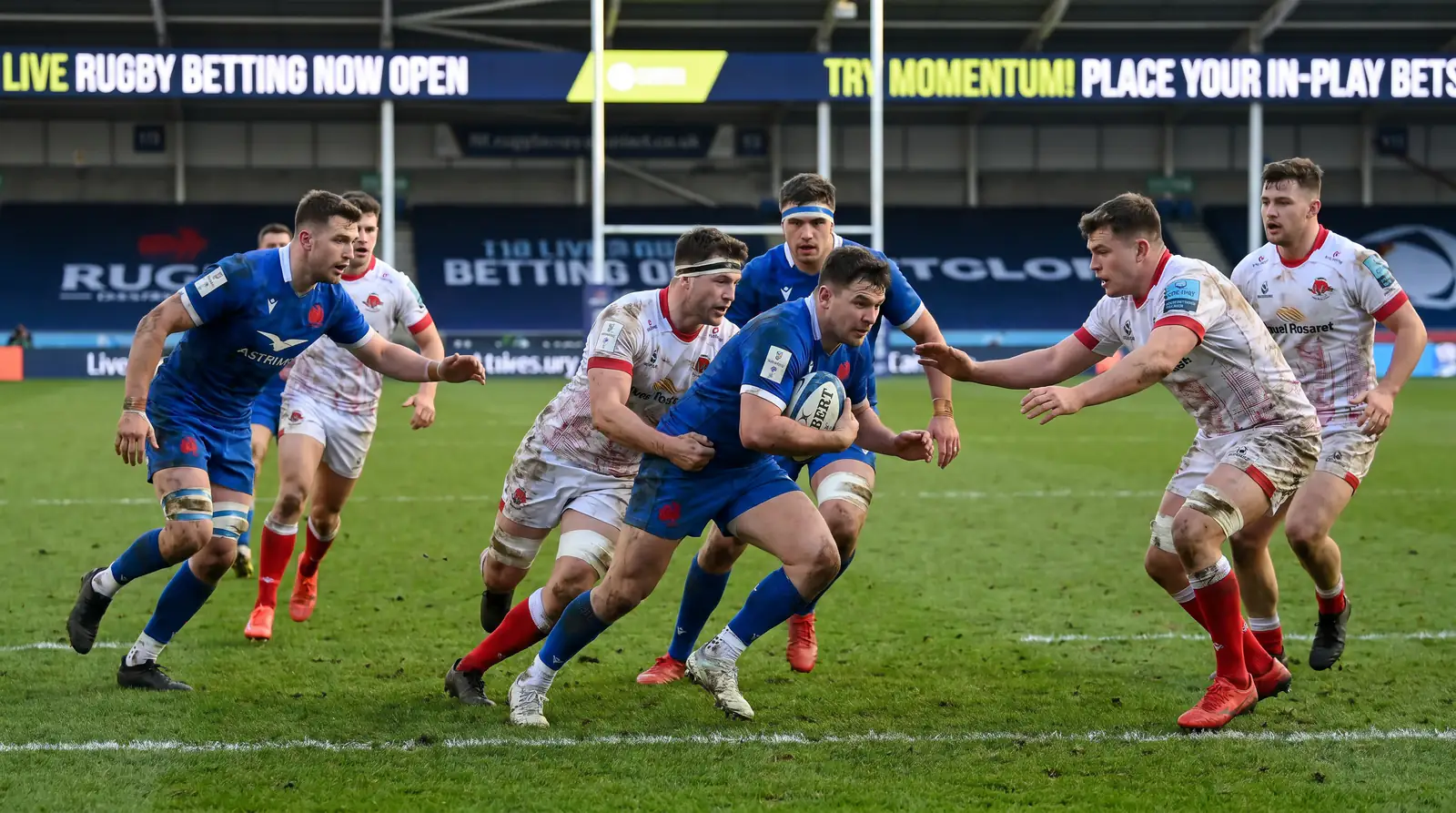
What that means in practice: when a team has been camped in the opposition 22 for two minutes without scoring, the next-try probability for that team is higher than the static price suggests. Bookmakers under-react to short-term territorial dominance and over-react to scoring plays. The window to bet “next try Team A” is during sustained pressure, not after the try is scored.
The 60 to 80 minute window is the most volatile for totals and handicap. Bench players come on with fresh legs, defensive structures fray, and tries cluster. Live totals overs are often well-priced through this window, especially in matches where the projected total is in the 40 to 50 range. The historical pattern of late tries in the second half — combined with the 66 percent backs share of tries in elite union — means the late window favours attacking rugby.
Sin-bin edge windows
A 10-minute yellow card is the cleanest live betting setup in rugby. The team with the player advantage scores points at a rate roughly two to three times their average for the rest of the match. Bookmakers know this and price live handicap and totals lines accordingly — but the pricing is often slow in the first 60 seconds after the card is shown.
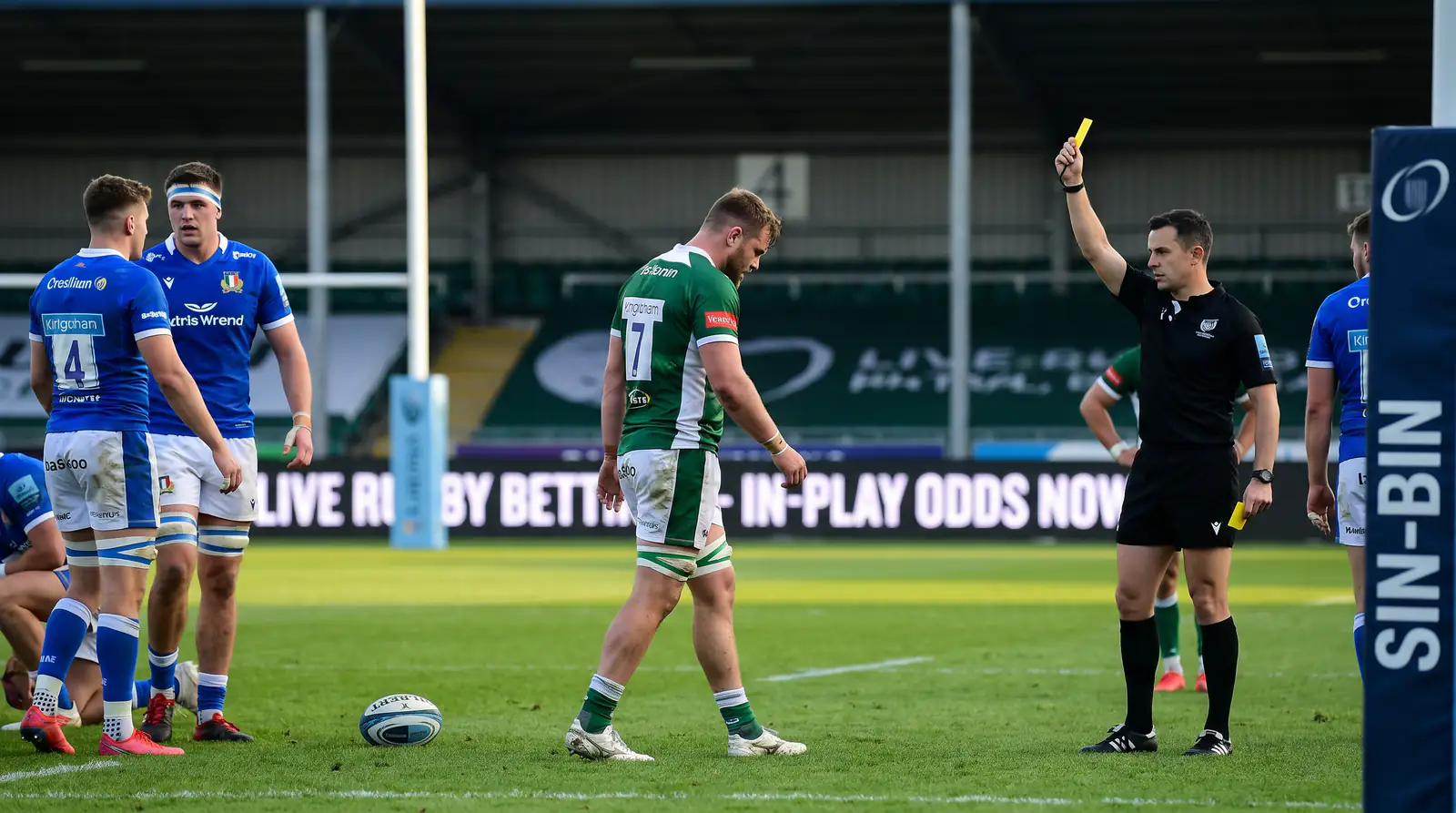
The sin-bin sequence I look for. Card shown around the 30 to 50 minute mark of the match (mid-game cards create the cleanest scoring windows). Team with advantage is at home (home crowd plus player advantage compounds). Score is within 7 points (both teams will play to win, not park the bus). Weather is benign (high-scoring opportunities not constrained by conditions).
In those windows, live “team to score in next 10 minutes” markets are sometimes still priced as if both sides are at full strength. The mispricing window closes within 60 to 90 seconds, but inside that window the edge is real and clean.
Live totals and race-to-X markets
Race-to-X-points markets pay out on which team reaches a specified point total first. Race to 10, race to 20, race to 30 — each has its own pricing logic and its own value moments.
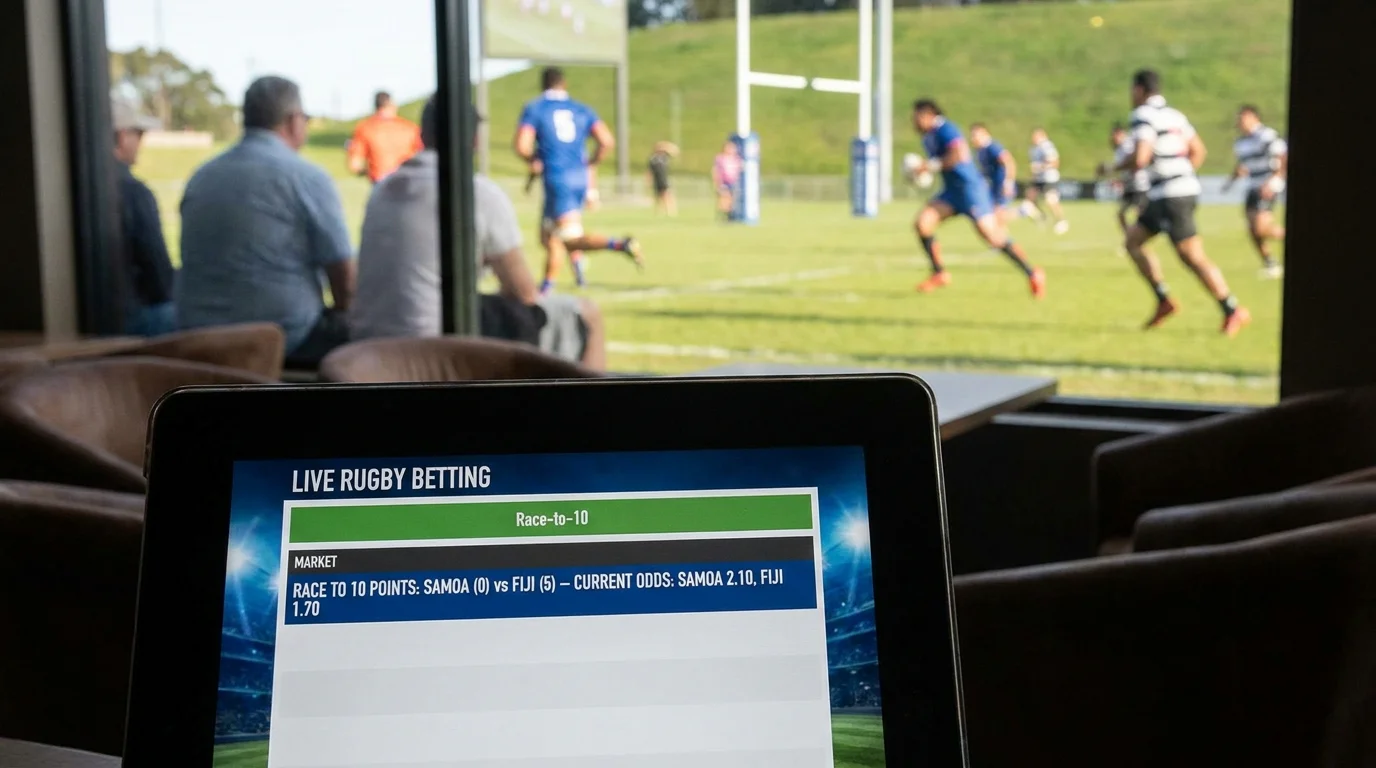
Race to 10 markets are most active in the opening 15 minutes when both sides are still establishing. The market often over-prices the team that takes an early kick at goal because the bookmaker weighs early scoring heavily. Race to 20 and race to 30 markets are most active in the middle third of the match when the score has settled but neither side has reached the threshold.
Live totals “next 10 minutes” markets are a useful proxy for short-term momentum without committing to a specific side. If your read is that the next 10 minutes will be high-scoring regardless of who scores, the live totals over for that window can be a clean play.
Latency and suspended markets
Live betting punishes latency. The market freezes for several seconds after every scoring play, every line break in dangerous territory, and every video review. By the time the market reopens, the price has often moved against the obvious bet.
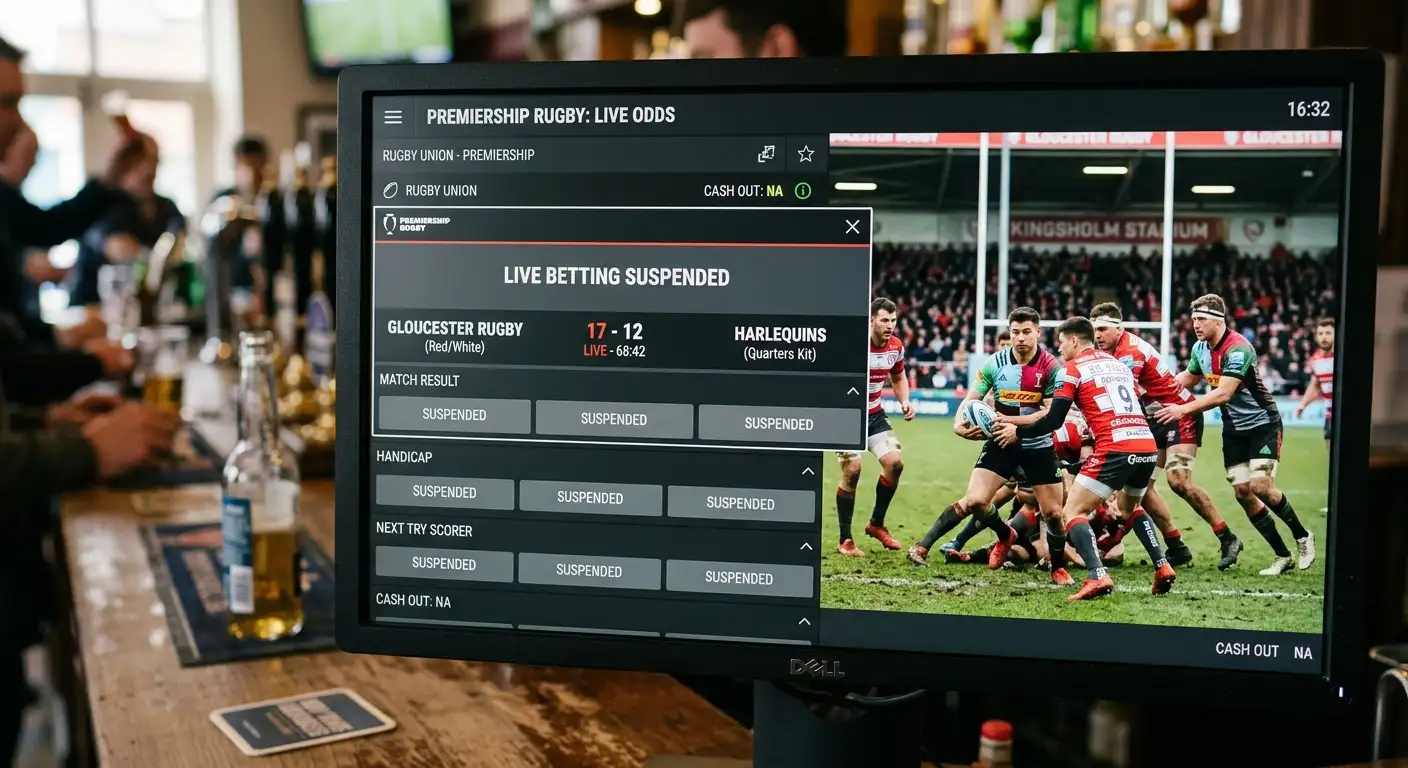
What I do about it: I never chase a price that has just moved. If the next-try-scorer market reopens after a try with prices that look 10 percent off, I assume the market knows something my model does not. The exception is when I have a specific pre-match plan to bet a particular live market — for instance, taking a side’s next-half handicap at the first half-time interval — and I am ready to execute at the speed the operator allows.
Suspended markets are part of the cost. Bookmakers freeze in-play markets aggressively to protect against latency arbitrage. The frustration is real, but the alternative — a market that never suspends and gets picked off by faster bettors — would be priced wider and offer worse value.
The discipline that separates winning live bettors
The single habit that has made the biggest difference to my live betting profit is not modelling — it is pre-match planning. Before kick-off I decide which markets I might trade, what triggers I am waiting for, and what stake I will risk. During the match I execute against that plan and ignore everything else.
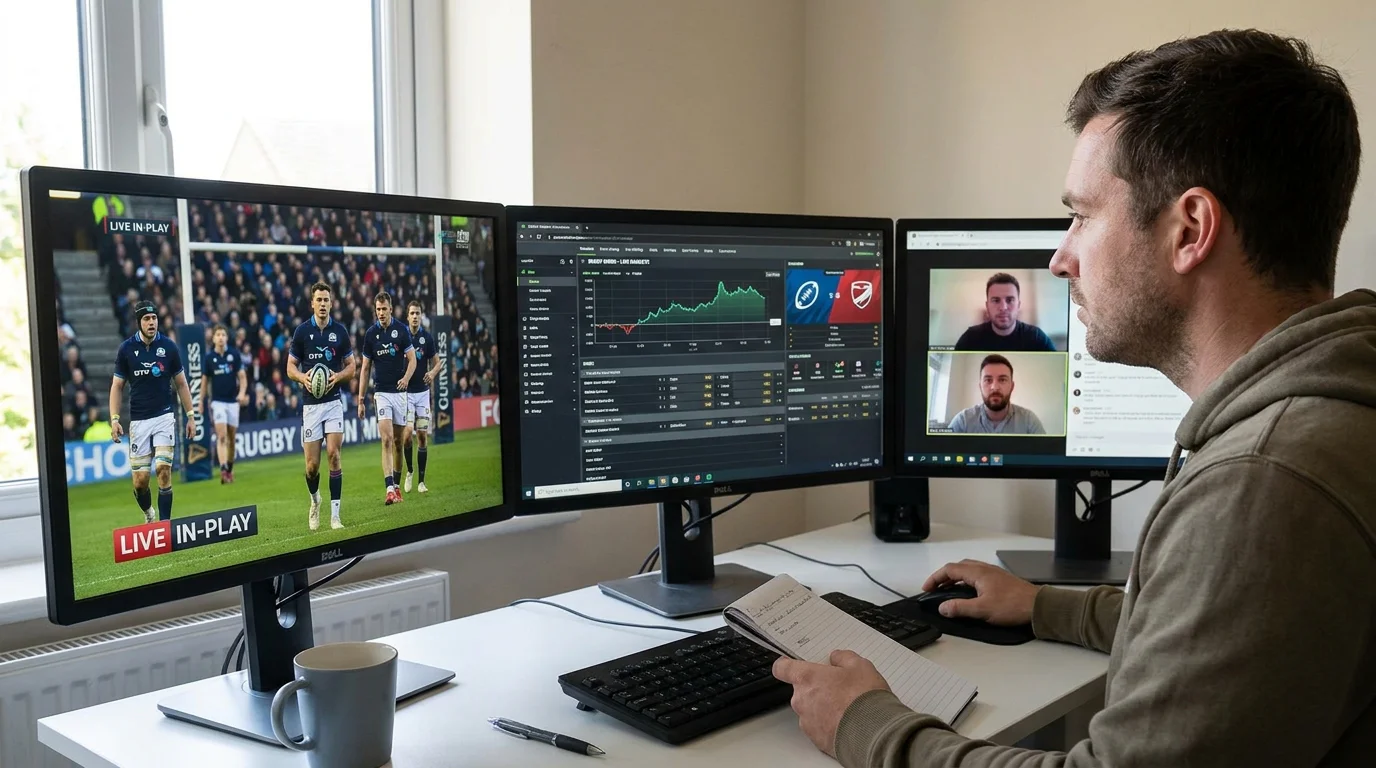
The 150-plus market depth on top fixtures is the playing field, but the working set is usually three or four markets per match. Sin-bin opportunities, live totals overs in the final quarter, race-to-20 markets in the middle third — those are recurring setups I have positive expectation in. Everything else is noise, and noise costs money. For the combined live-and-acca approach that pairs naturally with this, my piece on using cash out alongside in-play bets covers the trade-out logic.
