
Rugby League Challenge Cup Betting: Knockout Pricing and Giant-Killing Value
 Available in US
The cup that loves a Championship side
I have lost money on Challenge Cup favourites enough times to stop trusting them in the early rounds. The oldest knockout in rugby league is also the most volatile, because the bracket pulls in clubs from the Championship and League 1 alongside the Super League sides. Mismatches on paper produce some of the tightest games of the season — and the bookmaker has to price them with thin sample sizes and patchy form data.
The betting context matters too. Rugby league sits in the lower-revenue band of the regulated betting sector — combined funding to snooker, darts, and league from the industry runs at £12.5 million-plus annually according to EY’s BGC analysis, well behind football’s £40 million from the EFL. Smaller pots mean fewer model resources at bookmakers, and that gap is most visible in cup competitions where the data is thinnest.
How the tournament actually runs
The Challenge Cup is a single-elimination bracket that pulls in Super League sides from the sixth round onwards, with Championship and lower-tier clubs entering earlier. By the quarter-finals the bracket is usually a mix of eight Super League sides — but not always, and that “not always” is where the value sits.
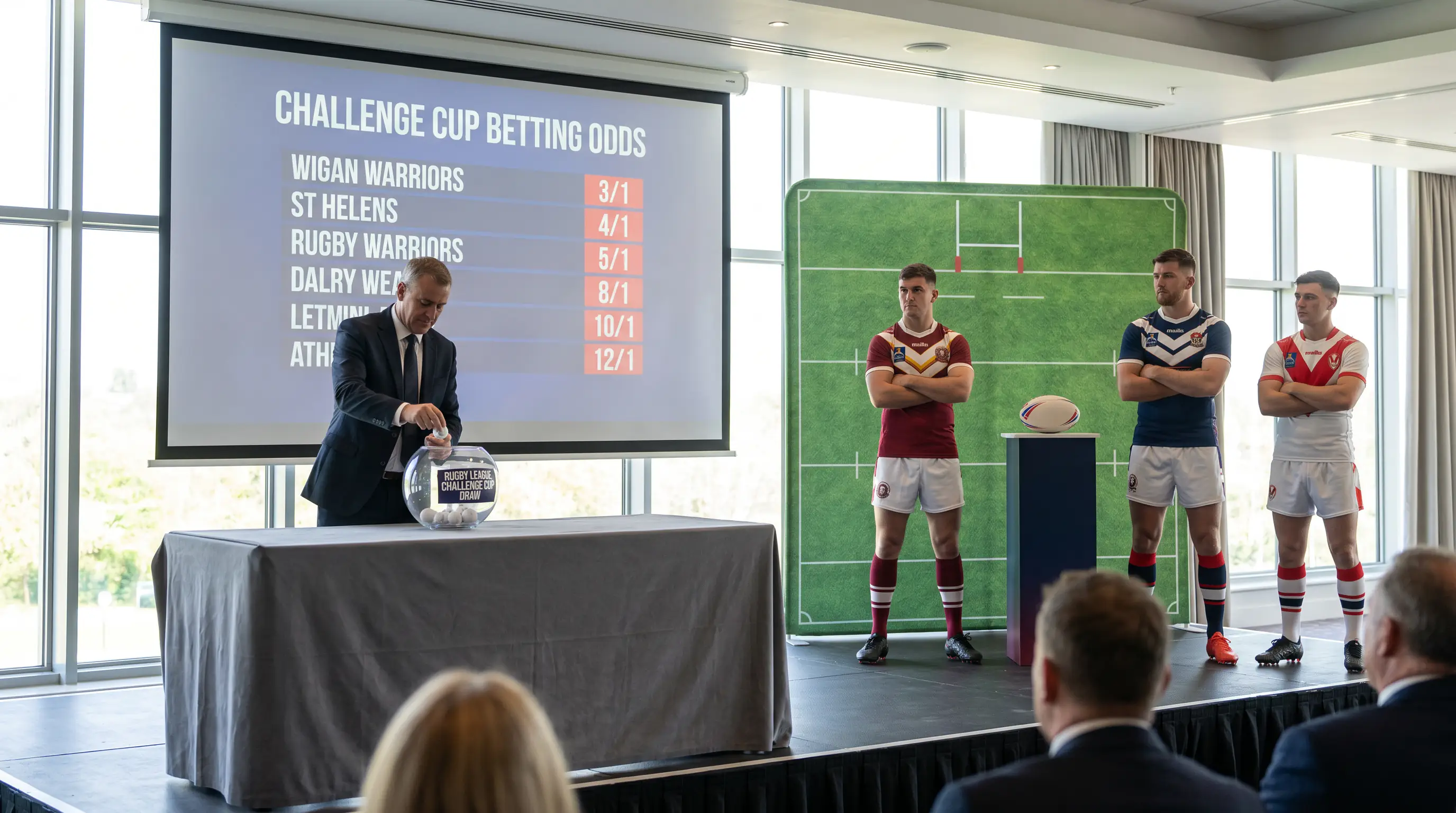
Format quirks worth pricing in: ties are decided on the day, with extra time and golden point if needed. There is no replay safety net, so a draw at 80 minutes does not protect you. Bookmakers settle qualification markets at the final whistle of the original 80 in some cases and on the actual outcome in others — read the rules tab before you stake on a “to qualify” market.
Early-round upset pricing and the bracket trap
The pattern I have tracked over multiple seasons: in fixtures matching a mid-table Super League side against a top-three Championship club, the Super League side wins roughly 70 percent of the time but covers a 14.5-point handicap less than half the time. The bookmaker’s instinct is to price these games like a Super League home game with a wider line — and that line is regularly too wide.

I treat the Championship cover as a default position in those mismatches, not the moneyline. The reason is simple: cup motivation runs the other way. The Championship side has nothing to lose and is playing the biggest match of their season; the Super League side is rotating squad players and treating it like a training fixture. Effort drops, set pieces sharpen for the underdog, and the spread closes.
The corollary: avoid sub-10-point handicap lines on Super League favourites in the sixth round entry point. The bookmaker has the same instinct I do, and the value has already been priced out.
Wembley Final outright betting
The Final itself is a different exercise. By the time the bracket is set the field is usually two Super League sides, occasionally with a giant-killing Championship side in the semi-final but rarely in the final itself. Outright winner prices in March, when sixth-round draws are made, look very different to the same prices in April.
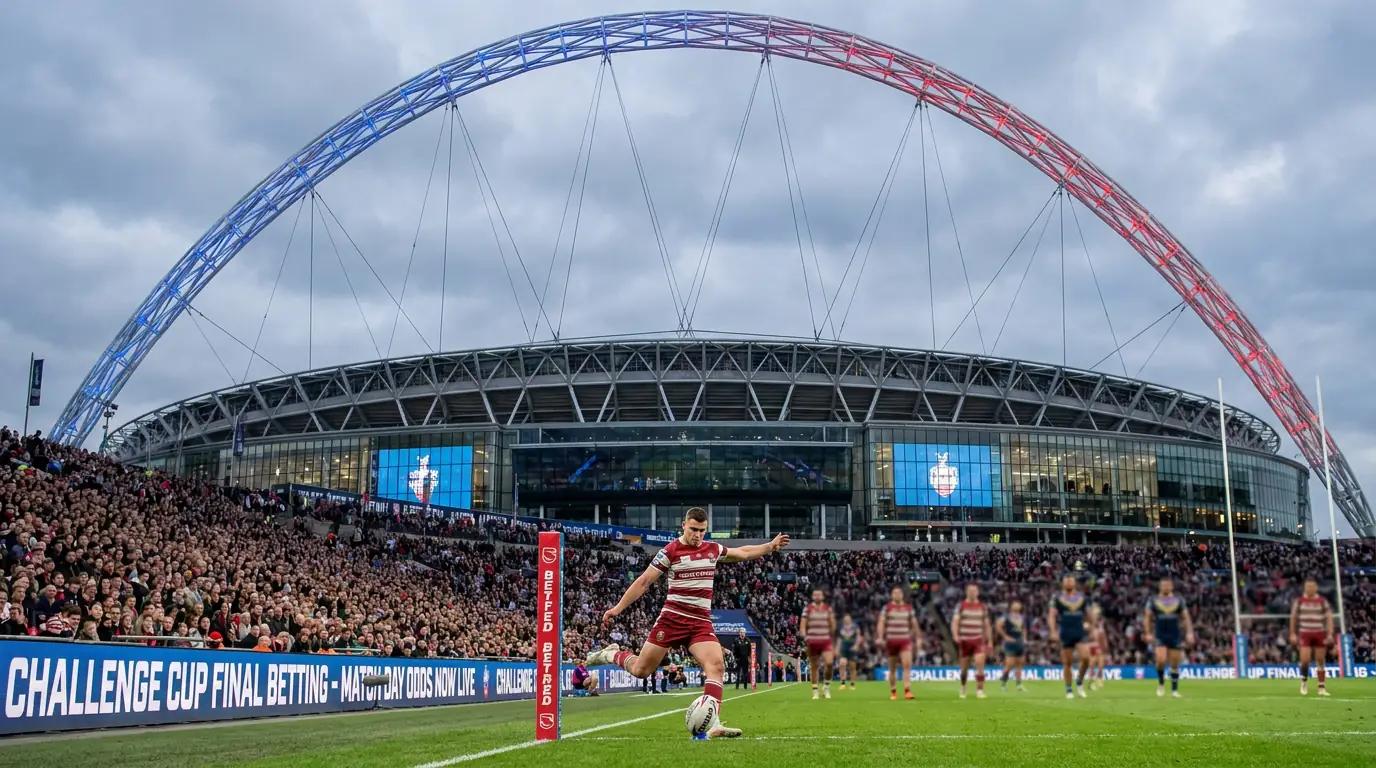
What I do: track the bracket draw rather than the early-round results. A heavily one-sided bracket compresses prices on the path-of-least-resistance side; a balanced bracket spreads value across three or four contenders. Outright Final winner is rarely the right bet pre-draw; it is much more often the right bet post-draw, before the semi-finals are played.
Top try scorer for the Final-week-only markets are typically settled across the full match plus extra time. That detail matters if the game goes to golden point and a try wins it — bookmakers occasionally disagree on whether that counts toward player props.
Bracket and progress markets
The “to reach the semi-final” and “to reach the final” markets are where I do my heaviest staking in this competition. Pricing on those markets is wider than on outright winner because the bookmaker is hedging against bracket variance, and that wider margin gets compressed once the round before is played.
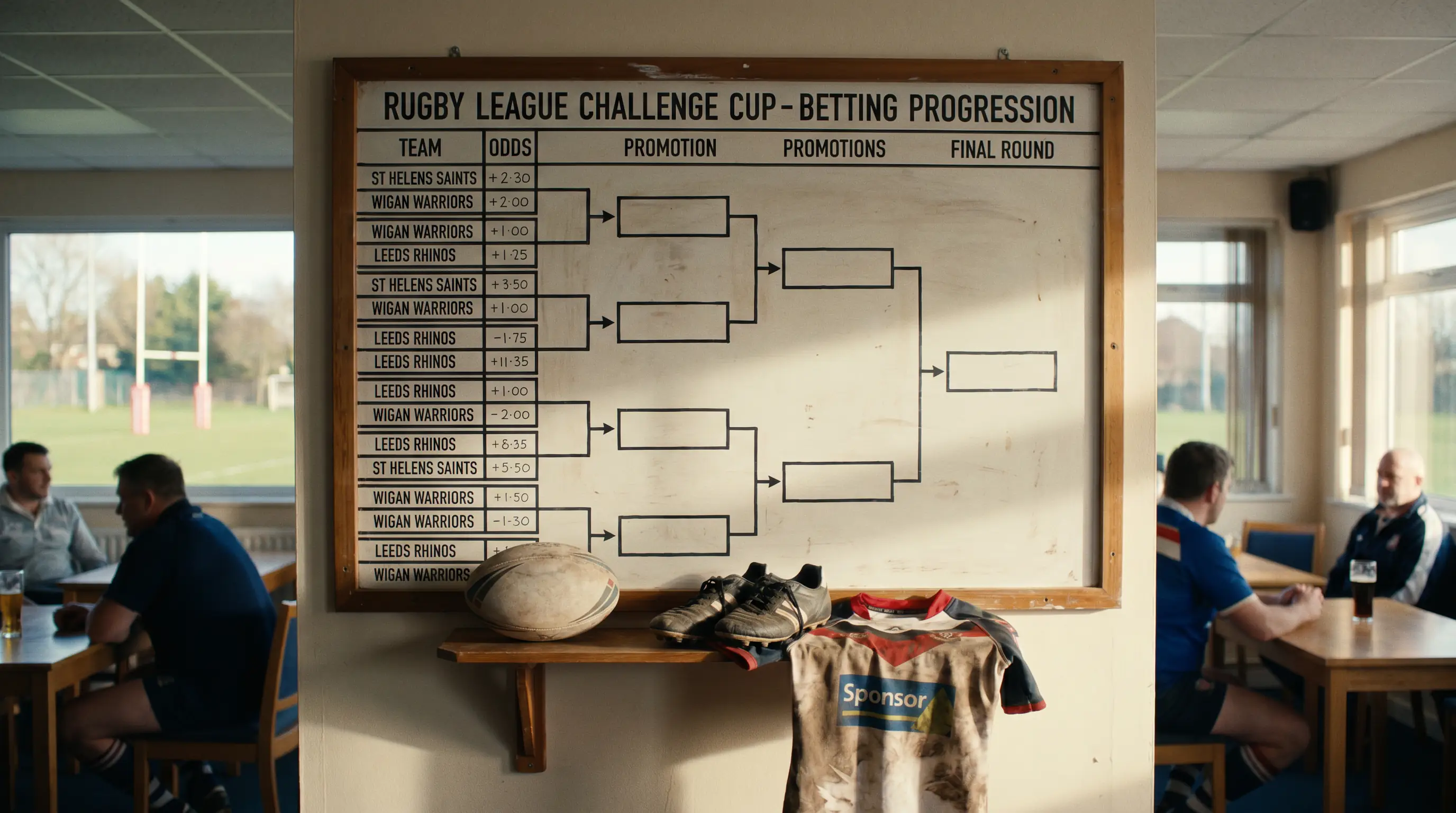
A worked sequence I have used: build a small position on a second-tier Super League side to reach the semi-final at 4.00 or higher in the fifth-round window; if they win their quarter-final draw, the same outcome reprices to 2.20 or shorter immediately. Either trade out half the stake there or let it ride based on the semi-final opponent.
“To win their quarter” or “to win their half of the bracket” markets are sometimes offered as enhanced specials around the draw. The implied probability on these specials is occasionally well below the true probability if the bracket is structurally favourable — that is when I stake heavier.
How I structure a Challenge Cup season
My Challenge Cup bankroll splits across three phases. Early rounds: small stakes on Championship covers, treated as a portfolio rather than individual bets. Quarter-finals: targeted bets on bracket progression for one or two contenders. Final week: outright and player props with the squad and form data fully visible.

The combined GGY data for rugby-adjacent sports underlines why this discipline matters. The £12.5 million-plus annual contribution from snooker, darts, and league together is small relative to football and horse racing, and that lean operator margin means promotional offers are sometimes generous around the Final but stingy in early rounds. Stake size should match where the operator is actually competing on price, not where you would like them to.
Closing the bracket
The Challenge Cup is the rugby competition where I do my most knockout-specific work. The volatility is built into the structure: small samples, mixed-tier brackets, single-elimination format, and a thin bookmaker model on the lower-tier ties. None of that is going to change. What you can change is your discipline around when to stake and when to wait, and the bracket draw is almost always the right trigger to act on. For a wider view on knockout patterns across rugby, my piece on knockout tournament betting patterns goes deeper.