
How Weather Shapes Rugby Betting: Wind, Rain, and the Totals Line
 Available in US
The Saturday I learnt to trust the forecast more than the form
Twickenham in February. I had backed a totals over at 47.5 based on two attacking sides and recent form. The Met Office had been flagging high winds all week. I ignored the forecast because the bookmaker’s line had moved only a single point from the opening number. Final score: 19-13. Crosswind from the south-west all afternoon, kicking accuracy in the gutter, no tries between the 30th and 75th minute. I gave back six weeks of profit on one Saturday.
Weather is the input that bookmakers handle worst. Forecasts firm up through the week, and operator models do not always rerun aggressively when conditions change. By kick-off the conditions are much more predictable than the line implies — and that lag is where the value sits, consistently, year after year.
Wind and kicking accuracy
Wind is the single largest weather variable for rugby totals. Goal-kicking accuracy drops off a cliff above 20 mph sustained, and the drop is asymmetric — kicking with the wind is helped less than kicking against it is hurt. Typical Six Nations total points lines sit at 42.5 or 45.5, and a 25-plus mph wind day reliably pushes the actual scoreline 4 to 7 points below that line.

The other effect of wind is on territorial kicking. Sides prefer to play with the wind, which means they pin the opposition deep in the half they are kicking toward. This compresses the field into a small zone for long stretches, which reduces try-scoring opportunities and increases set-piece-driven penalties. Total points drop; total penalties rise; kicking-accuracy player props lose value.
Cross-winds are the worst case for goal-kicking. A 15 mph cross-wind affects accuracy more than a 25 mph head- or tailwind, because the kicker has to read the line of the kick rather than just adjust the length. Bookmakers occasionally fail to distinguish cross-winds from head-winds in their models. That distinction is sometimes worth 2 to 3 points of mispriced totals.
Rain and the handling factor
Heavy rain reduces totals by 6 to 10 points in union and slightly less in league. The mechanism is straightforward: wet ball handling errors break attacking phases, set-piece dominance shifts toward forwards, and back-line moves get cancelled before they start.

The score patterns shift too. Rain games skew toward forwards scoring from close-range mauls and pick-and-go phases, away from wingers scoring from open-field movement. First try scorer props on outside backs lose value in wet conditions; props on back-row forwards gain value. The shift is rarely fully priced in by kick-off because operators set the player props earlier in the week.
Drizzle is different from heavy rain. Light rain barely affects handling — modern boots and ball treatments cope well with damp pitches. The threshold for totals adjustment is roughly steady rain for the 90 minutes before kick-off, not a passing shower. Bookmakers occasionally over-adjust on early-week rain forecasts that have cleared by Saturday morning, which creates the opposite value window on the over.
Temperature and set-piece load
Cold conditions below 5 degrees Celsius reduce totals by 2 to 4 points without fundamentally changing the game. The mechanism is handling: gloved hands and stiff fingers produce more knock-ons, more dropped passes, and more set-piece resets. The game stays open and attacking; the execution drops.
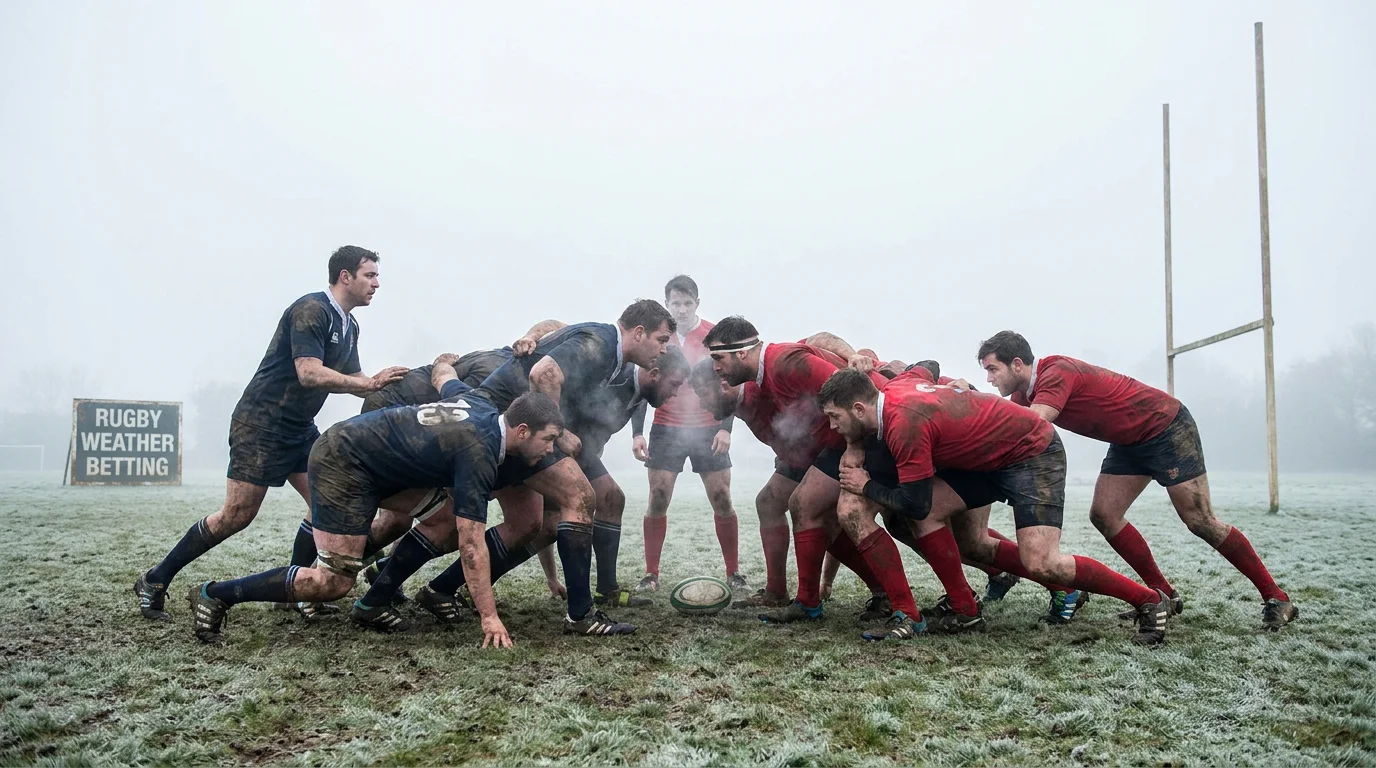
Hot conditions above 22 degrees affect rugby less than they affect football because rugby’s stop-start rhythm gives more recovery between phases. But sustained heat does increase substitution rotation, and the bench impact in the last 25 minutes becomes larger as starters fatigue faster. This shifts late-game try scorer probabilities toward bench wingers and away from starters who get hooked early.
Altitude — relevant only in URC fixtures against South African sides at Pretoria or Johannesburg — adds another layer. European visitors fatigue faster, kicking distance increases for the home side, and totals trend higher than they would at sea level. The adjustment is roughly 3 to 5 points on the totals line for altitude venues, and bookmakers price this approximately but not always cleanly.
Stadium-specific quirks in the UK
Specific UK stadiums have weather patterns that recur across seasons and that bookmakers do not always weight correctly. Murrayfield in late winter consistently produces tougher kicking conditions than Twickenham, even on the same forecast — the open-bowl design catches wind from multiple directions. Cardiff with the roof closed plays as an indoor venue with predictably higher totals. The same fixture at the Principality Stadium with the roof open plays differently depending on whether the roof was closed during the week’s training (training schedule affects the side’s familiarity with the conditions).
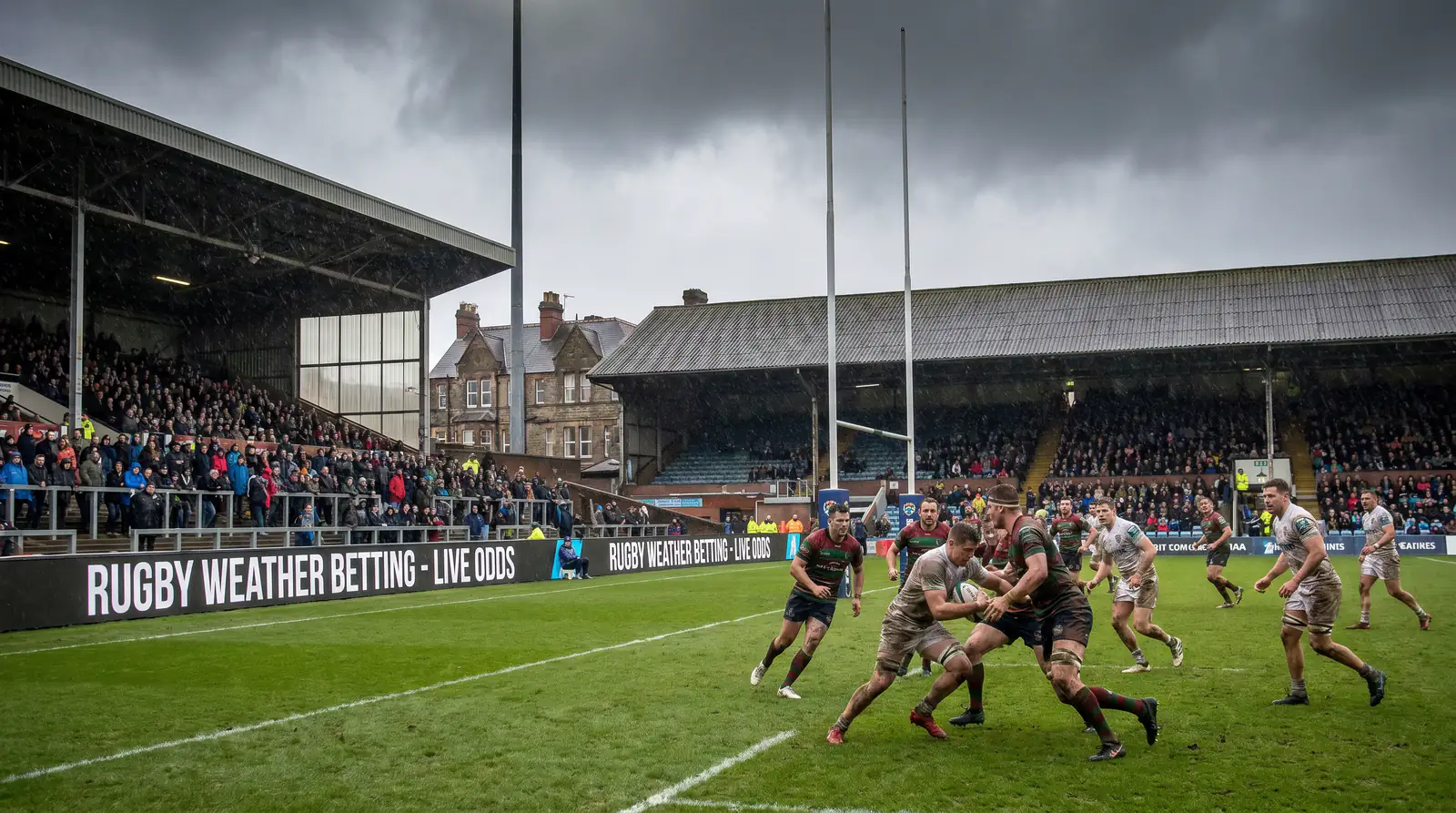
Welford Road in February tends to produce lower totals than the form lines suggest, partly because the pitch holds water and partly because traditional Tigers rugby leans on forward dominance. Allianz Park (Saracens at their previous home, occasionally still in use) had a 3G pitch that played differently in wet conditions — drainage was excellent, handling stayed cleaner, totals ran slightly higher than equivalent matches on natural turf.
These venue-specific patterns are not always priced into individual match lines. Bookmakers tend to set lines from generic team-level form rather than venue-level patterns. That gap is occasionally 2 to 3 points of totals value.
Live weather line adjustments
In-play markets react to weather more sharply than pre-match lines. A 10-minute squall of rain mid-match will push the live totals line down by 4 to 6 points within a few minutes, even if the conditions clear by the 60th minute. Bettors who can read the conditions live — wind picking up, rain visibly heavier, kickers struggling visibly with the ball — can act faster than the model’s reaction time.
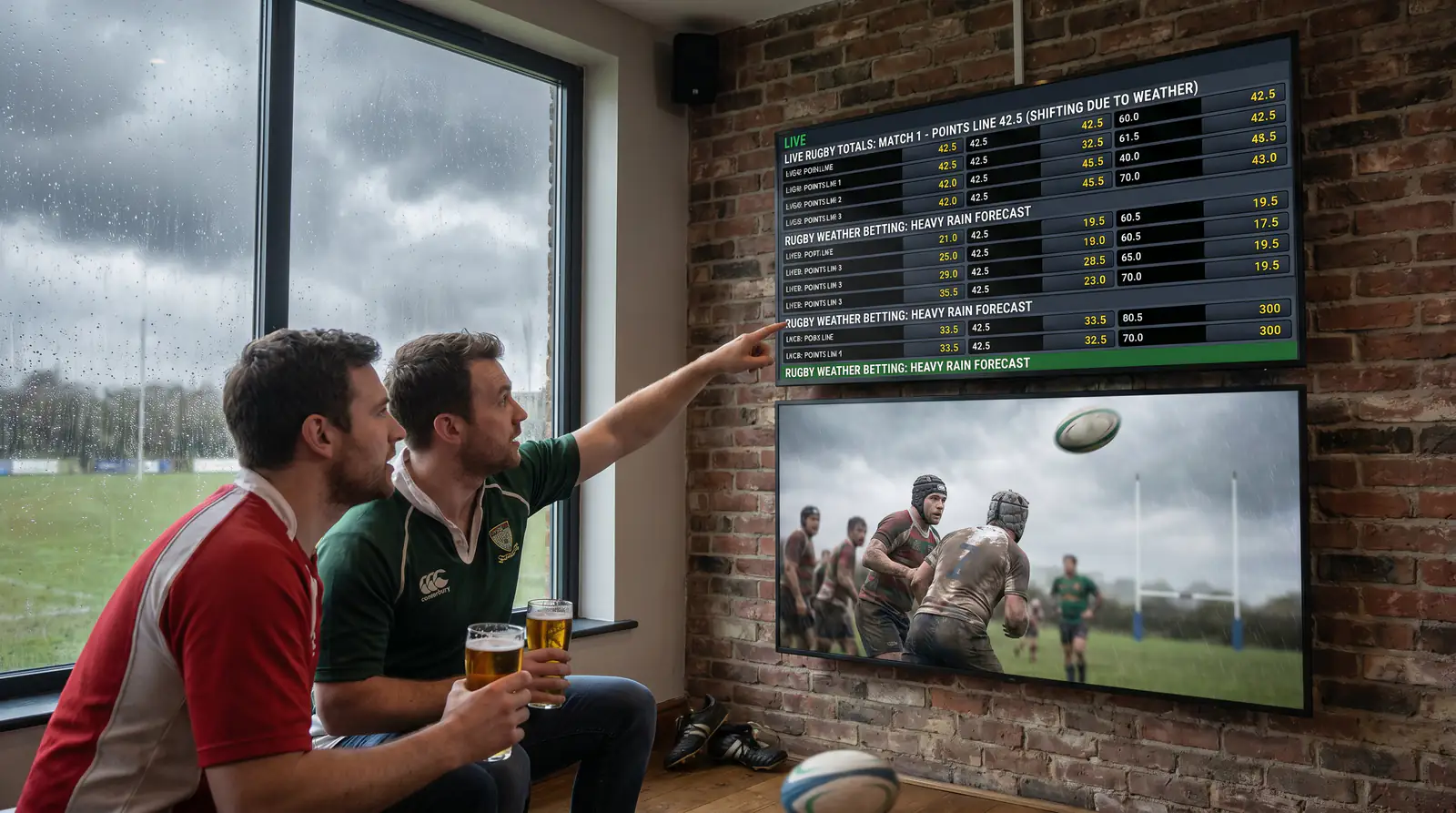
The reverse is also valuable. A pre-match line set for heavy rain forecast that did not materialise will be too low for the first 20 minutes of the match. Live totals overs in those windows are sometimes priced 5 to 8 points below where they should be. The window closes once the bookmaker’s model has caught up with the actual conditions, usually within 25 to 30 minutes.
The pre-match weather workflow that works for me
My routine on Saturday mornings. Pull the official forecast for the venue at kick-off time, with wind speed and direction, precipitation, and temperature. Cross-reference against the operator’s line and the line movement since opening. Decide whether the line reflects the forecast or lags behind. Stake when the lag is meaningful — usually a 3-plus point gap between my modelled total and the bookmaker’s line, given the conditions.

Stadium-specific patterns get layered on top. A Twickenham fixture with a 15 mph cross-wind reads differently to the same wind at Murrayfield. A Principality Stadium fixture with roof status unclear is a hold-off bet until the operator confirms — the difference between indoor and outdoor conditions is the difference between a 50.5 total and a 44.5 total. For the broader totals methodology that sits behind these weather adjustments, see my piece on totals and weather lines together.
