
UK Gambling Sponsorship Ban: What It Means for Rugby
 Available in US
The decision that started in football and rolled into rugby
The headline is football’s. In April 2023, Premier League clubs collectively agreed to withdraw gambling sponsorship from the front of matchday shirts — the first UK sports league to take such a measure voluntarily. The ban takes effect from the end of the 2025/26 season. Gambling brands continue to be permitted on sleeves, in stadia, and as official partners. That carve-out is important and often misunderstood.
The reach into rugby is less direct but no less real. Eleven of thirteen Gallagher Premiership clubs carried a gambling sponsor in the 2023/24 season. The 65 percent share of televised rugby union matches in the UK that featured visible gambling branding in 2022 tells you how saturated the sport was. The cross-sport code that the Betting and Gaming Council has co-developed with sporting bodies now reaches into rugby explicitly — and the financial implications for clubs, plus the practical implications for bettors, are still working through the system.
Voluntary code and the football precedent
The Premier League’s April 2023 decision was a voluntary action, not a statutory ban. The 2023 white paper had flagged sponsorship as an area for industry self-regulation, and the Premier League acted ahead of formal legislation. The implementation timeline was deliberately long — effective from end of 2025/26 — to allow clubs to renegotiate sponsorship deals and find replacement revenue.
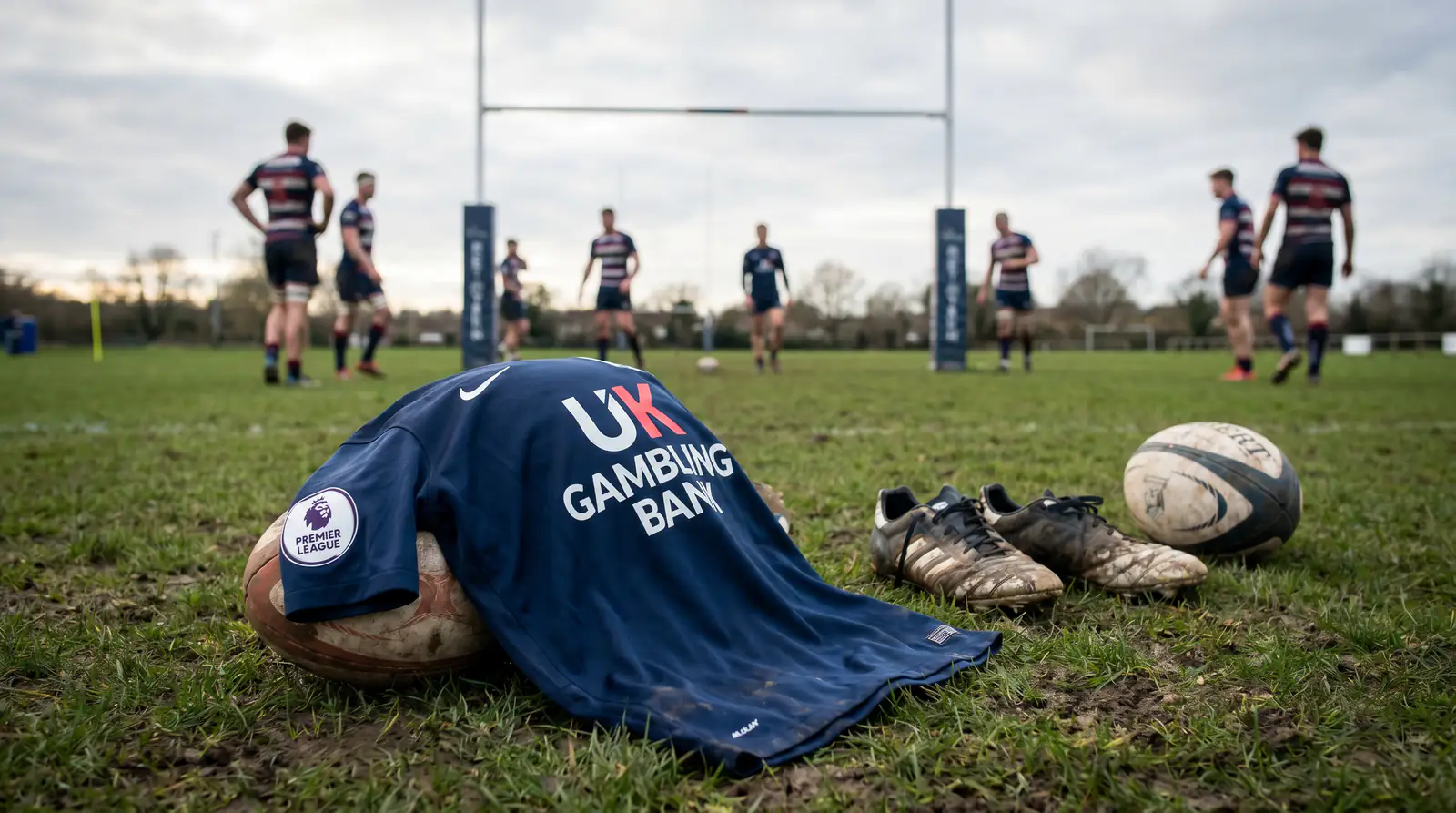
The Premier League’s own statement made the structural framing explicit: clubs collectively agreed to withdraw gambling sponsorship from the front of matchday shirts, becoming the first sports league in the UK to take such a measure voluntarily in order to reduce gambling advertising. The voluntary framing matters because it sets a template — other sports can follow without waiting for legislation.
The carve-outs reflect commercial reality. Sleeve sponsorship continues. Stadium signage continues. Official-partner status continues. The effect is to remove the most prominent and televised single advertising slot — the front of the shirt during matches — while leaving the wider commercial relationship intact.
Cross-sport code and rugby
The cross-sport code on gambling sponsorship was developed by the Betting and Gaming Council with sporting bodies including the RFU and RFL. The code commits operators to standards on advertising content, sponsorship visibility, and protective measures around young audiences. The implementation across rugby specifically has been more gradual than in football, partly because the financial dependency on gambling sponsorship is structurally different.
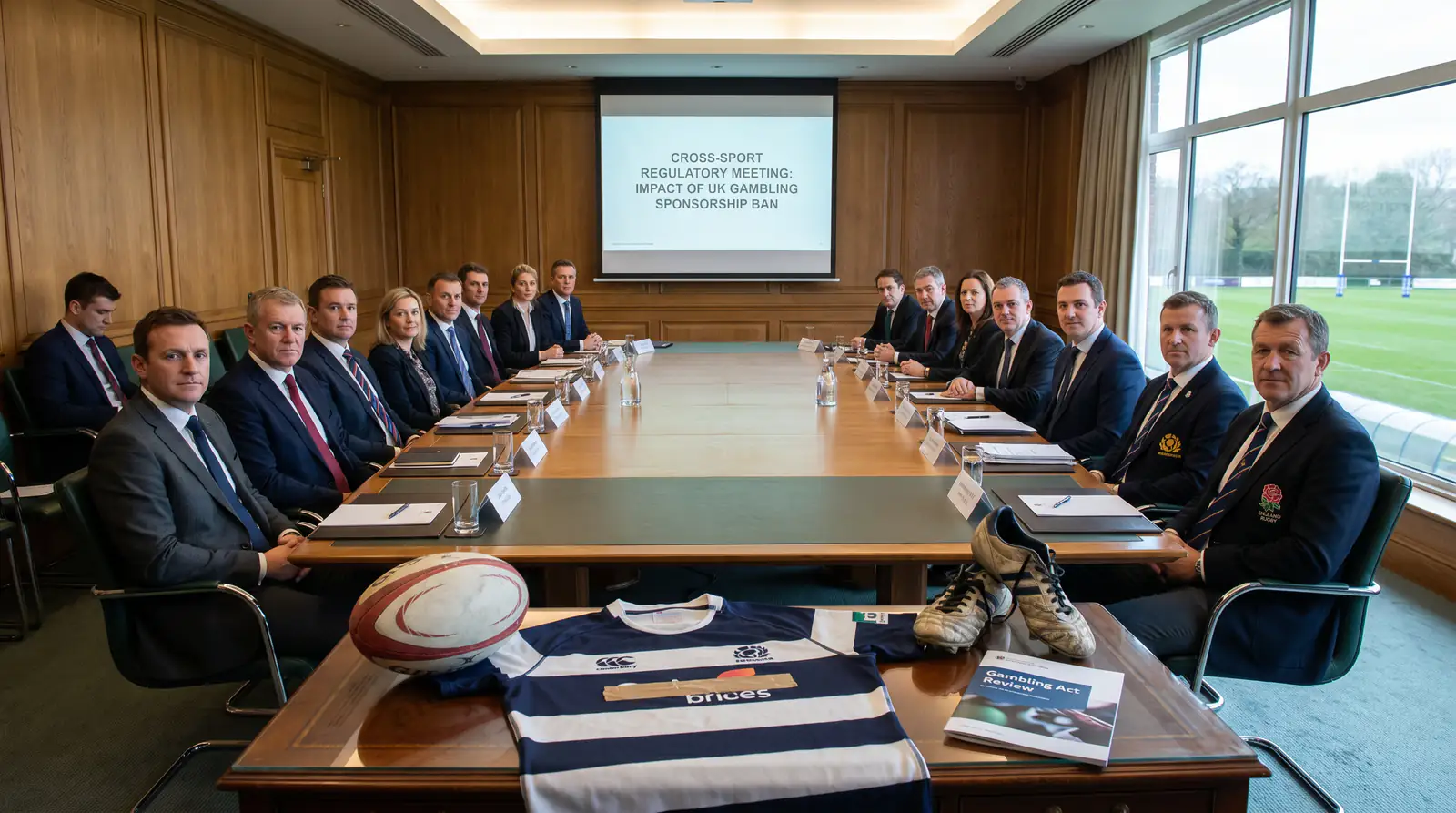
The 65 percent figure for televised rugby union matches with visible gambling branding in 2022 is the baseline against which any change is measured. The cross-sport code does not eliminate that branding; it sets standards for how it can be deployed. Specific restrictions cover when adverts can air, what messaging can be used, and how cooling-off periods around matches are structured.
For rugby league, the RFL’s participation in the code applies similar principles to Super League and Challenge Cup broadcasting. The visibility of gambling brands in league broadcasts has historically been lower than in union, partly because the league’s overall commercial profile is smaller, but the regulatory framework now applies symmetrically.
Financial impact on clubs
The financial scale of gambling sponsorship in European rugby is substantial. Industry analysis put the combined value of gambling sponsorships in European professional rugby at over £40 million in 2024. That sum, spread across union and league competitions and across club-level deals, sleeve deals, stadium partnerships, and broadcast advertising slots, represents a meaningful share of clubs’ commercial revenue.

The pressure on club finances from any sponsorship transition is real. The Gallagher Premiership saw every club post a loss for the third consecutive year in 2023/24. Removing or restricting gambling sponsorship — even partially — affects revenue lines that clubs are already struggling to replace. The two-year notice period built into the Premier League’s voluntary code was designed to give clubs time to find replacement sponsors; whether that has worked in practice depends on the club and the deal.
For bettors, the impact is indirect but not zero. Financial pressure on clubs affects squad stability, recruitment, and competitive consistency — all of which feed into the form data that ante-post and outright betting depends on. A Premiership club that loses a £2 million annual gambling sponsorship and cannot replace it at the same value is a club that may rotate squad players more aggressively during congested fixtures, affecting handicap and totals lines.
Effect on betting product
The sponsorship changes do not directly affect the prices and markets offered by bookmakers. UK-licensed rugby sportsbooks continue to operate under Gambling Commission licences regardless of which clubs they sponsor. The 1.6 million combined URC attendance and 1 million Champions Cup attendance figures in recent seasons reflect a sport that remains commercially active, and bookmaker volumes continue accordingly.
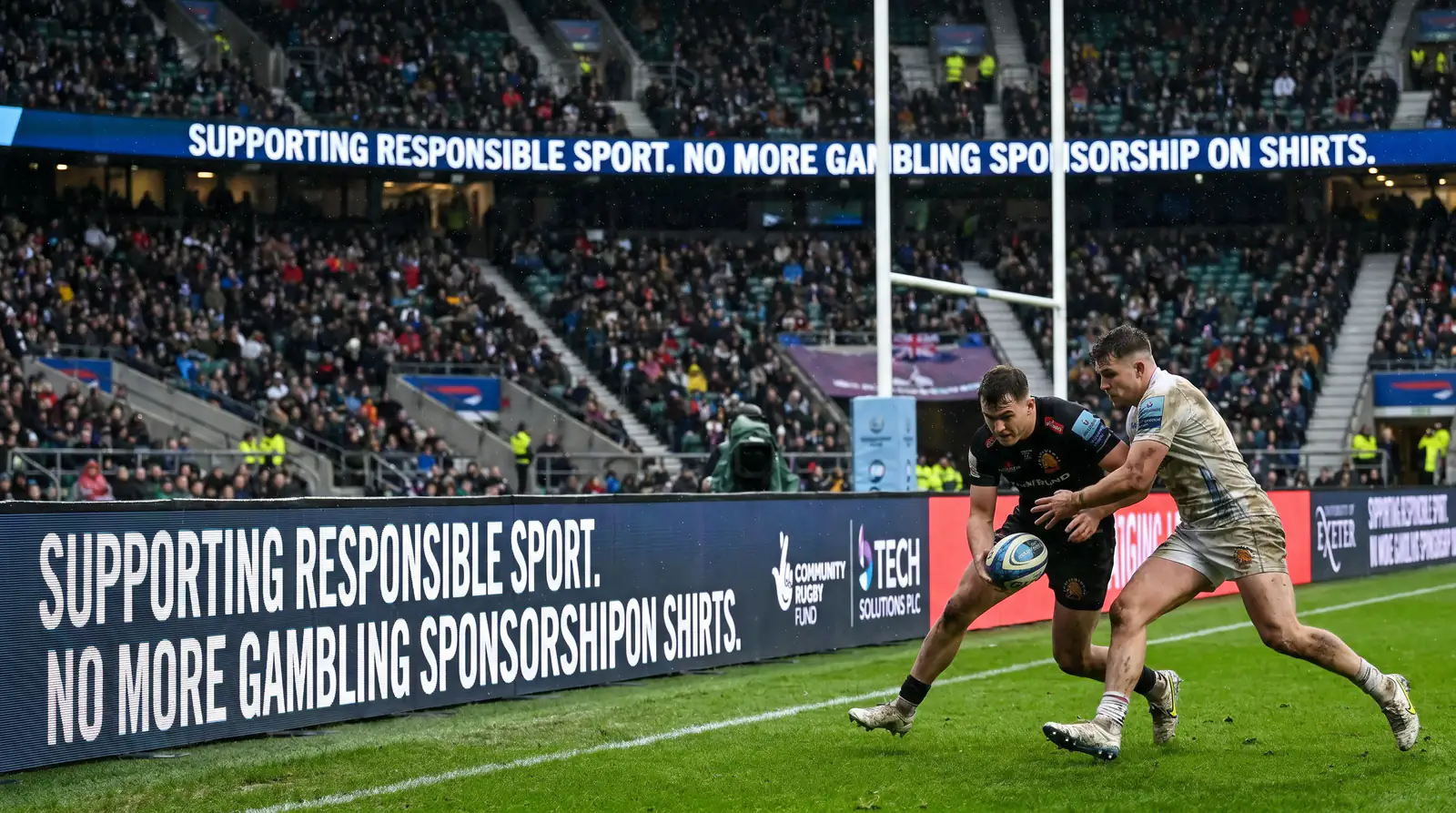
Where the sponsorship rules do affect the betting product. Advertising restrictions limit when and how operators can promote rugby markets — pre-watershed advertising, in-broadcast promotional integration, and athlete-endorsement formats are all constrained by the cross-sport code. The result is less prominent advertising of rugby markets compared with five years ago, though the underlying products remain unchanged.
The visibility shift may also affect betting volumes at the margin. Operators rely on prominent sponsorship visibility to drive recall and new account acquisition. Reduced visibility correlates with reduced acquisition spend per converted customer, which over time can compress the welcome-offer landscape — operators chasing fewer new customers may run smaller offers per customer, even if the structural payout rates remain stable.
Timeline and next steps
The Premier League’s front-of-shirt ban takes full effect from the end of the 2025/26 season. Voluntary cross-sport code commitments continue to develop. Statutory levy collection is now operational, funding research and treatment. Affordability check frameworks continue to evolve with operator feedback.
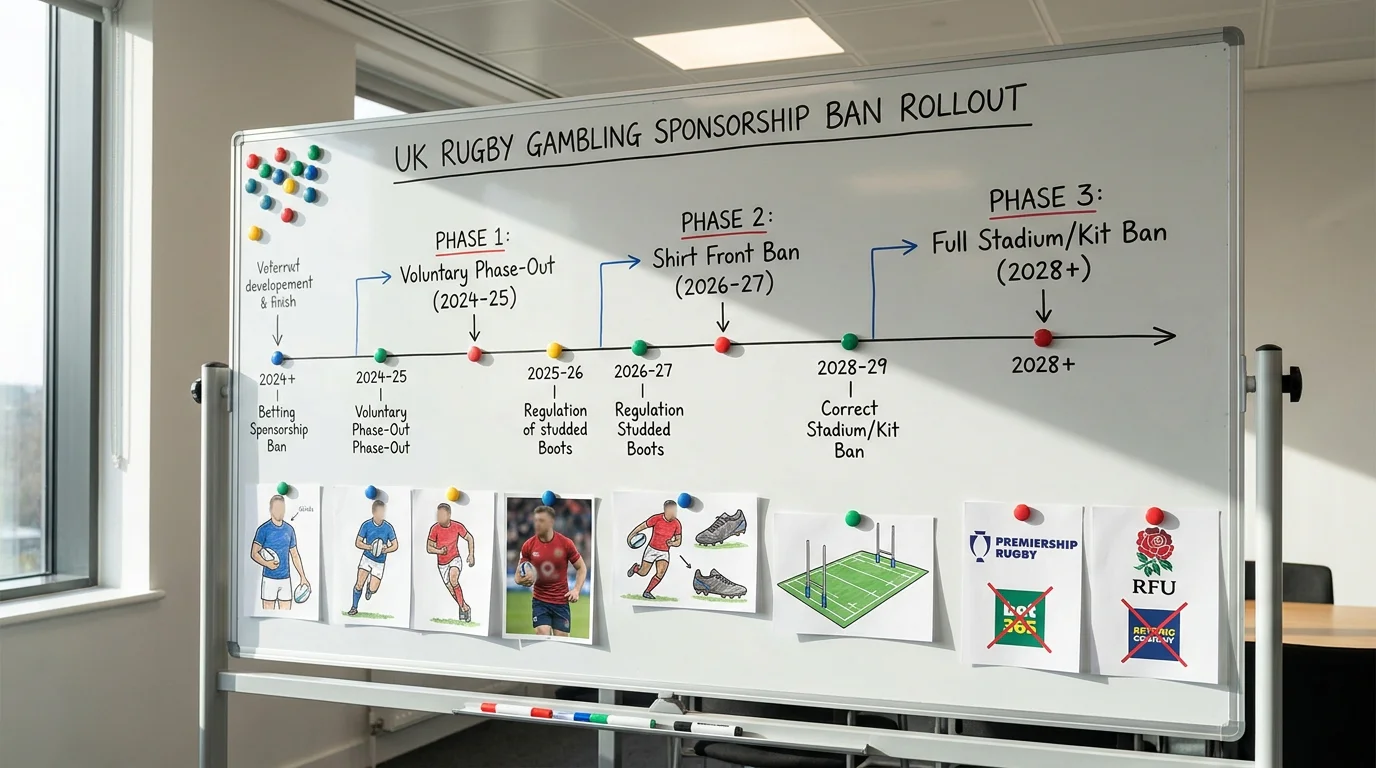
The next phase of the conversation is around broadcast advertising and in-app advertising. Both areas have been flagged by ministers and regulators as candidates for further regulation. The likely direction is more restriction on pre-watershed exposure, more restriction on athlete-endorsed marketing, and more standardisation of risk warnings in advertising content.
For rugby specifically, the question of whether the cross-sport code will translate into a formal sleeve and stadium ban is open. The football precedent left sleeves and stadia uncovered; rugby’s regulatory journey may follow the same trajectory or may diverge if the financial pressure on clubs justifies a more permissive long-term position.
What rugby bettors should actually take from this
The sponsorship landscape is changing, but the betting product is not changing in ways that should affect daily betting decisions. The same markets, the same operators, the same regulatory framework. What is changing is the commercial environment around rugby — and indirectly, the financial pressure on clubs that feeds into form variability and ante-post risk. The 11 of 13 Gallagher Premiership clubs with gambling sponsors in 2023/24, the £40 million-plus European rugby total, and the 65 percent televised visibility figure are the baseline against which any future change should be measured. For the regulatory framework that sits behind the sponsorship discussion, see my piece on UKGC licensing context.