
Gallagher Premiership Betting: Markets, Form Lines, and Club Liquidity
 Available in US
Why the Prem is the strangest league I bet on
I have spent nine seasons pricing Premiership games, and the league still throws curveballs that no other rugby competition does. Roughly £320 million in revenue makes the Gallagher Prem the biggest professional union league in the world by some distance, and the Sky Sports deal alone pumps £180 million a year into the ecosystem. None of that money is reaching the bottom line at club level — and that is the puzzle every Prem bettor has to solve.
Take the 2023/24 season. Every single club posted a loss for the third year running. That same season the league produced two of the most volatile play-off races I have seen. When clubs are financially fragile, recruitment cycles shorten, squad depth thins out in awkward places, and ante-post lines drift in ways that look irrational from the outside but make complete sense once you understand the cash flow underneath.
This piece walks through the markets that matter in the Prem, the form lines I trust, and where I think the genuine betting edge sits in a league that does not behave like a standard top-flight competition.
League structure and the fixture rhythm bettors miss
Ten clubs, 18 regular-season rounds, top four into the play-offs. On paper that is a clean format. In practice the Premiership 2025/26 season has already produced 85 matches and 732 tries by the data I have to hand — an average of 8.6 tries per game. That number alone tells you the league plays a very different brand of rugby to, say, the URC winter window.
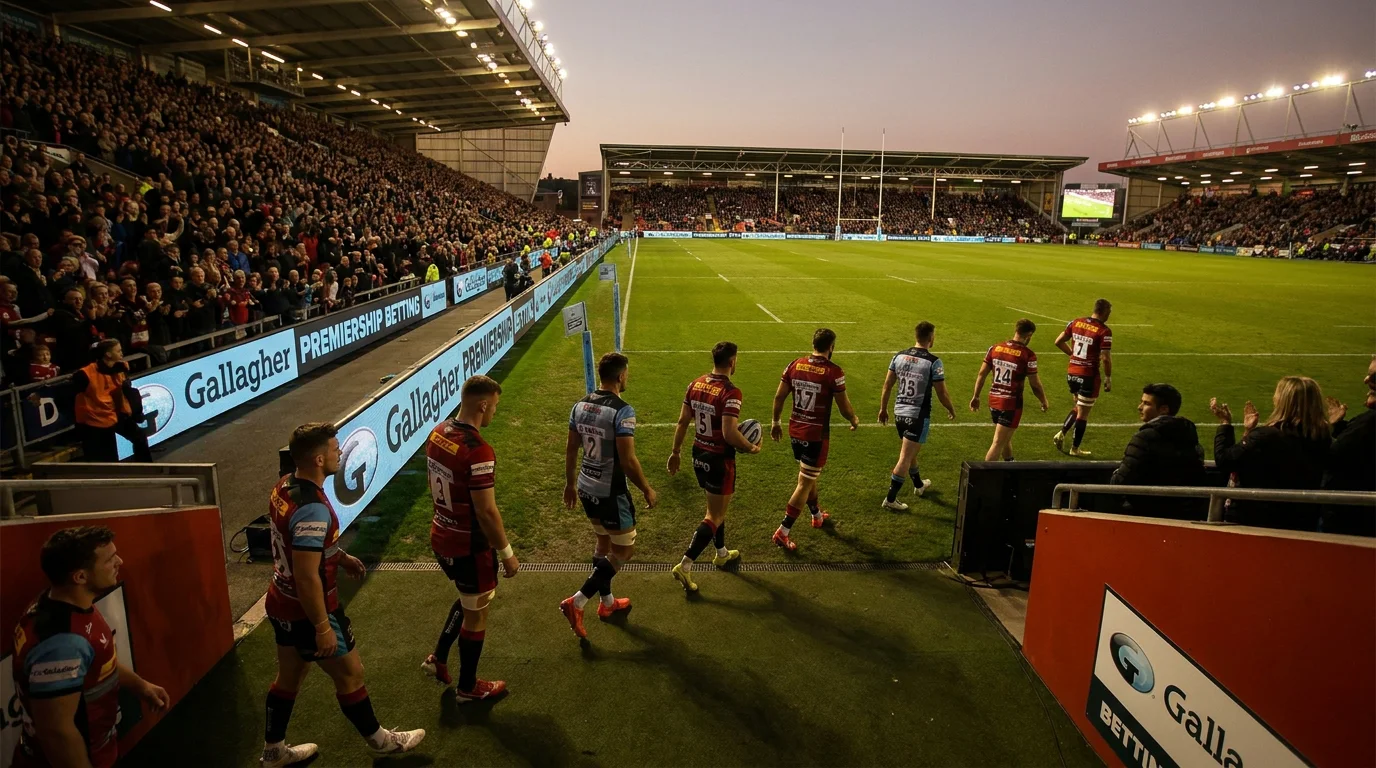
The fixture rhythm matters more than newcomers think. Prem clubs absorb European weekends, international windows, and a packed Christmas-New Year block that compresses three rounds into eleven days. I pay close attention to which clubs lose key players to England camp because the betting line often shifts before the team sheet drops, and that early movement is where casual bettors get caught flat-footed.
What I do with this: track the fixture density two weeks out, not just the next match. A side coming off a Champions Cup round of 16 tie followed by a domestic derby is a different bet to the same side coming off a fortnight of rest, even with identical recent form.
Match markets in the Prem and where the prices wobble
The standard menu on every match: 1X2, handicap, total points, half-time/full-time, first try scorer, anytime try scorer. On bigger Friday-night fixtures the depth pushes towards 80-plus markets, including bet builder configurations and player-prop combinations.
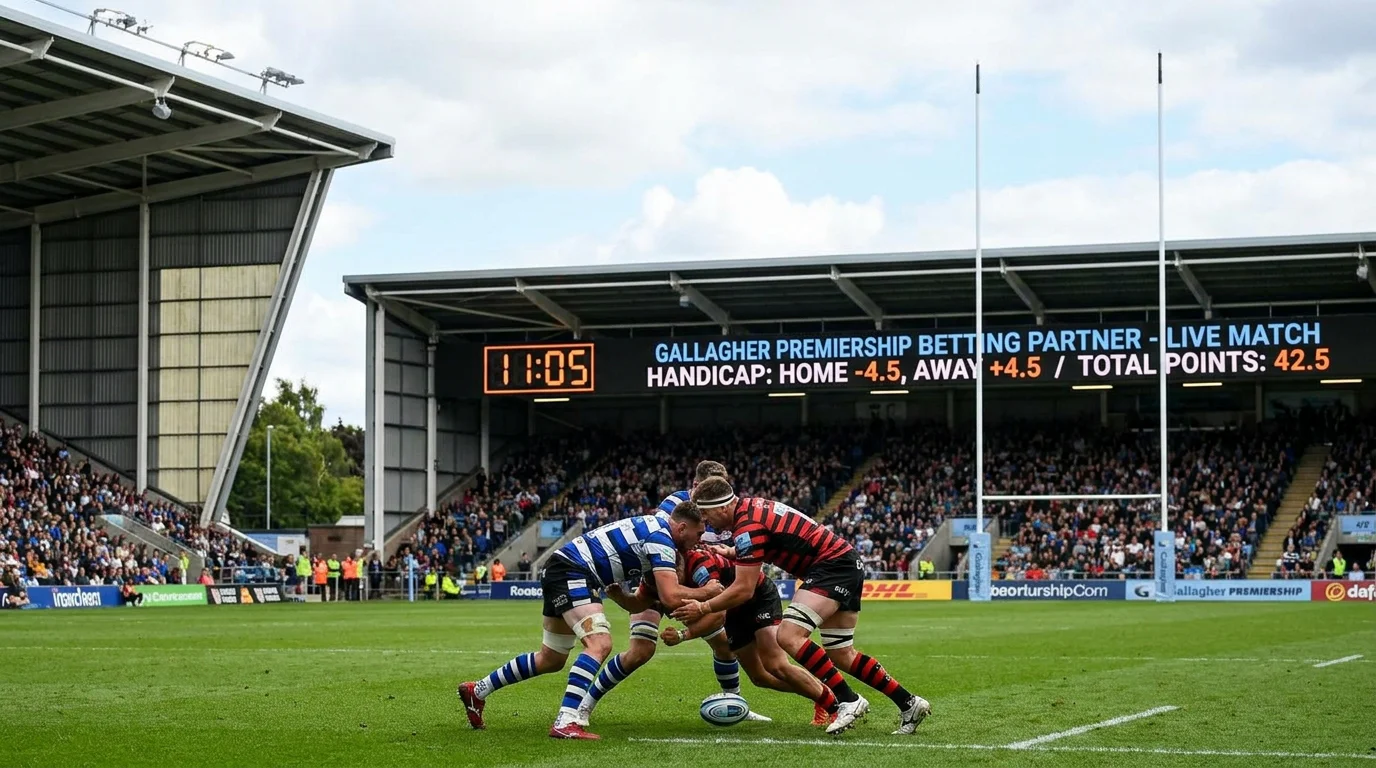
Handicap lines in the Prem usually sit between 4.5 and 14.5 points for in-form fixtures. Anything wider and you are looking at a mismatch where the bookmaker is effectively daring you to buy a sub-par favourite. The draw is genuinely live in the Prem more often than in international rugby — partly because the league has historically tolerated tighter games and partly because kicking accuracy fluctuates wildly between sides. I do not ignore draw-no-bet pricing in this league; I have backed it into profit more than once over a season.
Total points lines deserve their own paragraph. The 8.6 tries-per-match average looks high until you split it by venue and weather. Indoor venues with stable conditions push totals up; coastal grounds in February push totals down. Bookmakers know this, but their adjustments are often half a beat behind the forecast.
Bonus point and margin markets — the league’s signature edge
The Premiership scoring system gives a bonus point for scoring four tries in a match and a losing bonus point for losing by seven or fewer. That changes how teams play the last twenty minutes, and it changes how I price totals and margin markets late.

If a side trails by ten with fifteen to go and they are already at three tries, the kicking decisions change. Penalties get tapped instead of kicked at goal. The defensive line concedes territory to force errors. Live totals lines do not always price this shift fast enough. I have made money in the last quarter of Prem games by reading the bonus-point chase before the bookmaker did.
Winning margin markets in the Prem are typically banded — 1 to 12, 13 to 24, 25-plus. The most reliable value sits in the 13 to 24 band when a clear favourite hosts a mid-table side. Mismatches push more often into 25-plus than newcomers expect, especially when the underdog is rotating before a European weekend.
Play-offs and outright betting on a fragile league
Ante-post on the Prem is where I have to think hardest. The play-off race usually condenses into a five-team scramble for four spots, and the outright winner market always punishes lazy assumptions about regular-season form. The team that finishes top of the league has not won the play-off final in every recent season — far from it. Knockout rugby in this league is its own animal.

The Leonard Curtis Rugby Finance Report 2025 captured something I think about constantly when pricing futures. As the analyst put it, the rebranded Gallagher Prem has shown encouraging signs of growth across attendances and digital engagement, yet with all clubs making losses for a third successive year in 2023/24 the league is still navigating various hurdles. That hurdle status is not just an accountancy concern. It feeds directly into squad turnover, late-season minutes management, and how committed certain sides are to a top-four push when survival is the real conversation in the boardroom.
When I price the final play-off slot, I look at the financial pressure on the bubble teams as carefully as I look at the points table. A club nervous about next year’s recruitment can play differently in April.
Club finances and the ante-post risk nobody talks about
This is the part I wish more punters thought about before locking in a winter ante-post bet. The same analyst summary noted that the league is still navigating various hurdles after three straight loss-making seasons, and that environment has real consequences for an ante-post position you might hold for four or five months.

I have seen squads gutted by mid-season departures because a key player moved abroad on improved terms. I have seen training-ground injuries cascade when a club cannot afford to add depth in January. I have seen a play-off contender effectively pause their season once the head coach signalled a contract dispute. None of this shows up on a form line until after the line has moved against you.
My rule for Prem ante-post: stake smaller, spread across two or three sides, and avoid going long on outrights until the international windows have cleared. The price you take in October is rarely worth holding into January if you cannot recoup value by partial cash out along the way.
FAQ
Read more on related ground: bonus point markets explained.
