
Six Nations Triple Crown Betting: A Four-Way Sub-Tournament
 Available in US
The trophy hidden inside the championship
The Triple Crown is the oldest competition inside the Six Nations. Four home unions — England, Ireland, Scotland, Wales — and whichever one beats all three of the others takes the prize. France and Italy are along for the ride. The competition runs across only six of the fifteen tournament matches, which means the Triple Crown is settled by a small sample and prices respond aggressively to single results.
The 1,050,465 combined attendance across the 2025 tournament tells you the broader interest. Inside that interest, the Triple Crown sits as a niche market that often offers cleaner pricing than the championship outright because the operator’s model has fewer match results to base the price on. That smaller sample is both the reason for the volatility and the reason for the occasional value.
What counts as Triple Crown
Beating all three of the other home unions in the same tournament. England, Ireland, Scotland, Wales each have three Triple Crown fixtures — one against each of the other three. If one of the four wins all three of its home-union fixtures, it claims the Triple Crown. If none does, the prize is not awarded that year.
The structural detail that matters: the home-union fixtures are not evenly distributed across the championship rounds. Some years deliver three Triple Crown fixtures in rounds one and two, leaving the late rounds for tier-mixed matches. Other years stretch the home-union games across rounds two through five. The fixture order changes how the market moves through the tournament.
Results against France or Italy do not count for Triple Crown purposes — a home union that loses to France can still win the Crown if they beat the three other home unions. That detail is occasionally relevant for combined betting: a side might win the Crown but miss the championship outright, or vice versa.
Pre-tournament pricing
The Triple Crown market opens alongside the championship outright in autumn. Pricing reflects which home union is favoured to beat all three of the others — a function of recent form, fixture order, and home-away splits within the home-union sub-tournament.
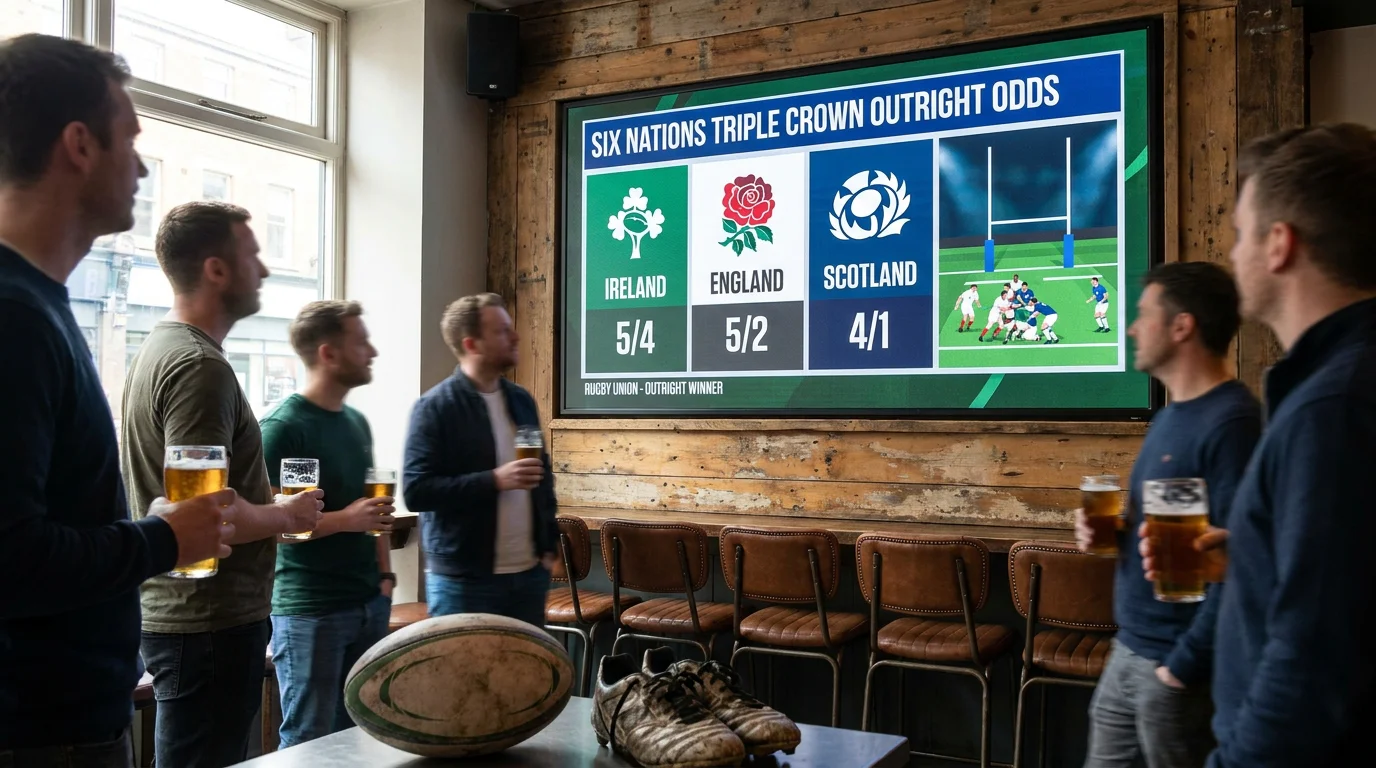
Typical opening prices on the favourite home union sit at 2.00 to 3.00. The second-favourite usually opens at 4.00 to 5.00. The third and fourth home unions at 6.00 to 12.00, with one historical pattern: Scotland and Wales rarely open shorter than 5.00 because the recent record suggests neither has consistently swept all three opponents.
The honest pricing reality: the Triple Crown market is small and the operator margin is wider than on the championship. Implied probabilities can be 7 to 12 percent overround across four candidates plus “not awarded”. Line shopping across operators is worthwhile because individual operators can be 5 percent off market average on specific home unions.
Historical strike rate by team
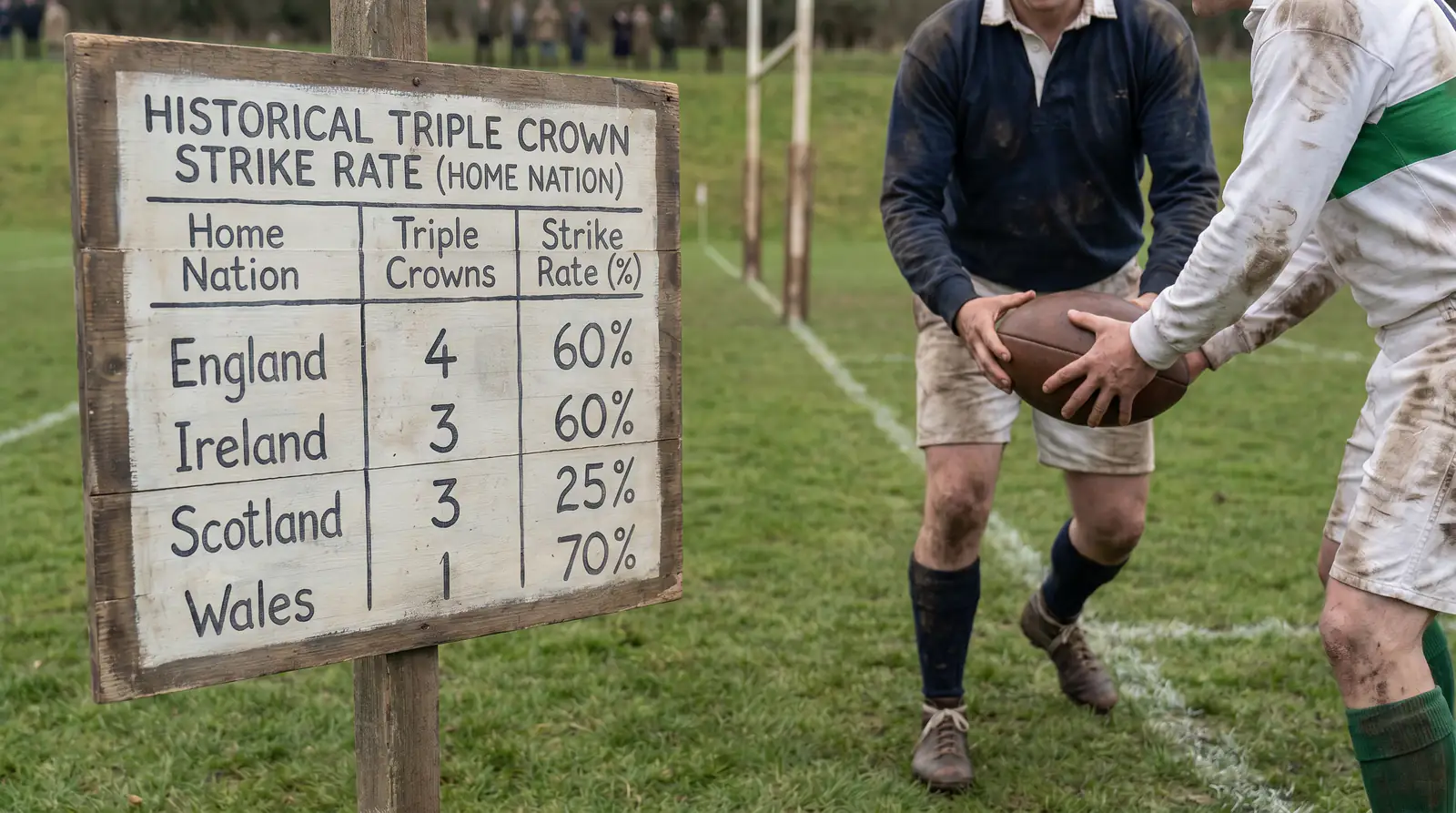
Ireland and England have dominated Triple Crown wins over the past two decades. The recent run, including the 2025 sample of 1,050,465 attendance and the 995,964 across 15 matches in 2026, has continued the pattern broadly. Scotland and Wales win the Crown less often, but each has had specific years where their fixture order and form aligned for a sweep.
What this means for pricing. The market’s structural bias toward Ireland and England is justified by the historical record, but the implied probability is sometimes overstated. A typical 2.50 to 2.80 price on the favourite implies 35 to 40 percent probability. The actual probability in a given tournament depends on squad form and fixture order — sometimes the favourite is more likely than the implied probability, sometimes less. The market does not always discriminate well between these scenarios.
The second-favourite is where I have found cleaner value. A 4.50 to 5.00 price on the second home union implies 20 to 22 percent. Across recent tournaments, the second-favourite has won the Crown more often than that implied probability suggests, because favourites have a habit of dropping a single match they were expected to win.
Fixture order impact
The order of home-union fixtures changes the Crown probability significantly. A side that plays all three home-union games at home has a much higher Crown probability than the same side playing all three away — home advantage in elite union is roughly 3 to 5 handicap points per fixture, and that adds up across three games.
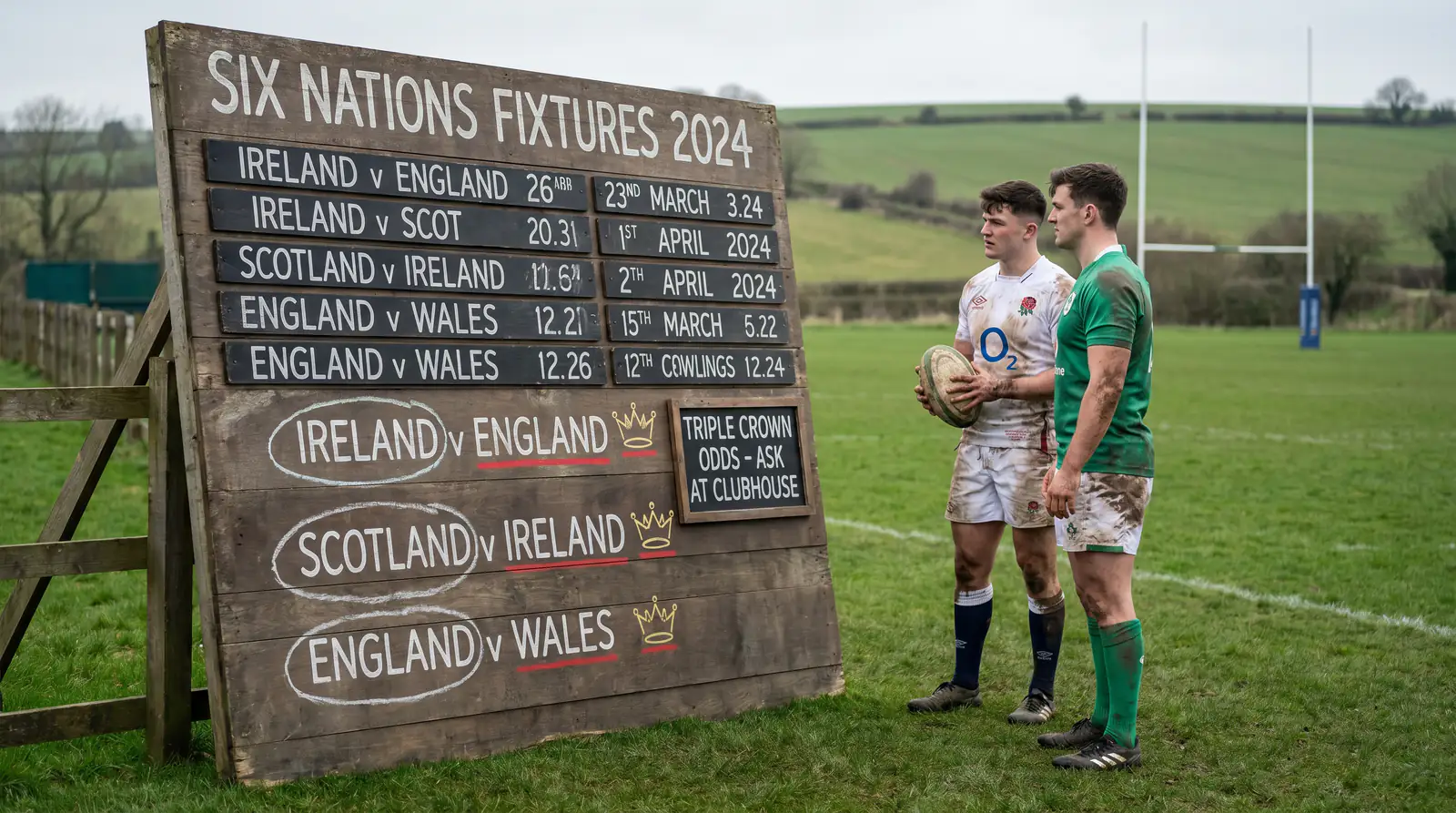
The other order factor: when the home-union games happen in the tournament calendar. A side with home-union fixtures in rounds three through five (after squad form is settled and weather is more predictable) has different probability than the same side with home-union fixtures front-loaded in rounds one and two when form is noisier.
What I do with the fixture order: I model each home union’s individual match probability across their three home-union fixtures, then multiply for the combined Crown probability. The bookmaker price either matches my model (no value) or diverges (potential value). The divergences are usually 2 to 4 percentage points — small enough that stake sizing matters more than the raw edge.
Live Triple Crown windows
The Triple Crown market is most active in the rounds where home-union fixtures actually happen. Outside those rounds, the market sits with no new information and prices barely move. Inside those rounds, the prices move aggressively after every home-union match result.
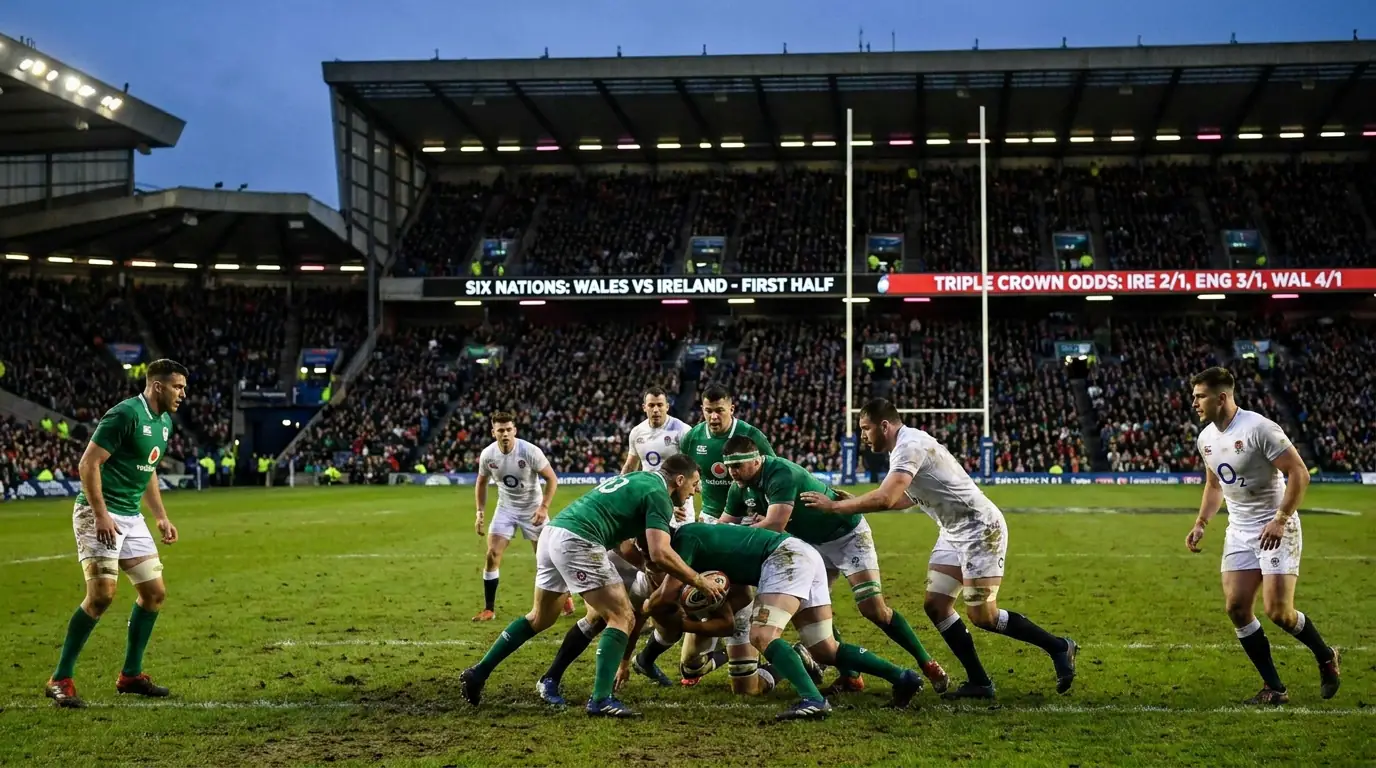
My approach. I pre-flag which rounds contain Triple Crown fixtures for the relevant tournament, and I trade during those windows. The cleanest action is on the morning of a Triple Crown match — a favourite home union playing their first or second home-union game of the tournament, with the bookmaker’s overall Crown price reflecting both that match and the remaining ones.
After a Triple Crown result, the surviving Crown candidates re-price. A favourite that wins their first home-union match shortens from 2.50 to 1.80. The same favourite losing drifts beyond 6.00. Partial cash out makes sense on positions taken at the opening price once the favourite has won their first home-union fixture — lock in some profit, leave residual exposure for the remaining matches.
The cleanest pattern in the market
The Triple Crown market rewards bettors who model the home-union sub-tournament specifically rather than treating it as a derivative of the championship outright. The fixture order matters more than the pre-tournament form ranking; the historical pattern of favourites dropping a single home-union game is real and worth pricing in. Across recent tournaments the second-favourite has been better value than the front-runner more often than not, and that pattern is unlikely to flip suddenly. For the related last-place market on the same tournament, see my piece on Wooden Spoon market.