
Six Nations Betting: Outrights, Match Markets, and Tournament Value
 Available in US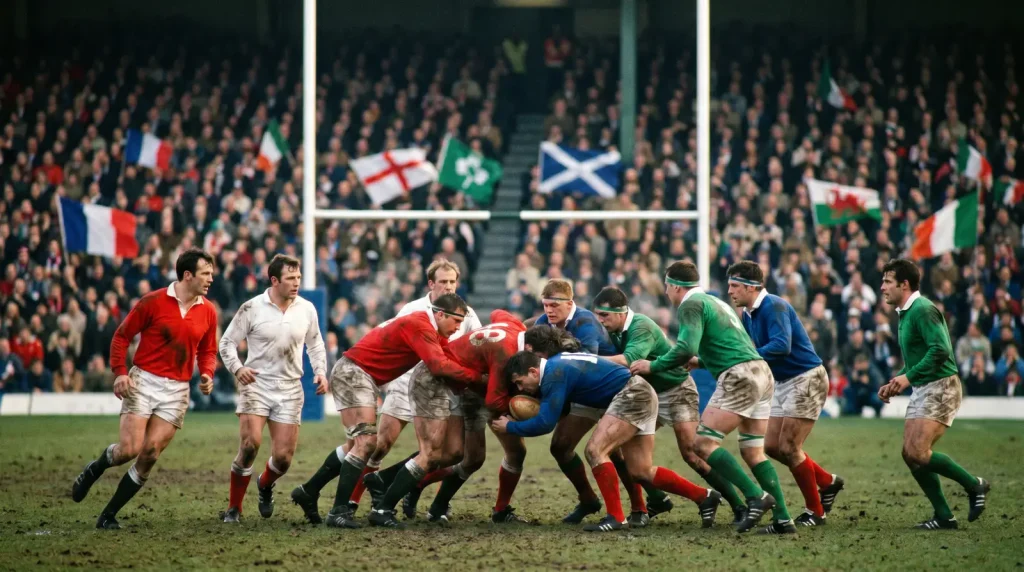
Six Nations weekend is when my staking sheet doubles in length and my coffee intake triples. Across nine years of pricing this tournament — first as a trader, now as an analyst — I’ve watched the market evolve from a sleepy ante-post pond into the densest pricing battleground in northern hemisphere rugby. Five fixtures over a single Saturday, all of them live in their own way, all of them feeding into a championship outright that moves with every try scored.
The tournament pulled 1,050,465 spectators through the gates across the 2025 edition — an average of 70,031 per match — and the betting handle behind those bodies is what makes this competition so distinctive. UK bookmakers price more rugby markets on a Six Nations Saturday than they do on the rest of the rugby calendar combined. If you want to understand where the real edges live, you have to think about the tournament as one connected machine, not five isolated weekends.
How the Six Nations format shapes every market on the board
I’ll be honest — I used to assume punters all understood the structure. Then I watched a friend lose a stake because he didn’t realise bonus points existed. The Six Nations runs as a round-robin: each nation plays every other once, with home advantage rotating every two years. Five rounds, fifteen matches, one trophy. Simple on paper. Less simple when you start pricing it.
Bonus points are the wrinkle that catches casual bettors out. Four tries in a match earns one bonus point. A losing margin of seven or fewer earns another. Grand Slam — winning all five — adds three on top of the championship. That bonus-point structure means a 23-19 result can shift outright odds harder than a 33-12 result, because the loser walks away with two points instead of zero. Bookmakers know this. The ante-post line moves accordingly.
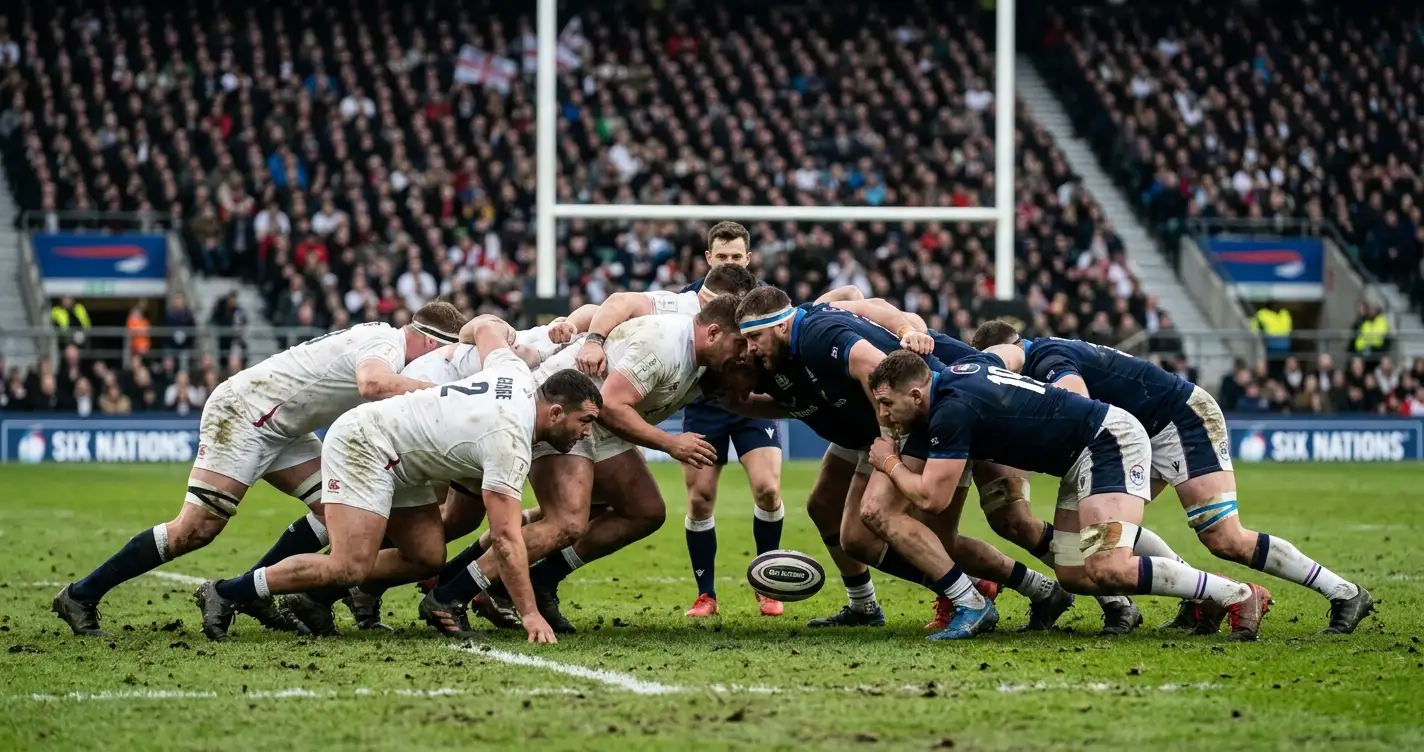
The 2026 edition produced 111 tries across fifteen fixtures — 7.4 per match — and the gap between the top of the table and the bottom often comes down to two or three bonus points hoarded in defeat. When I’m modelling the outright market, I run two parallel projections: pure win-loss and bonus-point-adjusted. The gap between those two ladders tells you where the open price is mispriced.
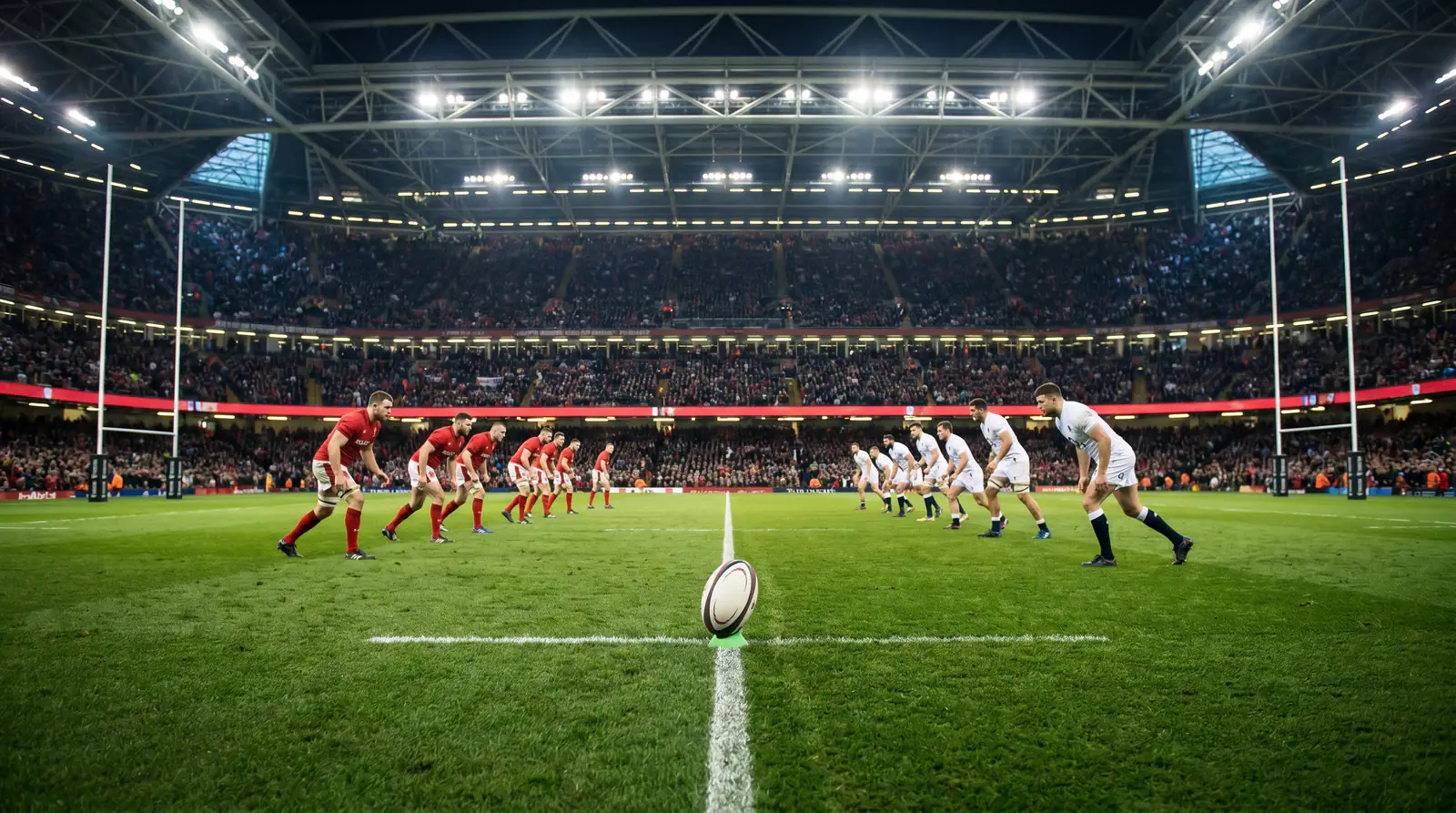
The format also dictates fixture order. Opening weekend tends to be cagey — sides are still finding cohesion, line speed is conservative, totals come in low. By round four, the rust is gone and the totals lines push toward 50. If you’re shopping handicaps, the calendar position of the match matters as much as the team news.
Reading the championship outright board
Outright pricing on the Six Nations is the most reliable opening exercise of my rugby year. Bookmakers post their first championship lines in November, usually within forty-eight hours of the November internationals wrapping. That early window is where the sharpest money goes in — before injury news, before squad announcements, before the public has had a chance to remember whether their hangover from last year’s tournament was deserved.
Pre-tournament favourites typically sit between 1.80 and 2.50 in decimal. The second favourite is usually somewhere between 3.00 and 4.50. The bookmaker’s job in that ladder is to make every position carry a defensible probability while keeping the overround respectable, and they tend to over-shorten whoever won the previous edition. The “champion’s hangover” — where last year’s winner trades shorter than their form deserves — has been a consistent value spot for me across the past four tournaments.
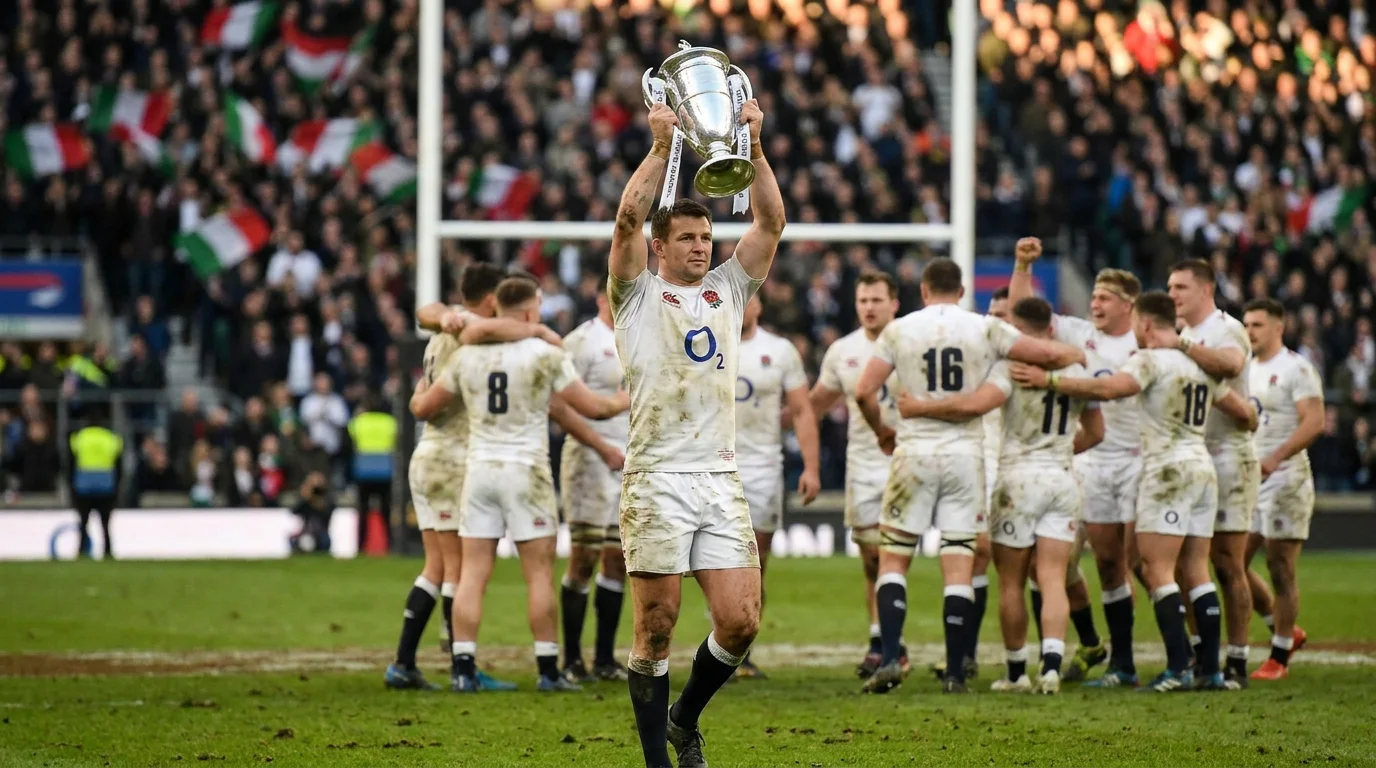
Prize money tells you something about the squad selections you’ll see, too. The 2025 winners, France, walked away with £6.5 million. England, finishing second, picked up £3.5 million. That gap matters when you’re trying to read whether a coach will rotate or chase the win in a dead rubber. The prize fund itself has climbed by roughly 12.5% since 2020, pushing past £18 million in total payouts, and the federations now treat the Six Nations as a primary revenue line rather than a marketing exercise.
When the same logic gets applied to a bigger global stage, the analyst commentary tends to follow a similar template. Betfair’s Sam Rosbottom captured it cleanly when previewing the next World Cup cycle: “South Africa are 9/4 favourites to win the Rugby World Cup for a third successive time in 2027. The Boks have cemented their position as World No.1 and are likely to collide with 7/2 second-favourites New Zealand in the quarter finals. England’s strong autumn form sees them as fourth favourites at 5/1.” The Six Nations operates on the same gravitational logic — recent form bends the price more sharply than long-term pedigree.
The other thing the outright board hides is the correlation between the championship line and the Grand Slam line. They’re priced as separate markets, but they share the same path-dependent maths. A team trading at 2.20 to win the championship and 5.00 for the Grand Slam is implying roughly a 45% chance of winning the trophy and a 20% chance of winning every match. Those numbers only make internal sense if you assume the team’s win probability per match averages around 73%. Whenever I see those two lines drift out of step — usually because one market moved before the other on team news — there’s a quiet arbitrage in the gap.
Grand Slam and Triple Crown markets at a glance
Grand Slam is the headline secondary market. Pre-tournament pricing on the top favourite typically lives between 4.00 and 6.00, and historically a Grand Slam happens roughly once every three or four tournaments. That mismatch — between the implied probability of around 20% and the historical strike rate closer to 25-30% — is something I’ve flagged for years. The bookmaker rarely concedes the full historical rate because they’re pricing in a specific season’s fixture difficulty, not a long-run average.
The Triple Crown market — the sub-contest between England, Ireland, Scotland, and Wales — is a different animal. It only activates when one of the four home unions beats the other three. Pre-tournament prices on the favourite usually sit between 2.50 and 3.50, which understates the dominance Ireland and England have shown in recent cycles. If you’ve got a clear read on which home nation is strongest, Triple Crown is often a cleaner bet than the outright championship because France and Italy are removed from the equation entirely.
The detail I always emphasise — and where I’ve parked a deeper write-up — is that Grand Slam pricing is a two-stage decision. The pre-tournament number is one bet; the live trading window after rounds three and four is another. For a fuller breakdown of when each window offers value, I keep coming back to my Grand Slam betting explained in depth notes.
Match-by-match markets and where the money actually lives
Outrights get the headlines, but the bulk of Six Nations turnover runs through match markets — handicap, totals, and try scorer specials. The typical total points line in a Six Nations fixture sits around 42.5 or 45.5, occasionally pushing to 50 for fixtures involving open attacking sides like France or Italy. Handicap lines run from -3.5 in tight cross-pool fixtures up to -25.5 for the worst mismatches, with the bulk clustered between -7.5 and -14.5.
Try scorer markets are where I do my most patient work. Six Nations 2023 data showed 66% of tries scored by backs and 49% in the first half. That positional bias drives every “anytime tryscorer” price the bookmaker posts. The wingers and outside centres get priced shortest because they finish the moves; the props and locks drift longer because they only score off rolling mauls and pick-and-go phases. When team news drops and a starting back is replaced by a forward — or vice versa — the entire tryscorer board shifts in a way most casual bettors miss.
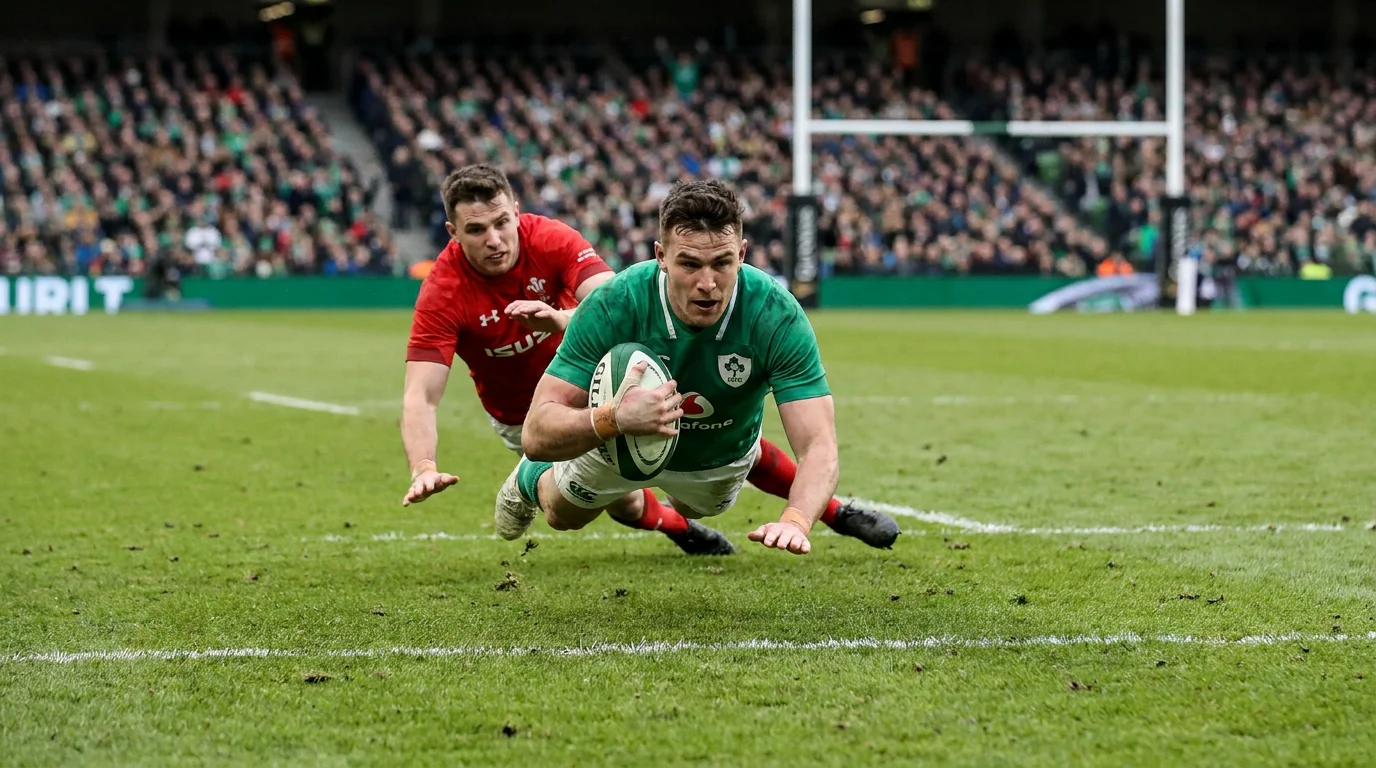
The first-half bias also tells you something about handicap quarter lines. A team favoured by -7.5 is much more likely to cover in matches where they score the opening try, because the first-half scoring concentration means the early lead often becomes a controlling lead. I price first-half handicap separately from full-time handicap for exactly this reason.
Race-to markets — race to ten points, race to fifteen — are another corner where Six Nations data rewards patient analysis. The 49% first-half try concentration translates directly into a strong bias toward whichever side scores first in the race-to-ten line. When you can find that market opening at evens with a clear opening-half attacking edge for one team, it’s often better value than the straight handicap. Most casual bettors ignore it entirely because it looks like a novelty rather than a core market.
Where the value spots actually appear
Most of my edge in this tournament comes from three repeated patterns. The first is the away-favourite undervaluation in round one. Coaches don’t fully trust their preseason work yet, line speed is tentative, and visiting sides with a settled half-back combination consistently outperform their handicap price in the opening weekend. I’ve tracked this across the past five Six Nations and the away favourite has covered in significantly more than the implied 50% rate over that window.
The second is the bonus-point try market in the second half of mismatched fixtures. Italy versus a top-four side, England versus Italy, France versus a depleted Scotland — once the result is settled by half-time, the chase for the fourth try becomes the dominant tactical theme. Over 4.5 team tries on the favourite is a market that frequently opens around 2.10 and closes closer to 1.70 once team news lands.
The third is the under in slow opening rounds — particularly when both sides have rotated their kickers or there’s serious weather in the forecast. When the typical line of 45.5 holds despite a stiff Twickenham crosswind, the under is mathematically the bet. I weight my weather inputs heavily here, and rounds one and two reward that discipline.
Beyond those three patterns, the tryscorer doubles market — combining first and last try scorer — is consistently the worst-priced market on the Six Nations board. Bookmakers know it’s a fun bet, so they bake in extra margin. Avoid it unless you’ve got a specific situational read.
A fourth pattern I lean on harder every year is the bench-impact totals trade. Modern Six Nations sides finish matches with their replacements on the field, and the impact off the bench is now so consistent that the final twenty minutes often produces more points than the third quarter. Live totals lines that drift below the implied closing total at the 60-minute mark are usually the bet. The market discounts late scoring because the broadcast tempo slows down, even though the on-field reality is the opposite.
Finally, treat the round-five accumulators with respect. The final Saturday produces three matches in the same window, and bookmakers offer aggressive multi-builders that look generous on first glance. They’re not. The implied correlation between same-direction outcomes — multiple favourites covering, multiple unders landing — is real, but the bookmaker prices the parlay as if the legs were independent. If you’re going to play round-five multis, pick legs from different fixtures and avoid stacking same-side handicap and totals from one match.
Broadcast context and the money that moves the line
The Ireland versus England fixture in 2025 pulled a peak audience of 5.2 million on ITV1 — the largest overnight peak on the channel for any programme up to that point in the year. The 2026 final weekend on ITV1 and ITVX averaged 3.9 million viewers with a peak of 5 million. The France 48-46 England decider on France 2 averaged 8.02 million viewers and a 42.5% audience share. These aren’t trivia. They’re a proxy for casual money flooding into specific matches.
When a fixture pulls those numbers, the public price drifts in a predictable direction. Punters back the favourite, they back the over, they back the first tryscorer they recognise from the highlights reel. The closing line on those matches tends to over-correct toward the public side, which means the unfashionable position — the underdog plus the points, the under, the unfashionable winger tryscorer — gains relative value in the final hour before kick-off.
This is one reason I do most of my actual stake placement in the half-hour before kick-off rather than days in advance. I want the broadcast audience to have done their work on the line before I commit. The exception is ante-post outrights, where the inverse logic applies — you want to beat the public to the value before televised highlights start moving the price.
Prize money and what tournament economics tell you
The economic structure of the Six Nations is unlike any other northern hemisphere rugby competition, and it filters down to the betting markets in ways most punters never consider. Guinness pays roughly £15 million per year as title sponsor. The 2025 edition generated $135.24 million in media revenue from broadcast deals across the UK, France, Italy, and Ireland. The total prize pool now exceeds £18 million, with the gap between first and second sitting at £3 million.
That £3 million gap drives squad selection in the final round. Coaches don’t rotate when there’s still a top-three finish on the table. They start their best XV, they leave them on the field longer, and they kick at goal rather than chasing tries. The behavioural impact of prize money is one of the underappreciated inputs for handicap and totals pricing in round five, particularly in any fixture where both sides have a financial stake in the result.
The flip side is the dead-rubber problem. When one team is mathematically out of contention for both the trophy and the Wooden Spoon by round four, the line becomes harder to model. Bench minutes increase, intensity drops, and totals lines that look reasonable on paper can end up being beaten by ten points either way. The dead-rubber discount on totals is real and it widens every season.
The federations are also leaning harder on broadcast distribution. France Télévisions retains the French rights through the 2026 contract cycle, and the BBC-ITV split in the UK keeps four of the home nations on free-to-air. That distribution model preserves the audience size — and therefore the public money flowing through UK sportsbooks — at a level no other rugby tournament achieves.
One last note on economics. The federations have a vested interest in keeping the tournament close. Long-term rule changes, refereeing emphasis, and the awarding of bonus points all serve the same purpose: keeping every match meaningful. As a bettor, that institutional incentive structure works in your favour — the integrity of the underlying competition is exactly what makes consistent pricing analysis possible.
What separates a profitable Six Nations campaign from a chase
If I had to compress nine years of pricing this tournament into a single discipline, it would be this: treat the five weekends as one staking plan, not five. The matches feed into each other. Outrights move with every result. Bonus points compound across rounds. A team that goes 1-0 with a bonus point in round one is a fundamentally different ante-post bet than the same team going 1-0 without one. Most punters reset their bankroll every weekend. That’s where the discipline breaks down.
Discipline also means logging every bet. Not in a vague mental tally — in a spreadsheet with closing line value, market type, and weather notes. The Six Nations is short enough that one bad weekend can wreck a season’s bankroll, but it’s long enough that genuine patterns reveal themselves in the data if you track them honestly. Half the analysts I respect started keeping ledgers in their first profitable tournament. The other half learned the hard way.
The other thing I tell anyone starting out is to stop chasing the headline odds boost. The “England to win and Marcus Smith to score” specials that flood every UK sportsbook on the Friday before a big fixture carry margins that would be illegal in any other regulated market. They look great in an app banner. They cost you money over time. Stick to the markets where the overround is transparent and you can compare prices across operators. That’s where a long-term Six Nations edge actually lives.
