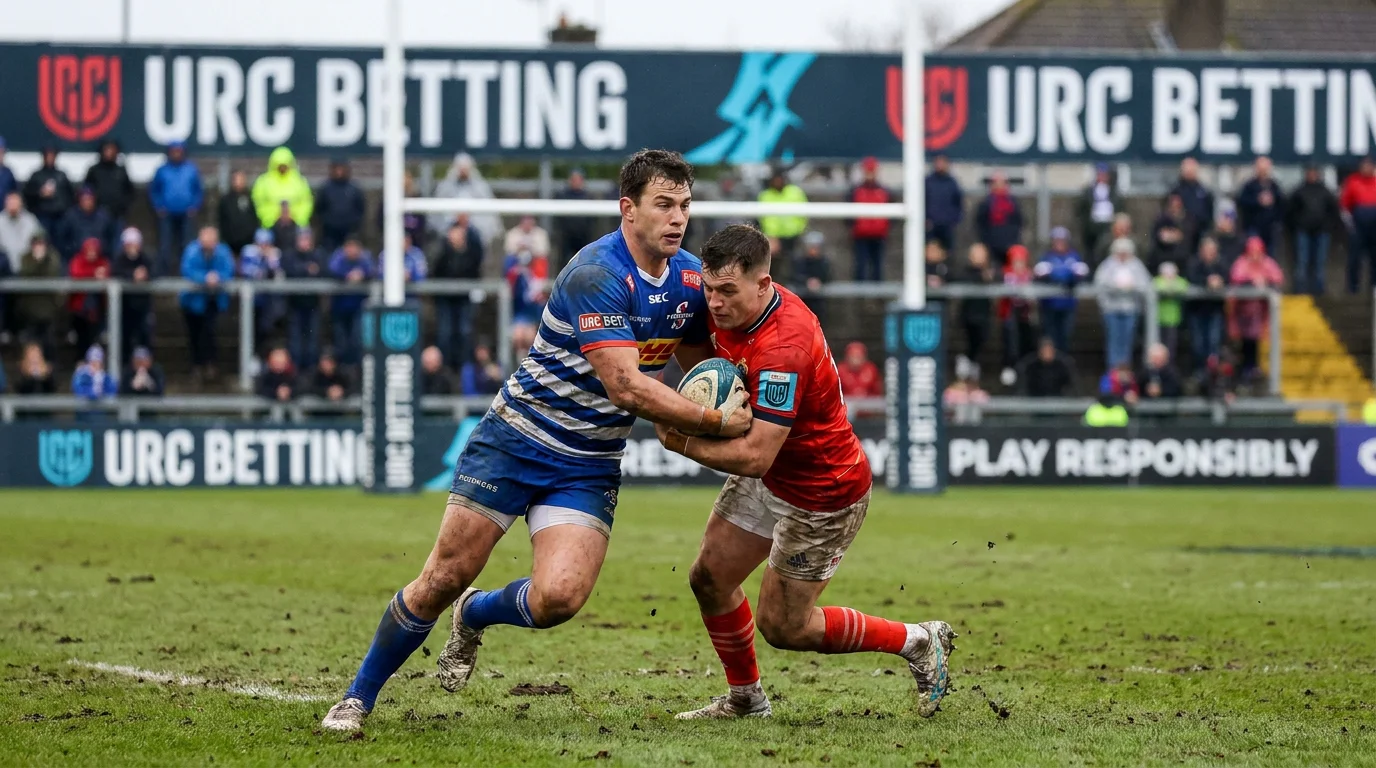
United Rugby Championship Betting: Cross-Border Markets and Outright Value
 Available in US
The league that broke my early models
When the URC first added the South African franchises I tried to bolt them onto my existing Pro14 power ratings. It did not work. Travel, altitude, and a completely different rhythm to the season blew up two months of value bets before I rebuilt the model from scratch. The URC is the only club competition I cover where geography is a market in its own right.
The 2025-26 season ran across 148 matches with combined attendance over 1.6 million and 988 tries — 6.7 per match on average. That tries-per-match number is lower than the Champions Cup and lower than the Prem, which already tells you something about pace, defensive structures, and the totals lines you should expect.
URC format and the conference quirk most bettors ignore
Sixteen teams from four nations plus the three South African franchises. The regular season runs eighteen rounds, with each team playing a mix of home and away across the geography. Top eight into the play-offs, and four regional shields awarded inside the league itself — Irish Shield, Scottish-Welsh, Italian, and South African. Those shields are a betting market in their own right that most UK punters never touch.
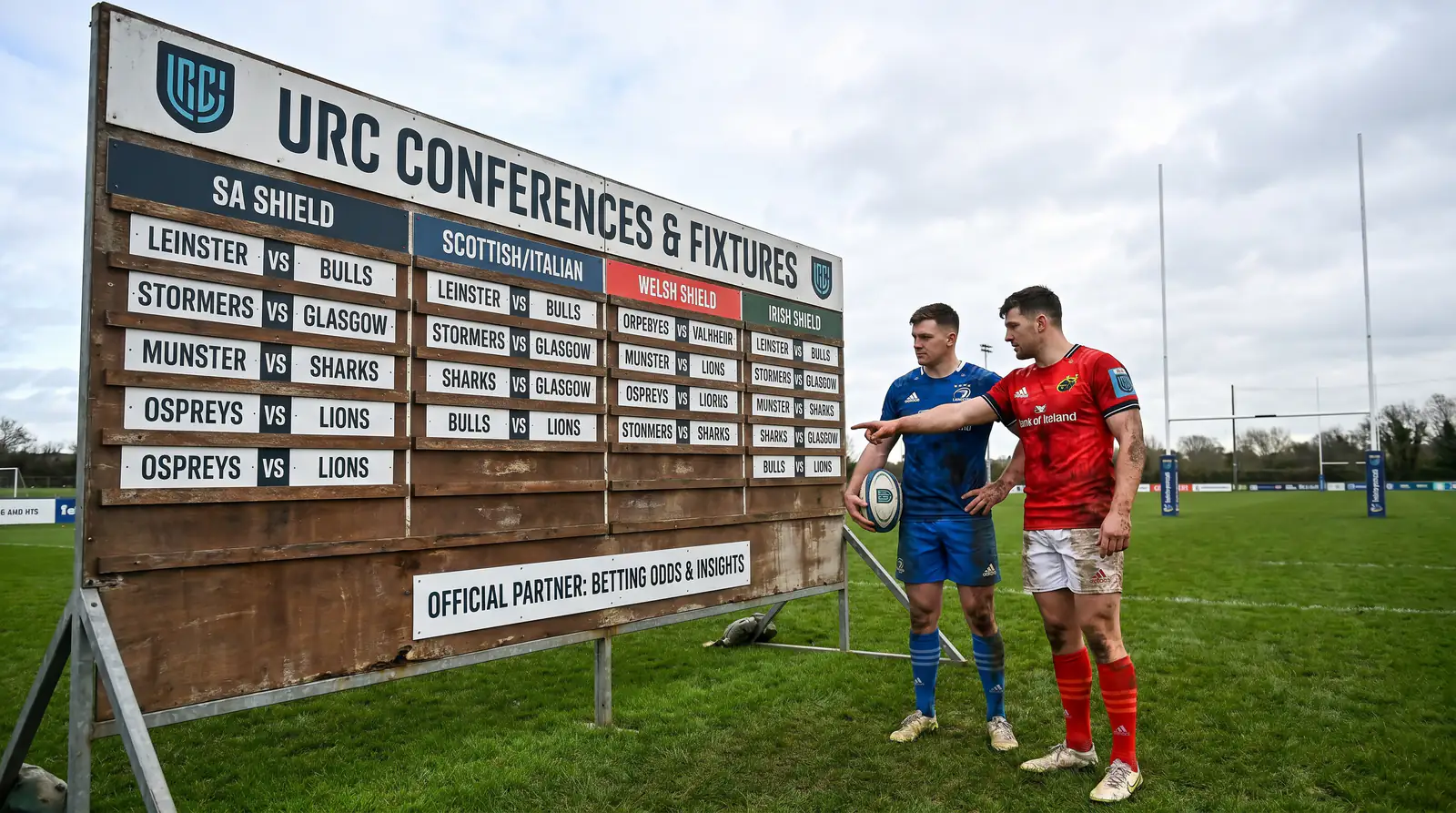
What is worth knowing: the schedule deliberately splits the South African block from the European block into windows. Sides travel down once, play two rounds in South Africa, then come home. That structure creates predictable form swings. European teams come back jet-lagged and concede early in the following round. South African teams visiting Europe in November look sharp in week one and fade by week two when the cold sets in.
Outrights and shield markets — where I find slow money
The URC outright winner market typically opens in August with Leinster as a clear favourite, often priced inside 2.50. The honest question is whether the price reflects the play-off variance or just regular-season dominance. I have learnt the hard way that a side that wins the league phase by ten points still has to navigate a quarter-final where home advantage might be neutralised by squad rotation.

The shield markets are where I push harder. Five or six sides genuinely compete for each shield, and bookmakers tend to copy each other’s prices rather than model the shield as a sub-tournament. That is the kind of inefficiency I look for. The Italian shield is often a two-horse race priced as if it were three. The Welsh-Scottish split sees occasional weeks where the line moves a full point after a single injury announcement.
For ante-post on the play-off, I prefer to wait until the round 12 to 14 window. By then travel rotations are clear, key injuries are public, and the bubble teams are showing whether they have the away form to push for a top-eight finish.
Travel fatigue and the handicap edge most people overlook
If you remember one paragraph from this piece, make it this one. Travel between Europe and South Africa changes URC handicap lines by an average of three to five points compared with what pure form would suggest. Bookmakers know this. They do not always apply it consistently.
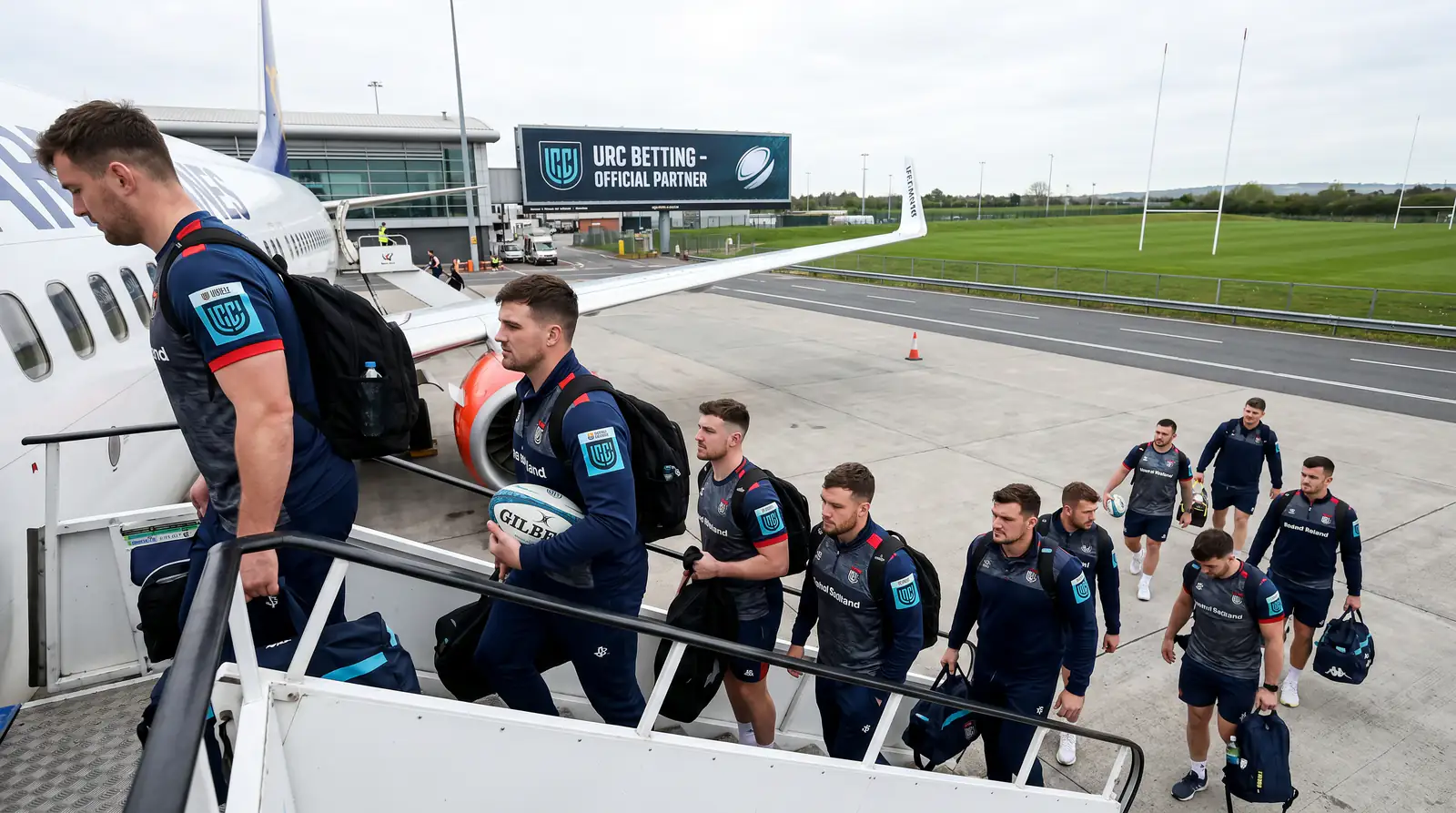
The edge sits in two places. First, the second match of a South African away block: the visiting European team has now had a full week to acclimatise, but the bookmaker often keeps a handicap line built on the first-match disaster. Second, the first home match for any team returning from South Africa: jet lag and altitude reversal hit harder than expected, and the underdog often covers in a fixture that “should” be a home banker.
I bet handicap covers in these scenarios more often than straight 1X2. The line drift is too modest to chase the moneyline price, but the spread offers a clean 5 to 10 percent edge in the right week.
Top try scorer and season-long props
The URC top try scorer market is one of my favourites because the pool of contenders is wide and the price discovery is uneven across operators. Wingers from Leinster and Munster get hammered early — they often open inside 8.00 and hold. Outside backs from Bulls and Stormers open at 15.00-plus and can drift wider if they miss two matches to international duty.

Two anchor stats I lean on: 988 tries scored across 148 matches in the most recent season, and a wide distribution where no single player typically pulls clear of the chasing pack by more than two or three tries until the final rounds. That means top try scorer markets stay live deeper into the season than the same market in the Premiership.
Season props worth looking at: total tries by team, most yellow cards (specific franchises trend hard one way), and finishing position bands. The bands market — “to finish 1st to 4th” or “5th to 8th” — is genuinely useful when the play-off race tightens and the outright winner price has compressed too much.
Home, away, and the URC pricing pattern
Home advantage in the URC is real but unevenly distributed. Some venues are genuine fortresses; others have a home record barely above 50 percent over a multi-season sample. I track home win rate by venue across rolling 24-match windows because the bookmaker’s baseline assumption of “home edge” is often two or three percentage points off the actual figure.
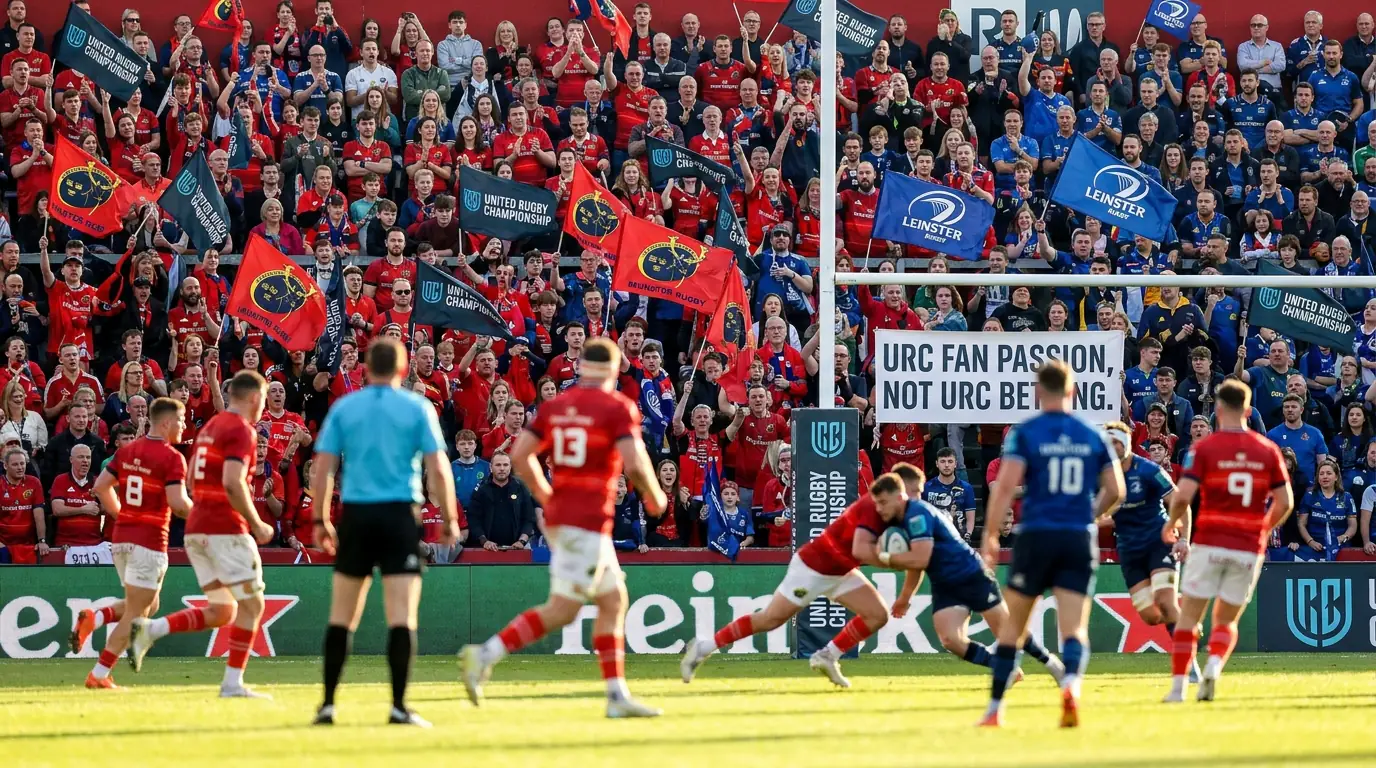
Pricing patterns to watch: the second of two consecutive home games (form often holds, line is slightly too short); the first away game after a bye round (line is often too generous to the visitor); and the round immediately after a national derby (lethargic performances are common, totals trend under).
Closing the season strong
The URC rewards patience. The shields, the cross-border travel patterns, and the top try scorer markets all stay live for months, and the play-off bracket usually delivers at least one genuine upset where the home side has rotated. I do not bet every round in this competition — I pick the windows where the bookmaker’s model is most likely to lag the real picture, and I size up when the price reflects that lag. For another angle on the same problem, my piece on home advantage in rugby betting covers how I quantify the venue effect across competitions.